• 2 min read
Lenovo’s Lecoo AI Mini packs dual Ethernet
Lenovo’s Lecoo AI Mini packs a Ryzen 5 7430U, dual Ethernet, two M.2 slots and a 512GB SSD into a compact $440 PC.
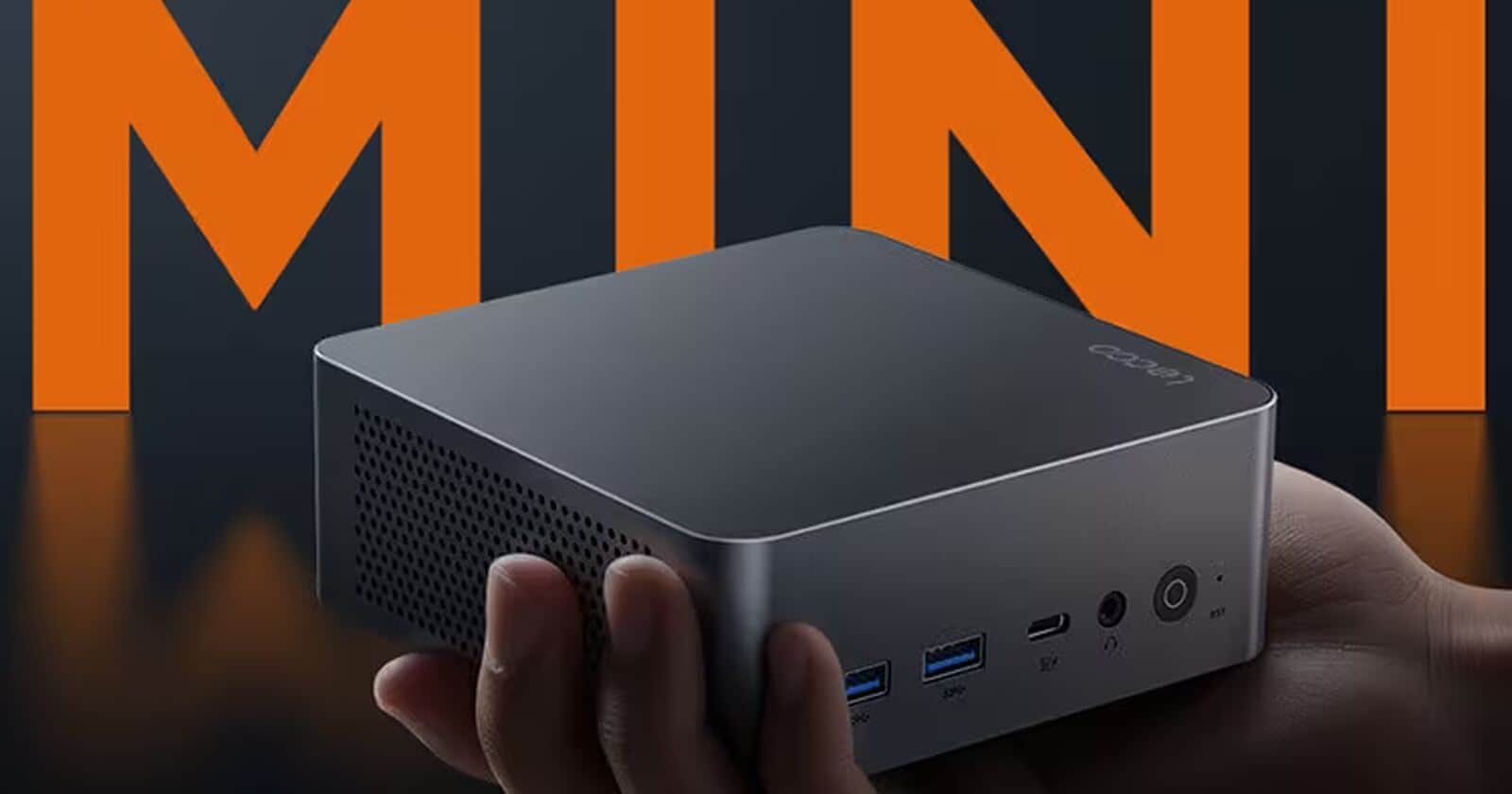
Image: ITzine
Lenovo has launched the Lecoo AI Mini, a compact PC focused less on integrated graphics or its AI-branded name than on connectivity and upgradeability. The system uses a six-core AMD Ryzen 5 7430U, 16 GB of DDR4 memory and a 512 GB SSD. A second M.2 slot makes adding another drive straightforward.
The mini-PC measures just 128.4 x 128.4 x 47.5 mm—smaller than a hand. Lenovo is competing with a large number of Chinese mini-PC makers, whose systems are often cheaper but can offer weaker hardware. With its port selection, the Lecoo AI Mini is positioned more like a small office PC than a conventional compact desktop.
Lenovo Lecoo AI Mini specifications
- Processor: AMD Ryzen 5 7430U, six cores
- Memory: 16 GB DDR4 SO-DIMM
- Storage: 512 GB PCIe M.2 SSD
- Expansion: second M.2 slot for an additional SSD
- Wireless: Wi-Fi 5, based on 802.11ac
- Cooling: fan and two heat pipes
- Dimensions: 128.4 x 128.4 x 47.5 mm
The front panel includes two 5 Gbps USB-A ports, a 5 Gbps USB-C port and a 3.5 mm audio jack. On the rear are two gigabit Ethernet ports, HDMI 2.1, DisplayPort 1.2 and two additional USB-A ports limited to 480 Mbps.
Pricing and availability
In China, the Lecoo AI Mini costs 2,999 yuan, or approximately $440. That is not especially low compared with mini-PCs from Beelink, Minisforum and other manufacturers, but the combination of dual Ethernet and two storage slots may be more useful than a lower price.
Marta Barinova is a news editor specializing in software analysis, streaming services and policy changes at global technology platforms. She covers Windows updates, feature changes in Spotify and Google, and antitrust regulation involving app stores. She is the author of more than 140 publications.

Recommended reading
Xteink’s $99 X4 Pro is a pocket-sized e-reader

Computing Editor
Tomas lives in the terminal. He covers chips, laptops, and operating systems with a focus on performance and efficiency. He reads kernel changelogs the way other people read fiction, and he's always on the hunt for the perfect mechanical keyboard switch. If it processes data, Tomas has an opinion on it.
via ITzine