

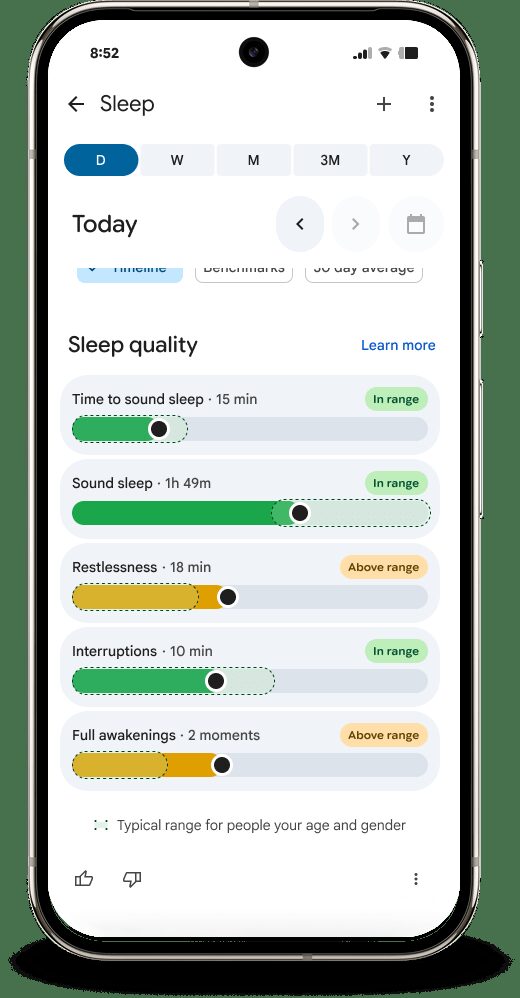
Fitbit is giving Sleep Score a much-needed reality check. Instead of pretending one number can explain a bad night, the updated system weighs deeper sleep patterns, wakeups, heart rate variability, and recovery signals to produce a more useful read on why you feel wrecked the next morning. The move also brings a new Digital Coach for Premium users, nudging Fitbit further into AI-assisted wellness rather than simple tracking.
The timing makes sense. Sleep tracking has spent years selling confidence it sometimes could not deliver, and rival wearables have increasingly leaned on richer sleep summaries rather than vanity scores alone. Fitbit’s shift is basically an admission that duration matters, but so do the messy details in between.
What Fitbit Sleep Score measures
The redesigned score now puts more weight on how quickly users reach Deep and REM sleep, how steady those stages remain, and how sleep affects the body through heart rate variability and relaxation levels. Fitbit is also replacing a flatter presentation with color-coded bars that show restlessness, full awakenings, and smaller interruptions, which is frankly more useful than a mysterious number and a pat on the head.
Users will also see their results compared with reference ranges for people of the same age and gender. That should make the score feel less like a generic grade and more like a benchmark tied to actual physiology, even if it also risks exposing just how average some sleep habits really are.
Fitbit Premium gets a Digital Coach
For Premium subscribers, Fitbit is adding a Digital Coach that turns the sleep data into personalized suggestions. If the system spots a long delay before sleep, it can point users toward changes in their pre-bed routine, while also explaining what drove score swings from night to night.
That kind of coaching is where wearables are heading: away from passive logging and toward products that try to interpret behavior for you. Apple, Samsung, and others have been pushing deeper health summaries too, but Fitbit is leaning harder into the idea that the software should do the explaining, not just the counting.
Public testing, score changes, and a sync issue
Fitbit says the new system is still in public testing, so some score shifts are expected while the algorithm settles into its new model. The company also warns of a small synchronization issue between the wearable and the mobile app, with the phone app showing the more accurate result when the two disagree.
That means the update is useful, but not quite finished. The core visualization and benchmarking changes are available to all users in testing, while the Digital Coach stays locked behind Premium. If Fitbit gets the calibration right, this could make sleep scoring feel less gimmicky and more like a tool people might actually trust.