

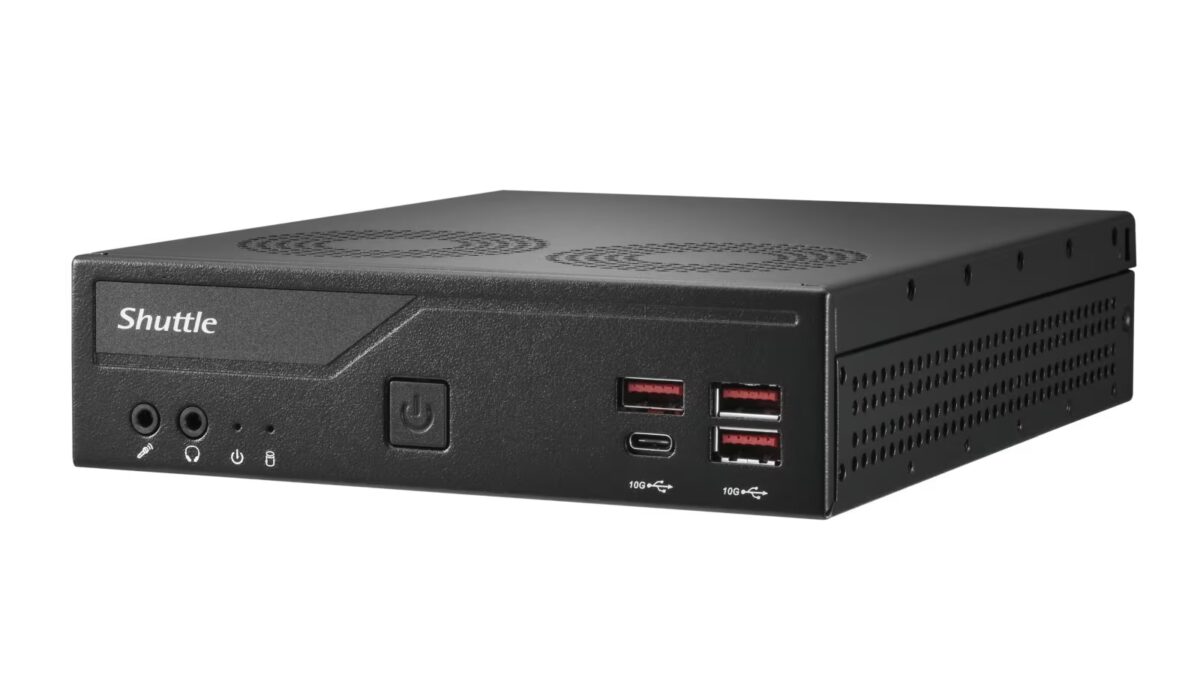
Shuttle has unveiled the XPC Slim DB860, a compact mini PC that stands out by packing support for Intel’s desktop processors into a slim chassis with active cooling. This combination offers desktop-level performance in a system just 1.35 liters in volume.
The XPC Slim DB860 features an LGA1851 socket compatible with Intel’s Arrow Lake-S generation desktop CPUs. Due to its small form factor, it supports processors with a thermal design power (TDP) of up to 65 watts-excluding higher-wattage, overclocked models like the Intel Core Ultra 9 285K.
Supported processors include models such as the Intel Core Ultra 9 285, Core Ultra 7 265, and Core Ultra 5 225. The top-end Core Ultra 9 285 offers up to 24 cores and delivers strong multi-threaded performance, approximately 10-11% lower than the 285K variant it resembles.
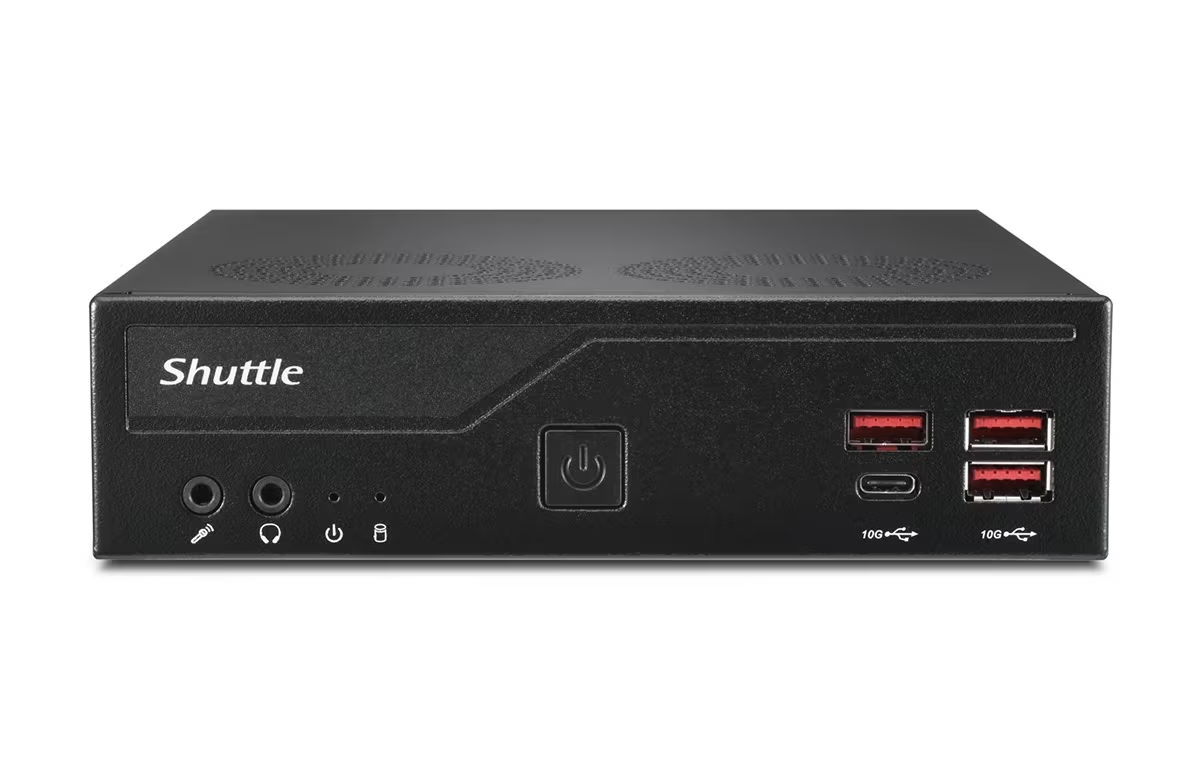
Memory-wise, the DB860 offers two SODIMM slots supporting up to 96GB of DDR5-5600 RAM. There is no dedicated graphics card, which is typical for ultra-compact mini PCs. Its metal case measures just 19 × 16.5 × 4.3 cm, making it easy to fit into tight workspaces or home offices.
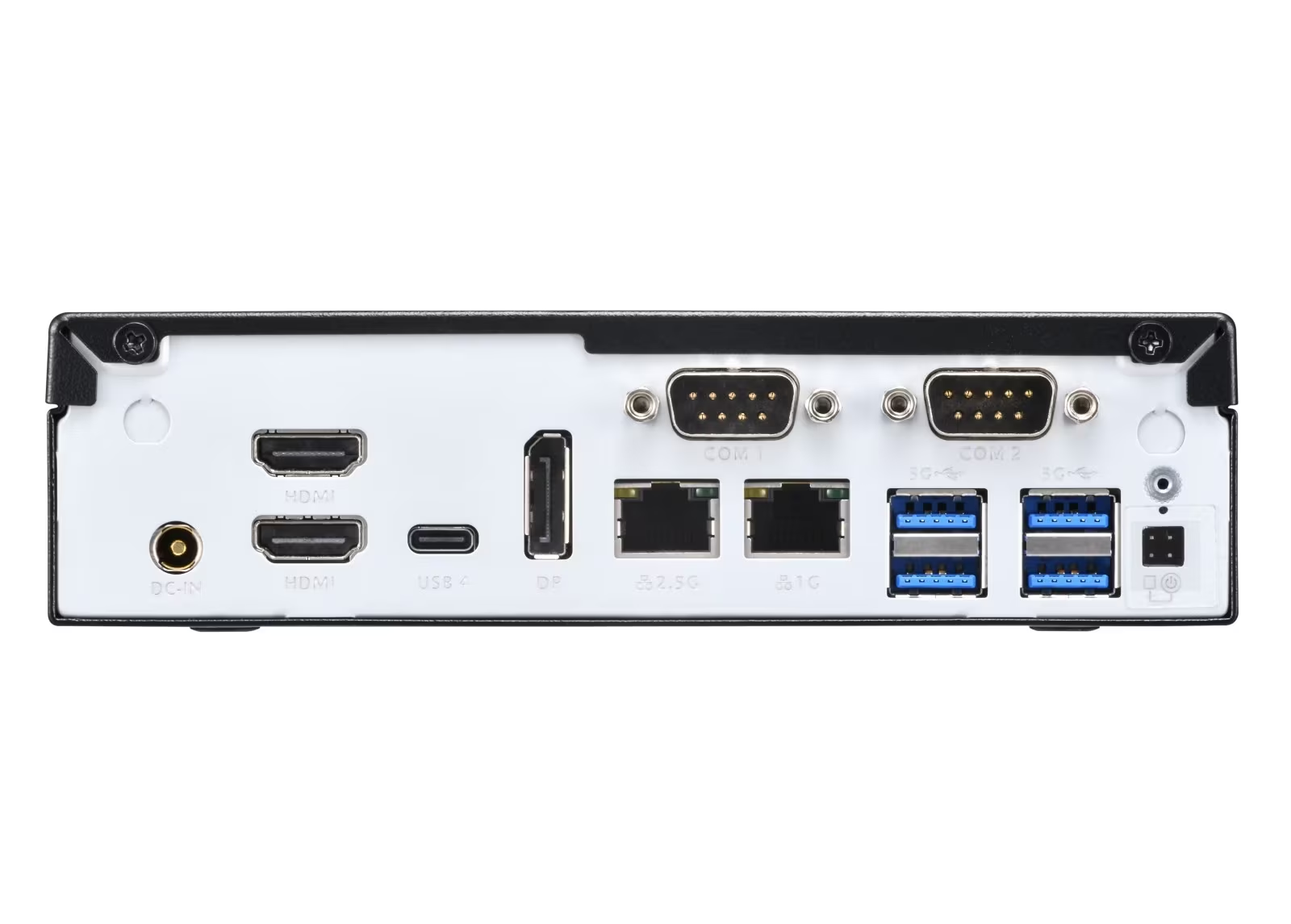
The port selection is surprisingly generous, including:
- Three USB 3.2 Gen 2 Type-A and four USB 3.2 Gen 1 Type-A ports
- One USB 3.2 Gen 2 Type-C and USB4 port with DisplayPort 1.4a support and charging capabilities
- 2.5G and 1G Ethernet network interfaces
- Video outputs: HDMI 2.1, HDMI 2.0, and DisplayPort 1.4a
- Two RS232 serial ports
- Audio input and output jacks
For storage, the system includes:
- One M.2 2280 slot with PCIe 5.0 x4 support
- One 2.5-inch SATA III bay for additional drives
- One M.2 2230 slot for Wi-Fi and Bluetooth modules
There is also an option to add an LTE modem for mobile connectivity.
Shuttle has not announced pricing for the XPC Slim DB860 yet, stating that costs will vary depending on order volume and will be provided upon request.
Shuttle’s XPC Slim DB860 uniquely blends desktop CPU power with a mini PC form factor-a niche typically dominated by lower-power mobile processors. This makes it an interesting contender among mini PCs, competing indirectly with Intel’s NUC series and ASUS’s PN line, which mostly rely on laptop-class chips. As desktop CPUs become more energy efficient, more models may emerge offering a better balance between power and size.
Looking ahead, it will be worth monitoring whether Shuttle expands CPU support beyond 65W TDP or introduces discrete GPU options to cater to gamers and creatives who want desktop-level performance in a compact body. How pricing will align with competing mini PCs and whether this form factor attracts users seeking both power and portability remain open questions. In any case, the DB860 pushes the boundaries of what mini PCs can pack inside a palm-sized chassis.