• 3 min read
China lines up 4 rocket debuts as rocket reuse race heats up
China is preparing a busy stretch of rocket launches, and the common thread is obvious: rocket reuse. Over the next few months, state and private teams are set to test Long March 12B, Pallas-1, Hyperbola-3, and Long Marc
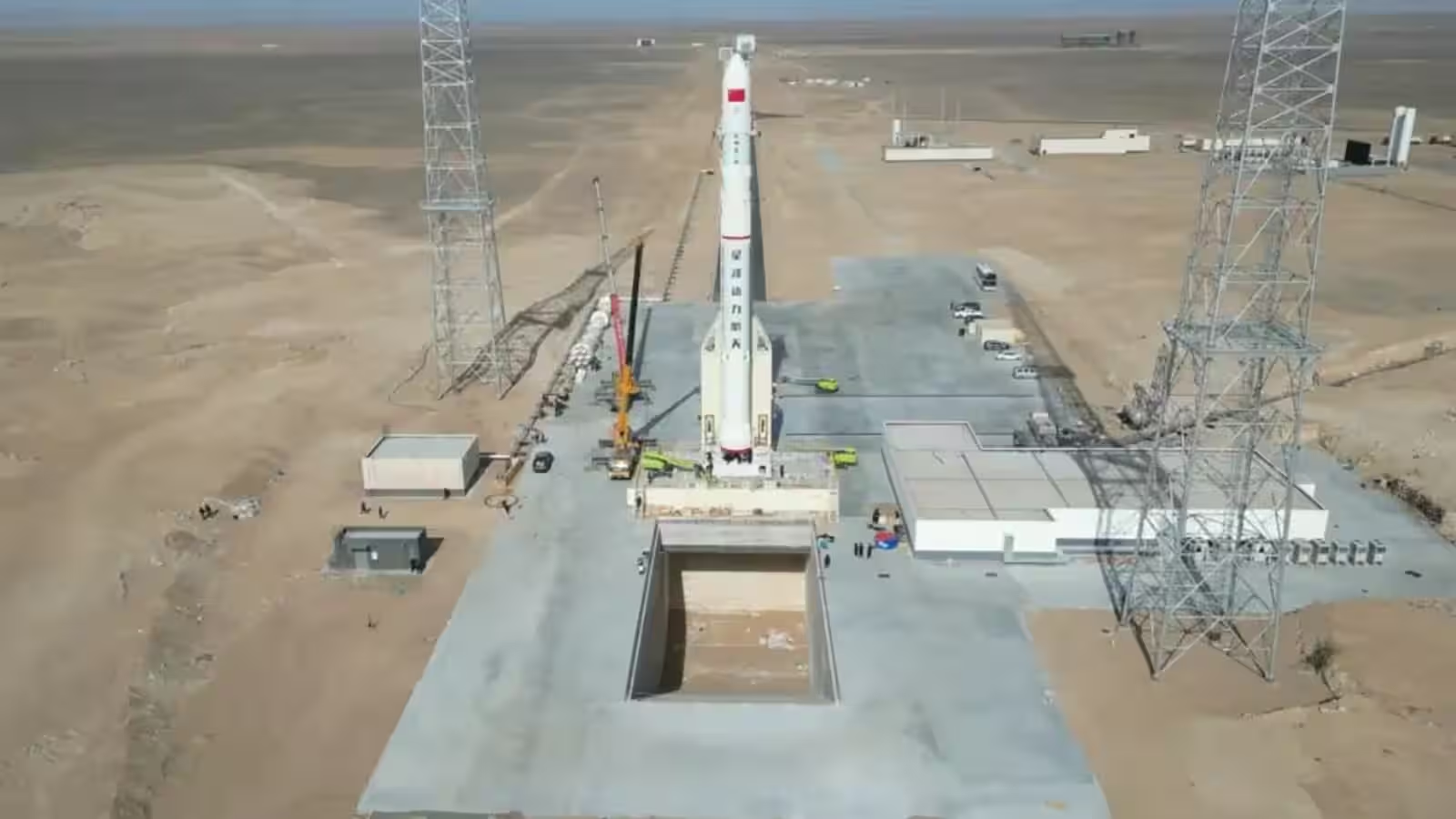
Image: ixbt.com
China is preparing a busy stretch of rocket launches, and the common thread is obvious: rocket reuse. Over the next few months, state and private teams are set to test Long March 12B, Pallas-1, Hyperbola-3, and Long March 10B, a mix of vehicles aimed at boosting orbital lift and building the hardware China will need for satellite constellations and lunar missions.
The lineup shows how quickly the country’s launch sector is splitting into two engines. State rockets still carry the lunar program and the heaviest payload ambitions, while private companies are now chasing the reusable market with hardware that looks far less experimental than it did a few years ago.
Long March 12B reaches the pad first
Long March 12B is the closest to liftoff. It has already been erected at the Jiuquan launch site, and it uses kerosene and liquid oxygen to carry up to 20 tons to low orbit. Landing legs have been spotted on the first stage, although it is still unclear whether engineers will try to recover it after the debut flight.
That uncertainty is telling. Its predecessor, Long March 12A, flew in late 2025, but the first-stage landing failed, which is a neat reminder that reuse is easier to announce than to actually pull off.
Galactic Energy and iSpace push reusable designs
Galactic Energy is getting ready to launch Pallas-1, its first liquid-fueled rocket. The company designed it from the start for recovery, adding landing legs and grid fins for the descent, though it does not plan to bring back the stage on the maiden flight. The rocket is expected to lift 7-8 tons to low orbit, with a heavier Pallas-2 already penciled in for 2027.
Recommended reading
Starlink V5 dish drops 62% in weight
Hyperbola-3 from iSpace is further along in the grim little art of landing stages. The company has completed landing-system tests, including hard-impact trials and full-size drop tests, and aims to fly before the end of 2026. In February, the project also secured about 729 million dollars in investment, which helps explain why the schedule looks so aggressive.
Long March 10B and China’s lunar hardware
The other headline rocket is Long March 10B, a cargo version tied to China’s future crewed lunar flights and the Mengzhou spacecraft. It has already been delivered to Wenchang for initial checks, and it is also expected to gain first-stage recovery hardware later, including ocean-platform landing capability. Its first test flight is expected no earlier than the summer of this year.
That matters because the launch manifest is starting to look less like a one-off demo list and more like a preview of China’s next orbital standard. If even part of these programs sticks, the pressure on rivals will be less about headline launch counts and more about who can reuse boosters reliably without turning every recovery into a fireball with paperwork.

Frontier Editor
Dan is our resident futurist, covering electric mobility, space exploration, and the smart home. He's interested in atoms just as much as bits. Whether it's a new battery chemistry, a reusable rocket, or a protocol that finally makes IoT devices talk to each other, Dan breaks down the engineering that pushes humanity forward.
via ixbt.com