

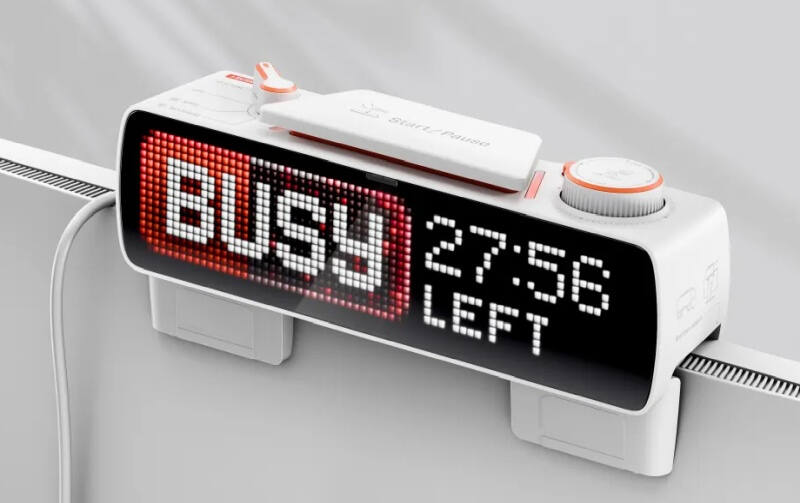
Flipper Devices is taking a sharp turn away from hacker toys and into workplace theater with Busy Bar, a color matrix desk display that can nag, remind, block apps, and signal to everyone nearby that you are, in fact, busy. The company says the Busy Bar desk gadget goes on sale on 14 July, with early buyers getting a lower price before the badge of productivity costs a little more.
The pitch is simple: make work interruptions visible and a bit harder to ignore. That is a tidy response to a very modern problem, especially in small teams where status messages are easy to miss and every app thinks it deserves your attention. Flipper is not inventing focus, but it is wrapping it in a physical object people can see from across the room, which is more effective than yet another software notification buried under 47 others.
Busy Bar hardware and display
Busy Bar looks like a retro desktop clock that wandered into a startup office. Up front, it uses a 72 × 16 pixel LED matrix panel with brightness up to 400 cd/m2 and support for 16 million colors, plus a light sensor. Around the back is a monochrome screen for device status, timer information, battery level, and connection indicators.
There is also a small speaker for sounds and alerts, while the top edge carries a mode switch, a start/stop button, an indicator, and a scroll wheel for menu navigation and time setting. Connectivity includes Wi-Fi, Bluetooth, and USB. The 3250 mAh battery is rated for up to eight hours in active use or up to two weeks on standby, and the 15 W adapter is said to fully charge it in an hour.
Busy Bar apps, timers, and platform support
Flipper is leaning hard into software as the real product. Busy Bar works with apps for iOS, Android, and macOS, with Windows support planned later, and it can lock selected apps using different timer types on mobile devices. On macOS, it can tie into the microphone to show an ”in call” status, then mute notifications during meetings, recording, or streaming.
The obvious comparison is to Pomodoro timers and status lights, except this one tries to do both the personal and public parts of focus management. That is smart, because productivity tools usually fail when they live only on a screen; a physical display on a desk is harder to dismiss, even if it also makes your workload look a little like a control panel from a tiny spaceship.
Matter support and developer access
Busy Bar is certified for Matter, so it can plug into Amazon, Apple, and Google smart home ecosystems. Flipper has also opened the device up to developers with an HTTP API, MQTT, and official Python and TypeScript libraries for widgets and interfaces, while users can manage it remotely through a cloud API.
That developer angle matters because hardware without a tinkering story tends to fade fast. Flipper built its reputation on openness and experimentation, so the move gives Busy Bar a better shot at becoming more than a novelty for remote workers who love timers and colored lights.
Busy Bar price and release date
The company says the first 3,000 buyers will pay $199, while everyone else will pay $249. Buyers can join a waiting list on the Busy Bar website, and Flipper says accessories are coming later, including wall mounts, screen protectors, and custom switches.
Whether Busy Bar becomes a useful office signal or another desk gadget people enjoy for a week depends on execution, not vibes. Still, the combination of status display, timers, app blocking, and open APIs gives it a clearer identity than most productivity hardware, which usually dies somewhere between ”nice idea” and ”why is this charging on my shelf?”