

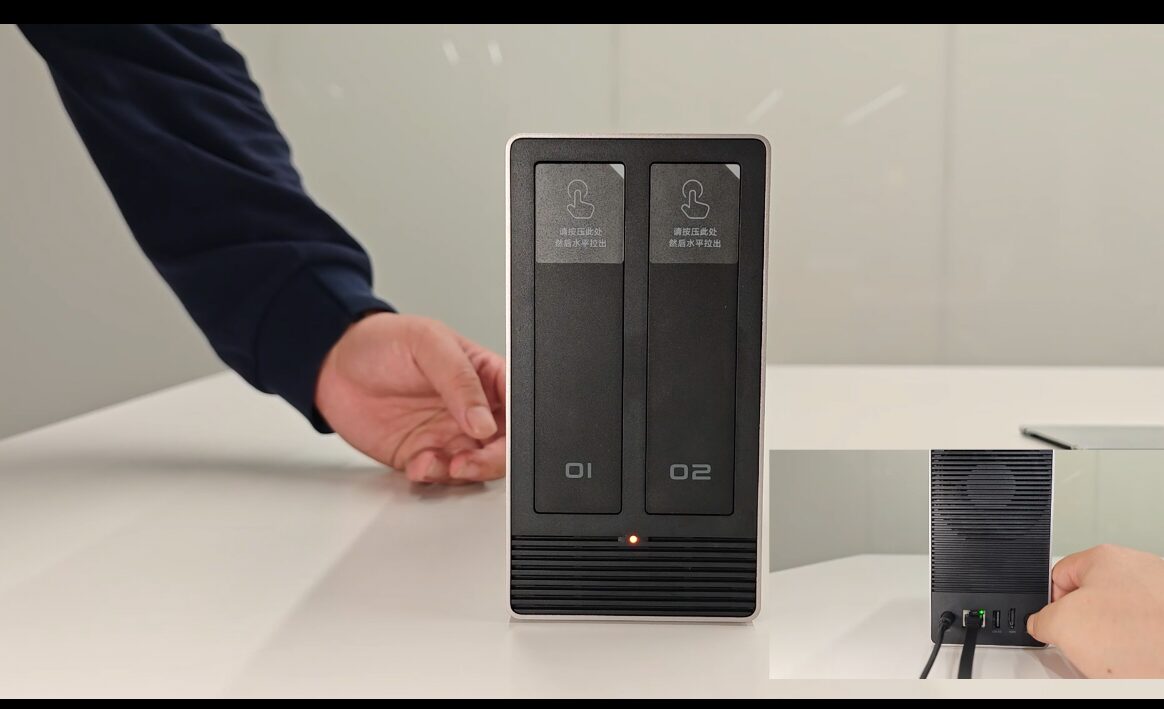
Xiaomi is about to sell its first NAS, and it is leaning hard into the ”one box for everything” pitch: backup, media streaming, remote access, and family file sharing, all wrapped in a companion app called Smart Storage. Open sales begin on 1 July, giving the company a short runway to turn a crowdfunding gadget into something closer to a mainstream home server.
The Xiaomi NAS supports up to 60 TB of storage in total, with cross-platform control through Smart Storage. The app is available for Huawei, Xiaomi, and Vivo app stores, plus iOS, Windows, macOS, and Smart TV, making it a better fit for ordinary households than for storage enthusiasts who want to fine-tune RAID layouts.
Xiaomi NAS: two bays, 60 TB and certified drives
The hardware is a two-bay system with SATA support for 2.5-inch and 3.5-inch HDDs and SSDs. Xiaomi says the maximum capacity reaches 60 TB in total, or 30 TB per bay, and the enclosure includes a 2.5G Ethernet port, USB 3.0, and HDMI. It also supports three operating modes:
- Single-disk setup
- Dynamic backup
- Mirrored storage
Xiaomi has also published a compatibility list, and the certified drives come from Western Digital, Seagate, and Toshiba. That may sound like a small footnote, but certification is the sort of boring detail that separates a useful home NAS from an enthusiast project that behaves beautifully right up until you insert the wrong disk.
Xiaomi Smart Storage features for photos and video
The company is positioning the NAS as a central hub for photos, videos, and documents pulled from multiple devices. Built-in features include automatic syncing, remote access, family sharing, intelligent album sorting, and a media server that can identify movies and generate posters. In other words, Xiaomi wants the box to feel less like storage and more like a private cloud with fewer monthly fees.
That strategy fits a broader trend: consumer NAS devices are getting simpler, while cloud subscriptions keep getting more expensive and more fragmented. If Xiaomi can keep the setup painless and the app polished, it has a real opening against the usual suspects in home storage, especially for users who already live inside its ecosystem.
The real test starts after launch
The question is not whether Xiaomi can build a NAS with respectable specs. It is whether it can make the thing feel trustworthy enough for family photos and work files, while still being easy enough that buyers do not need a manual, a forum thread, and a small crisis to get started. The launch on 1 July will answer the first question; real-world software polish will answer the second.