

The Large Hadron Collider has gone quiet for four years, and this is not a maintenance break in the polite sense. CERN has switched off the machine after its final physics run and is now preparing the most ambitious upgrade in the collider’s history: a rebuilt, higher-intensity version that should return in 2030 as the High-Luminosity LHC.
The high-luminosity LHC upgrade is designed to deliver more collisions, more data, and more chances to catch rare physics in the act. That matters because the LHC’s greatest hits – from the Higgs boson to a string of new hadrons – came from brute-force repetition, and the next phase is designed to push that logic far harder.
What CERN is changing inside the ring
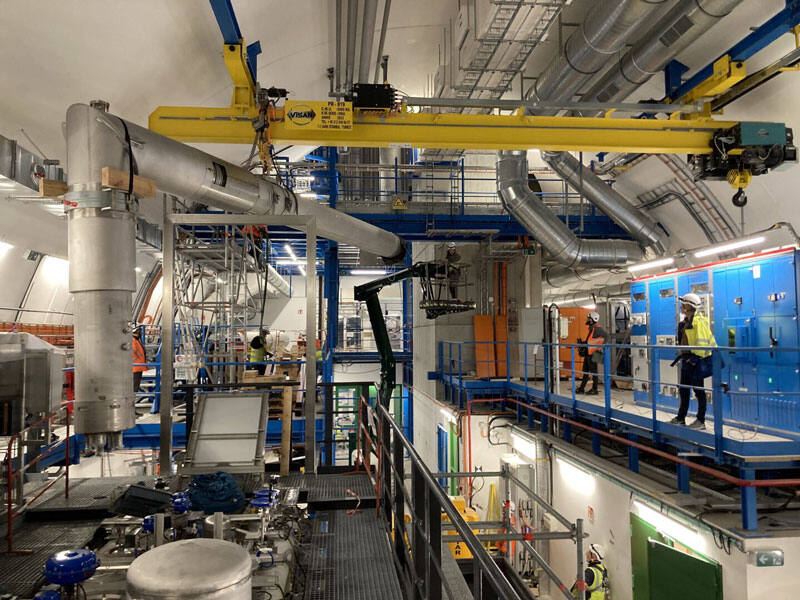
The shutdown began on 29 June 2026, when the collider entered Long Shutdown 3, a technical pause that will run through servicing, reconstruction, and installation work. CERN says the biggest task will be the removal and replacement of about 1.2 km of magnets and other components inside the 27-kilometre ring, alongside new cryogenic hardware, stronger beam-focusing systems, and upgraded detector elements tied to higher luminosity.
That is major surgery, not a software patch. Some accelerator sections and experiment hardware will be partly or fully dismantled, and new tunnels and new experiments are also slated to come online during the pause. In accelerator terms, this is the sort of project that takes years because it has to work the first time.
The LHC’s record before the lights went out
The collider is already one of the most productive machines in physics. Since the first beams circulated in September 2008 and the first proton collisions were recorded in 2009, ATLAS and CMS alone have logged about 54 million billion proton collisions and roughly 300 billion heavy-ion collisions over three completed operating periods, according to CERN.
That torrent of data helped produce around 4,500 peer-reviewed papers and the discovery of more than 85 hadrons. The headline achievement, of course, was the 4 July 2012 announcement of the Higgs boson by ATLAS and CMS, a result that turned the collider from a grand experiment into a permanent reference point for particle physics.
High-Luminosity LHC data and storage demands
When the upgraded machine returns in 2030, CERN expects luminosity to be about 10 times higher than the original design level. Translation: roughly 10 times more collision events and a lot more raw data to sift through, which is both a physicist’s dream and a storage engineer’s headache.
The scale of the challenge is already visible in the numbers. The LHC has produced one exabyte of experimental data over about 15 years of observation, and by the middle of the 2030s that total is expected to grow by an order of magnitude. That will sharpen measurements of the Higgs boson and deepen the hunt for what else the universe is hiding, but it will also keep laboratories busy buying storage instead of champagne.
Why the High-Luminosity LHC matters more than a restart
Big accelerators age in public, and the LHC is now entering the expensive part of its life cycle: the phase where the infrastructure must be rebuilt to keep the science fresh. The payoff is not a flashier machine for its own sake, but a collider that can produce rarer events often enough to make statistically awkward questions answerable.
That is why the name change matters. The High-Luminosity LHC is not a branding exercise; it is CERN’s way of saying the old machine has been good, but the next one is being built to squeeze much more physics out of the same ring. The real question is whether the upgrade schedule holds, because a project this complex rarely stays neatly inside the calendar.