

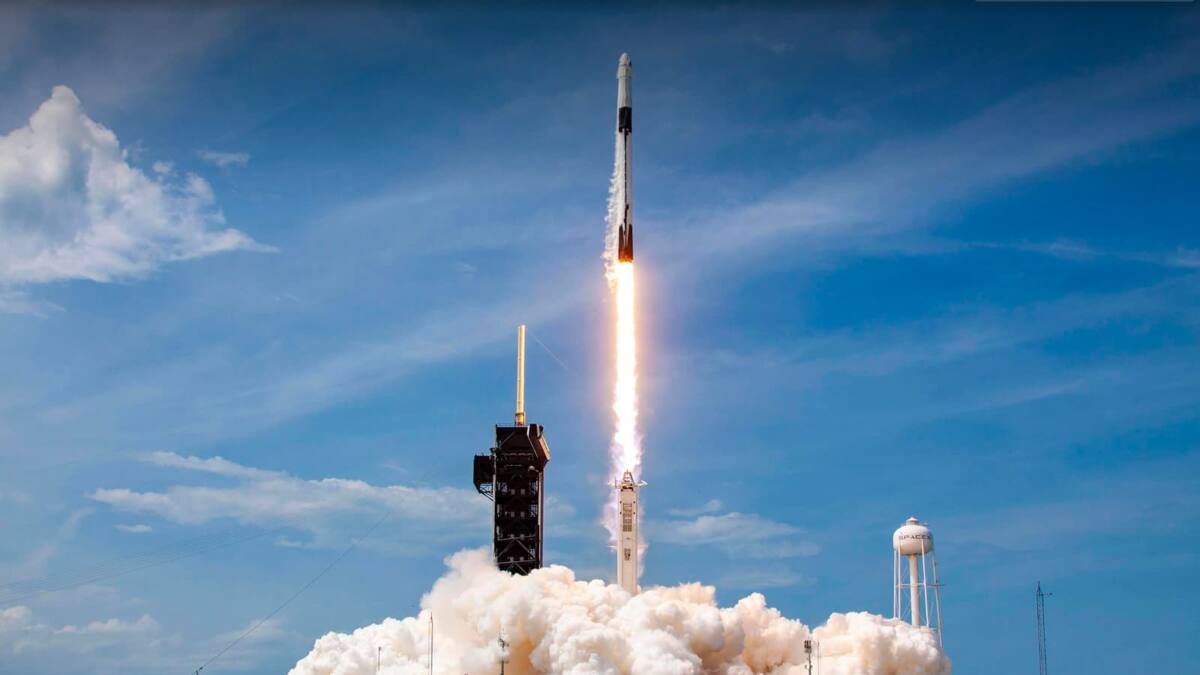
SpaceX has already completed 60 Falcon 9 launches carrying Starlink satellites in 2026, pushing nearly 1,600 new spacecraft into orbit in just six months. That pace works out to roughly one launch every three days, a cadence that looks less like a launch program and more like an industrial assembly line with a rocket attached.
The latest milestone underscores how aggressively Starlink keeps expanding while most satellite operators would be happy to manage a single mission without incident. SpaceX is using that volume to keep densifying its broadband network, which is the whole point: more satellites, more coverage, fewer dead zones for customers far from fiber and cellular towers.
SpaceX Starlink launch rate rivals can’t match
The jump from 50 missions to 60 in a single month is the real headline here. SpaceX is not just maintaining a high tempo; it is sustaining it, and that matters because launch cadence is one of the biggest competitive advantages in the satellite internet business.
There are plenty of competitors in space connectivity, but none have matched Starlink’s ability to replenish and expand a constellation this quickly. That speed helps SpaceX stay ahead on capacity, coverage, and resilience, especially as rival operators still face the slower and more expensive economics of building large satellite networks.
What Starlink is buying with all those launches
Starlink is SpaceX’s global satellite internet system, designed to deliver high-speed broadband in places where laying cable is impractical and mobile coverage is patchy at best. The more satellites that are in orbit, the easier it becomes to improve availability and service density across more of the planet.
- 60 Falcon 9 missions carrying Starlink satellites in 2026
- Almost 1,600 new satellites added in six months
- Launch pace: about one mission every three days
The bigger bet behind the constellation
SpaceX has turned Starlink into a business that depends as much on rocket operations as on orbital hardware. That is the clever part, and also the risky part: the company controls the launch loop, which gives it speed and scale that would be hard for a conventional telecom operator to copy.
There is also a wider strategic thread here. As the constellation grows, SpaceX keeps strengthening a network that can support remote users, maritime customers, and regions with weak infrastructure, while the rest of the industry tries to catch up one satellite – and one launch campaign – at a time.
What to watch next
The open question is whether SpaceX can keep this launch rhythm without slowing the rest of its business. If it can, the company will keep widening the gap between Starlink and everyone else; if not, even a machine this efficient eventually bumps into physics, regulation, and the plain old limits of how many rockets you can send up before dinner.