

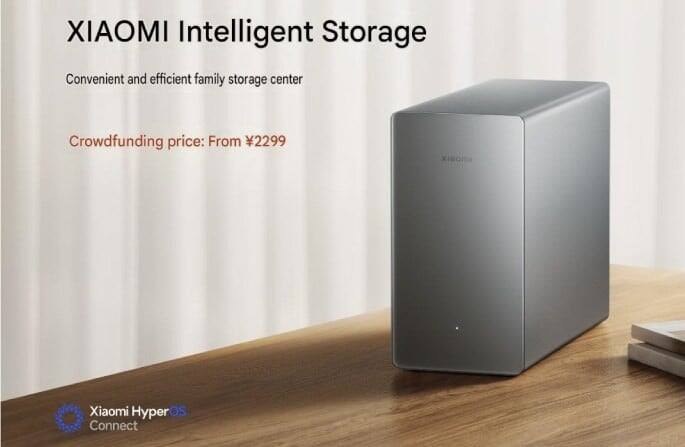
Xiaomi Smart Storage is about to test whether network-attached storage can be sold like a consumer gadget instead of a niche hobby project. Xiaomi’s first dedicated NAS is set for crowdfunding from July 1 to July 8, and the company is pitching it as an easy entry point for families, small offices, and anyone tired of paying cloud fees just to keep photos and backups under control.
The timing makes sense. Cloud storage subscriptions have become the quiet monthly tax of the modern photo library, and privacy concerns keep nudging users toward devices they can actually own. Xiaomi is clearly trying to catch that wave with something that looks less like a server box and more like a living-room product.
Xiaomi Smart Storage hardware and storage limits
The Smart Storage uses a minimalist gray cube design and a dual-bay layout that supports both 2.5-inch and 3.5-inch SATA drives. A leaked engineering sample points to a Realtek RTD1619B quad-core ARM Cortex-A55 processor clocked up to 1.7 GHz, 2GB of DDR3L RAM, and 8GB of onboard storage for the operating system.
Xiaomi reportedly plans support for up to 40TB total storage. That puts it in the same basic conversation as entry-level NAS boxes from the likes of Synology and QNAP, though Xiaomi is aiming for a much friendlier setup story than the usual ”download the manual, then spend the weekend configuring permissions” experience.
Ports, software support, and preconfigured bundles
The prototype had a Gigabit Ethernet port, but the final device is expected to include at least one 2.5GbE port, plus USB 3.0 and HDMI. If that survives to the shipping product, it would be a smart move: 2.5GbE is becoming the obvious middle ground for buyers who want faster transfers without paying for enthusiast-grade hardware.
- Beginner: 4TB for CNY 2,299 (~$338)
- Advanced: 8TB for CNY 2,899 (~$426)
- Professional: 16TB for CNY 4,699 (~$690)
Xiaomi says the device should work across Android, iOS, Windows, macOS, and Linux, which is the kind of broad support a mainstream NAS needs if it wants to escape geek-only territory. The big unanswered question is software depth: features such as Docker support are still unclear, and that could be the difference between a friendly home server and just another box with a shiny brochure.
Crowdfunding could show whether NAS can go mainstream
The real bet here is not storage hardware. It is whether Xiaomi can make NAS feel as ordinary as a smart speaker, with enough polish to convince buyers they do not need to learn server jargon to keep their files safe. If the software is solid and the pricing stays aggressive, Xiaomi may do for home storage what it has long tried to do for other categories: drag an awkward category into the mass market by making it feel less intimidating.
That is also where the competitive pressure lands. Synology built the category’s reputation on dependable software, while brands like QNAP and Asustor have leaned on specs and expansion. Xiaomi is trying a different route: consumer design, broad compatibility, and prices that look more like appliance bundles than enterprise hardware. The market will answer quickly once the campaign opens on July 1.