• 3 min read
AstroForge rebuilds DeepSpace-2 for a cheap asteroid run
AstroForge has rebuilt its DeepSpace-2 spacecraft and is aiming to send it toward an asteroid by the end of the year, after the company’s first interplanetary attempt ran into trouble almost immediately after separation.
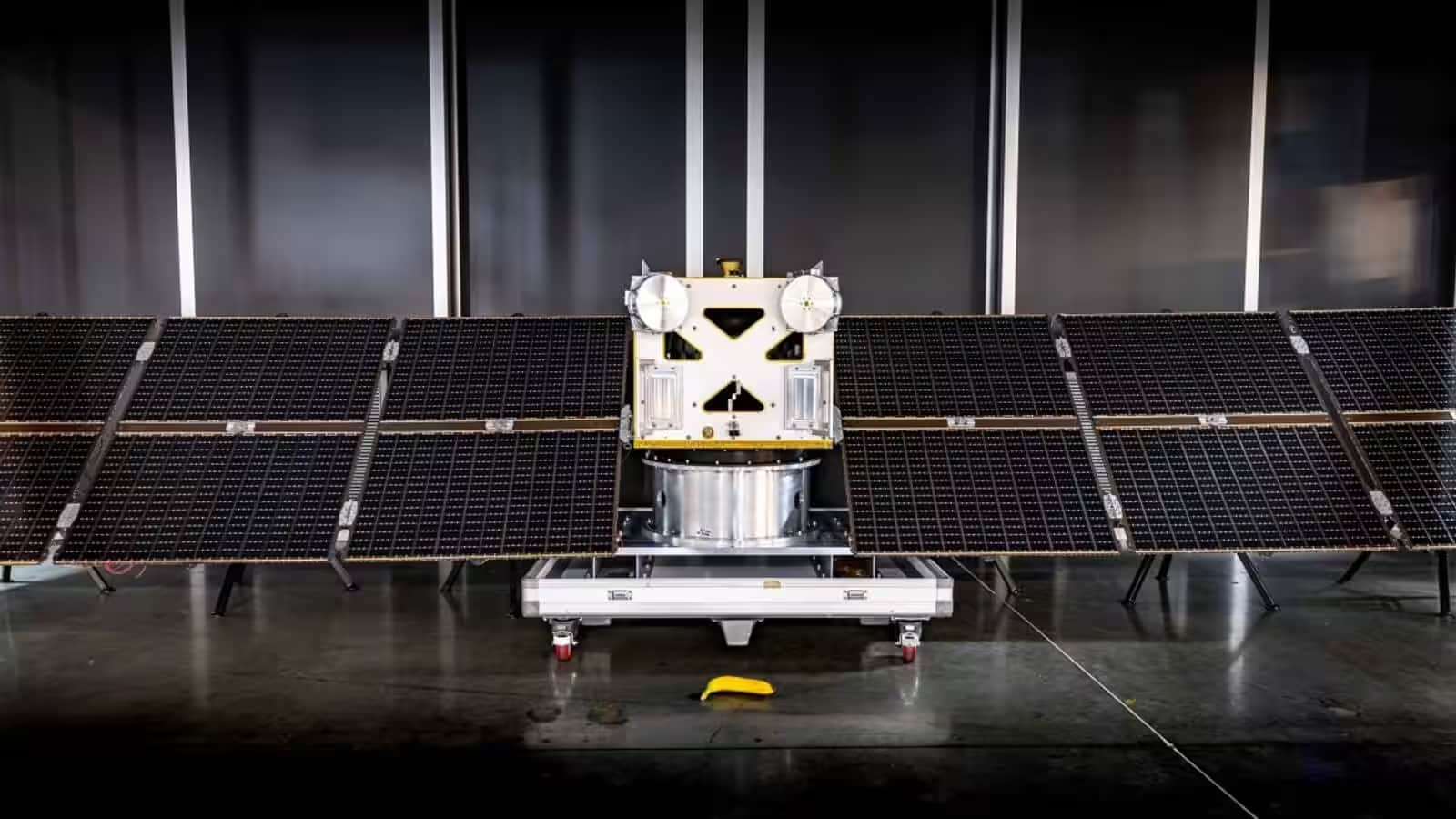
Image: ixbt.com
AstroForge has rebuilt its DeepSpace-2 spacecraft and is aiming to send it toward an asteroid by the end of the year, after the company’s first interplanetary attempt ran into trouble almost immediately after separation. The new DeepSpace-2 asteroid mission is less about elegant science and more about proving that a tiny team can fly deep space hardware without spending like a government program.
The spacecraft is already assembled and now going through ground tests for launch loads and space conditions. It is booked as a rideshare payload on SpaceX’s Falcon 9 as part of Intuitive Machines' IM-3, which is carrying a lunar lander; DeepSpace-2 will separate en route and head off on its own trajectory.
Asteroid target will be chosen late
The target is not locked yet. AstroForge says the final choice will depend on the launch date and available flight paths, with the decision to be made just a few days before liftoff at the launch site. That kind of flexibility is practical, but it also tells you how constrained low-cost deep space missions still are: the rocket schedule often chooses the science, not the other way around.
Once separated, the flight to the selected asteroid should take anywhere from 2 to 9 months. The spacecraft carries two high-resolution cameras, but the real objective is to show that the platform works and can support cheap interplanetary missions in the future.
Lessons from the Odin failure
DeepSpace-2 follows Odin, AstroForge’s first interplanetary spacecraft, which failed after its solar panels did not deploy and the vehicle lost power. That is a painfully familiar kind of problem in spaceflight: one stubborn mechanism, and the whole mission is basically a very expensive sculpture.
Recommended reading
York Space buys All.Space for $300 million
Engineers changed the power system so the spacecraft can keep operating even if the solar arrays do not fully open, and they added backup modes that allow partial function if one panel only deploys part way. The company also says it has tightened pre-launch testing, which sounds boring until you remember that boring is usually how spacecraft survive.
A modular platform built for low-cost spaceflight
DeepSpace-2 is the first spacecraft on AstroForge’s new modular platform, designed for payloads of up to 50 kilograms on future missions. The company says each spacecraft costs less than $5 million, while the full mission is priced below $10.5 million. For interplanetary travel, that is still pocket change by space-industry standards.
- Spacecraft: DeepSpace-2
- Launch: end of the year, as a rideshare on Falcon 9
- Mission role: asteroid flyby and platform demonstration
- Payload: 2 high-resolution cameras
- Cost: less than $5 million for the spacecraft, below $10.5 million for the mission
The bigger bet is that repeated, cheap asteroid sorties can move from demo flights to industrial scouting. AstroForge has been explicit that it sees metallic asteroids as a future resource base, and the company is not alone in that idea; SpaceX has also floated asteroid mining as a possible long-term direction. The hard part, as always, is turning enthusiasm into hardware that actually wakes up after launch.
If DeepSpace-2 survives the first few critical hours after separation, AstroForge will have something far more valuable than a camera feed: proof that its stripped-down business model can make it past Earth orbit. The next question is whether a low-budget asteroid flyby can become a repeatable template, or whether it will join the long list of space plans that look simple right up until launch day.

Frontier Editor
Dan is our resident futurist, covering electric mobility, space exploration, and the smart home. He's interested in atoms just as much as bits. Whether it's a new battery chemistry, a reusable rocket, or a protocol that finally makes IoT devices talk to each other, Dan breaks down the engineering that pushes humanity forward.
via ixbt.com