• 3 min read
Antares raises $470 million for military reactors
Antares raised $470 million to build Mark-1 microreactors, targeting US military deployments by 2028 under a September 30 deadline.
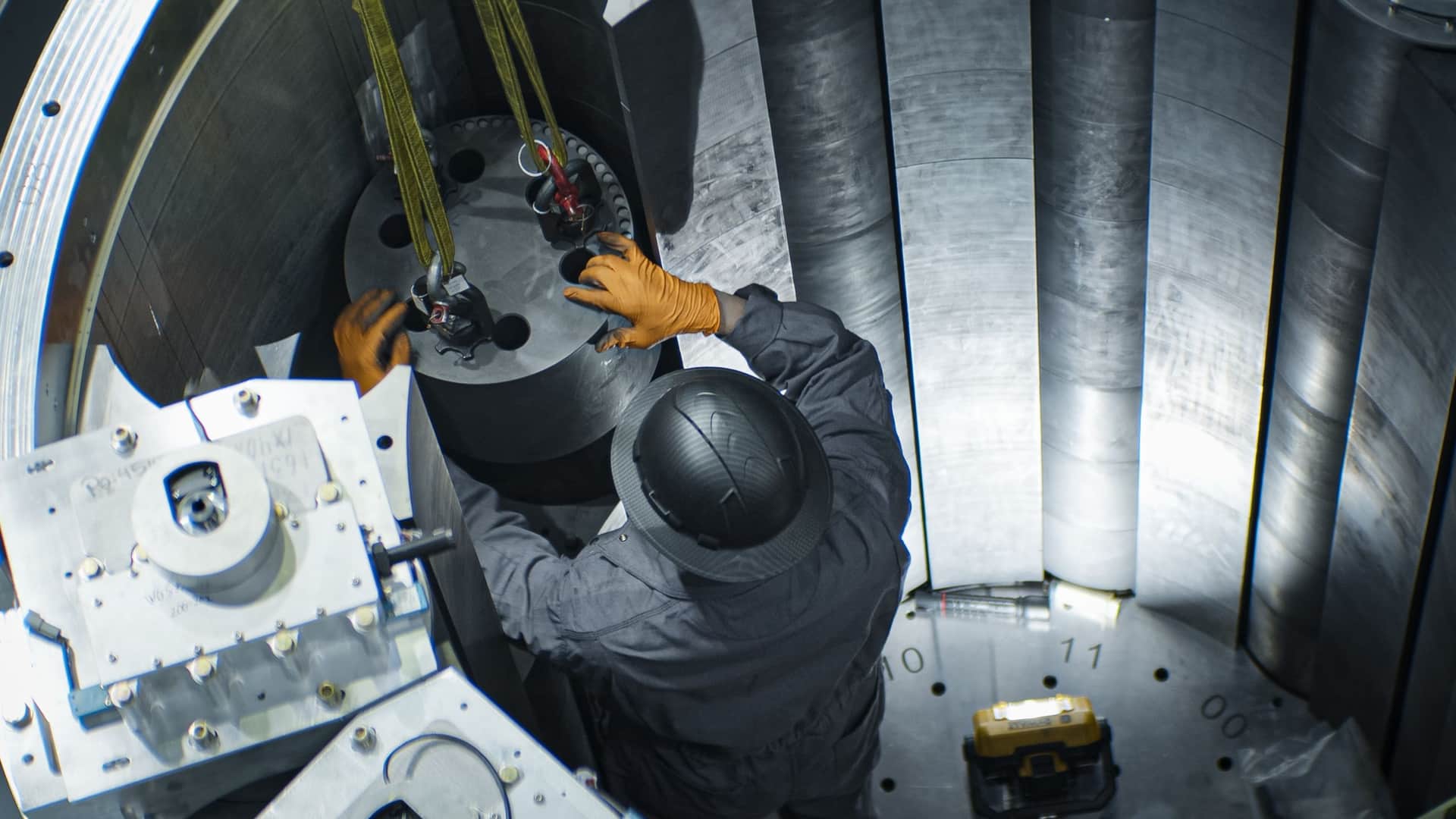
Image: TechRadar
Antares has raised $470 million to develop small nuclear reactors for the US military, giving the California startup capital to pursue a federal deadline for deploying an operating reactor on a domestic military base.
The Torrance-based company’s Series C consists of $370 million in equity and $100 million in debt. Paradigm and Caffeinated Capital co-led the round, with Point72 Ventures, Shine Capital, and Industrious Ventures also participating, according to TechCrunch’s review of PitchBook data.
Mark-0 reaches criticality
The funding arrives seven weeks after Antares' Mark-0 microreactor reached criticality at Idaho National Laboratory. The demonstration was conducted under authorization from the Department of Energy, alongside the DOE, Idaho National Laboratory, and BWX Technologies, with the US Army observing.

Recommended reading
FireSat satellites target fires as small as 1.5 square meters
Antares describes Mark-0 as the “first privately developed non-light-water reactor to achieve criticality in the United States in more than four decades.” Criticality means the reactor achieved a self-sustaining nuclear fission reaction, but Mark-0 was not designed to produce useful electricity.
The company says the test also provides a foundation for its next model. The Mark-1 will use the same full-scale core, facility, and TRISO fuel as Mark-0. Antares plans to build an electricity-producing Mark-1 in 2027, followed by initial deployments to defense customers in 2028.
A September 2028 military deadline
The US military is the startup’s first target customer because an executive order signed by President Donald Trump, titled “Deploying Advanced Nuclear Reactor Technologies for National Security,” requires an operating, Army-regulated nuclear reactor at a domestic military site by September 30, 2028.
Antares is one of three finalists in the Pentagon’s Advanced Nuclear Power for Installations program, which aims to test-deploy a small modular reactor on two different Air Force bases. The company also says it is the first private company to pass through the Department of Energy’s Reactor Pilot Program.
That schedule is central to Antares' strategy. The company is focusing on a customer that is less sensitive to price because of the national-security requirement and the executive-order deadline, rather than attempting to sell reactors broadly from the outset.
Antares CEO Jordan Bramble said the reactor is being engineered to operate reliably for more than six years without refueling once deployed. He also said firm reactor contracts and the new capital would enable the company to build:
“the first microreactor producing useful electricity in a truly commercially viable design.”
Cost and manufacturing risks remain
The military application may support Antares' business case, but financial advisory firm Lazard’s analysis suggests the technology is currently more expensive than all but the most costly gas turbines. Renewables are considerably cheaper, according to the source.
The US advanced-reactor supply chain is also not yet mature. No company has manufactured microreactors at production scale, and a first electricity-producing reactor could expose problems that would not appear in a zero-power demonstration core such as Mark-0.
The company did not disclose the Series C’s valuation or the value of any firm reactor contracts. It also has not demonstrated an electricity-producing Mark-1 yet. For now, the $470 million raise gives Antares the resources to attempt a 2027 build and an initial military deployment by 2028; whether it can place a reactor on a US base before the September 30 deadline remains unresolved.
Frontier Editor
Dan is our resident futurist, covering electric mobility, space exploration, and the smart home. He's interested in atoms just as much as bits. Whether it's a new battery chemistry, a reusable rocket, or a protocol that finally makes IoT devices talk to each other, Dan breaks down the engineering that pushes humanity forward.
via TechRadar