• 3 min read
Aina lands $5.5M to build buttons for AI agents
Founded by Ultrahuman’s former hardware VP, Aina is betting on action-first devices that trigger AI agents instead of passively recording users.

Image: TechCrunch
Aina, a startup based in Bengaluru and San Francisco, has raised $5.5 million to build hardware designed to control AI agents rather than simply capture audio, video, or other context.
The round was led by Redstart Labs (Infoedge, India) and 360 ONE, with participation from MIXI Global Investments, Antler, and Blume Founders Fund. Individual investors included newly appointed WhatsApp head Kunal Shah, Razorpay co-founders Harshil Mathur and Shashank Kumar, and Scribd founder Tikhon Bernstam.
Aina, previously called Project Mirage, was founded by Apoorv Shankar, formerly VP of Hardware at Ultrahuman. Before that, Shankar ran LazyCo, a hardware interface design startup that built gadgets including a ring for controlling devices such as a smartphone. Ultrahuman later acquired LazyCo.
“I left Ultrahuman last year because I was just super curious about the space of AI interfaces.” “Devices like Rabbit and Humane Pin had launched, and I had my own disappointments with them. However, I was just excited that we are seeing interfaces being a thing now. And as an engineer turned product designer, this was the hottest thing I could imagine myself building.”
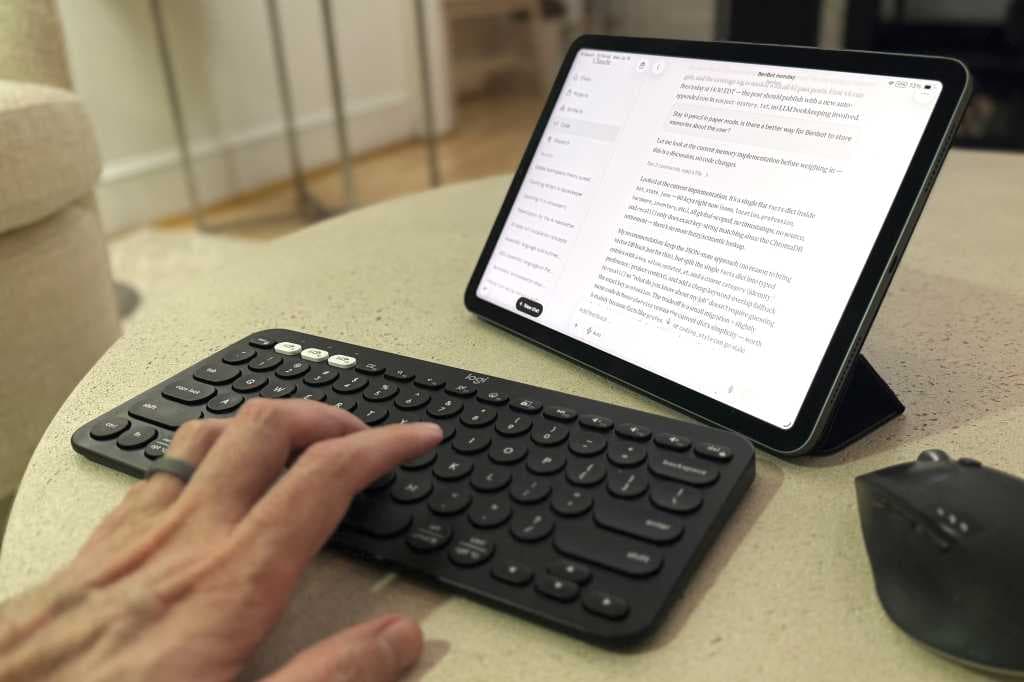
Aina’s first product is Dune, a three-key, context-aware macro keyboard. It can control the mic and camera in a meeting and run shortcuts or scripts based on the app a user is viewing.
Recommended reading
This two-word prompt keeps Claude Code from rushing ahead
The company also developed Radiance, a tabletop remote for video calls with a dial for volume and buttons for mic, camera, AI notetaker, voice modulation, and joining the meeting, as well as Shift, a one-tap button that triggers an AI agent to perform a repeated task through a phone connection.
In early testing, Aina found Dune was the most popular of the three and decided to ship it first, folding in ideas from the other devices. The startup said what it learns from these products will feed into a new device now headed into testing with a small group of users in the coming weeks.
What Aina is building next
Shankar said the next product will not be a passive, always-listening gadget like a ring or meeting recorder. Instead, Aina is aiming for hardware that uses existing context from devices people already own to trigger workflows and agent actions.
“I think you have enough context, you have in your phone and your laptop all the time, and we haven’t even started using that well. We are building an action-oriented device that will use the context to help you control and trigger workflows.”
That puts Aina in a fast-growing category. OpenAI this week released a custom Codex keypad with Work Louder. Rabbit R1 is also positioned as a device for invoking AI agents, and Qualcomm says it is experimenting with more than 40 devices for AI interaction. With no clear winner yet on form factor — whether ring, pin, glasses, keypad, or speaker — startups are still chasing the same question: what hardware will people actually use to control AI agents?

Computing Editor
Tomas lives in the terminal. He covers chips, laptops, and operating systems with a focus on performance and efficiency. He reads kernel changelogs the way other people read fiction, and he's always on the hunt for the perfect mechanical keyboard switch. If it processes data, Tomas has an opinion on it.
via TechCrunch