• 2 min read
1X’s Neo robot hands now unzip jackets and stack Lego
1X has shown off Neo Beta’s new tendon-driven robot hands, which can handle delicate tasks, lift weights, and survive hammer blows.
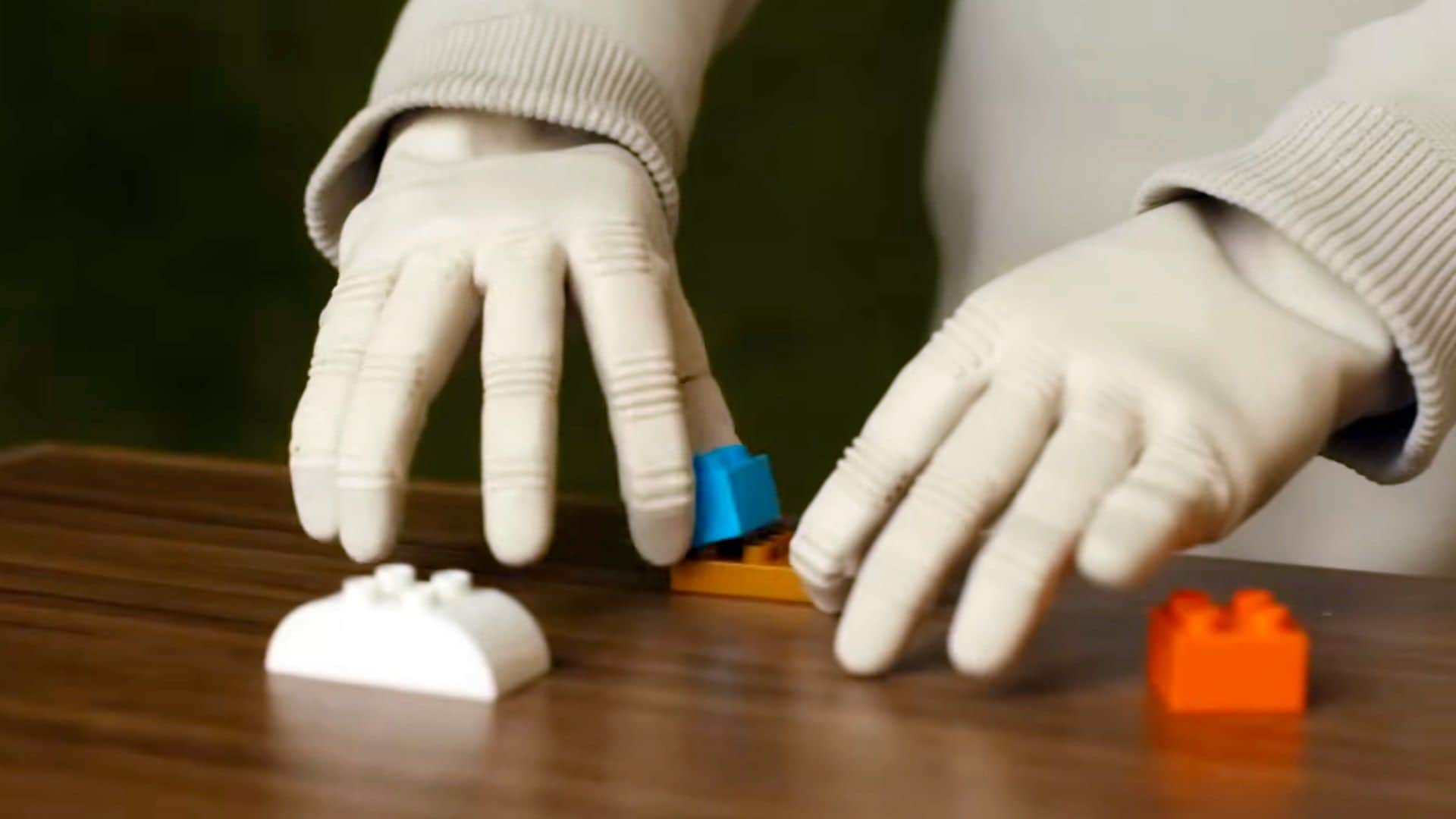
Image: TechRadar
1X has released a new demo of its Neo Beta robot hands, and the headline feature is human-like dexterity. In the video, the hands screw in a lightbulb, pull a chain switch, pluck grapes, pick up a screw, unzip a jacket, open a small bag of Funyuns, and stack Duplo blocks. They also shrug off a few hammer strikes while working.
The design is different from many robotic hands because the motors or servos are moved out of the hand and back along the arm. 1X says the waterproof, rubber-covered hands use a closed-loop tendon-driven system, with tendon-like connectors handling motion and manipulation. The approach keeps the hand smaller and more flexible, while more closely resembling how human hands work.
According to 1X, the fingers, palm, and thumb offer 25 degrees of freedom. The video also shows the fingers bending backward farther than a human hand normally would. Alongside dexterity, the hands show notable strength, lifting a 20 lb. dumbbell and curling a smaller pulley weight with a single finger.
Sensors in the fingers help the robot detect grip and adjust force, which is how the hand can handle fragile objects like a lightbulb without crushing it. TechRadar notes that this is a different kind of precision from the recently reported robot gall-bladder surgery on a pig, where robots manipulated laparoscopic tools rather than directly handling scalpels.
1X says these hands will generate new real-world training data for its robots. They are also meant for practical use: in the demo, a Neo Beta robot picks up its MagSafe-style charging puck and attaches it to its hip.

Recommended reading
MLB draws a line on AI iPads in dugouts
The company’s $20,000 Neo is expected to reach consumer homes, with early adopters possibly receiving units now.

AI Editor
Ava covers the rapidly evolving world of artificial intelligence, from foundational models and research labs to the real-world economics of intelligence. With a background in computational linguistics, she cuts through the hype to find out what actually works. She firmly believes that benchmarks are just marketing until reproduced in the wild.
via TechRadar