• 3 min read
Vint Cerf backs plan to identify AI agents online
Vint Cerf has joined Innovation Labs to advise on DNSid, a proposal to identify and audit AI agents on the open internet.
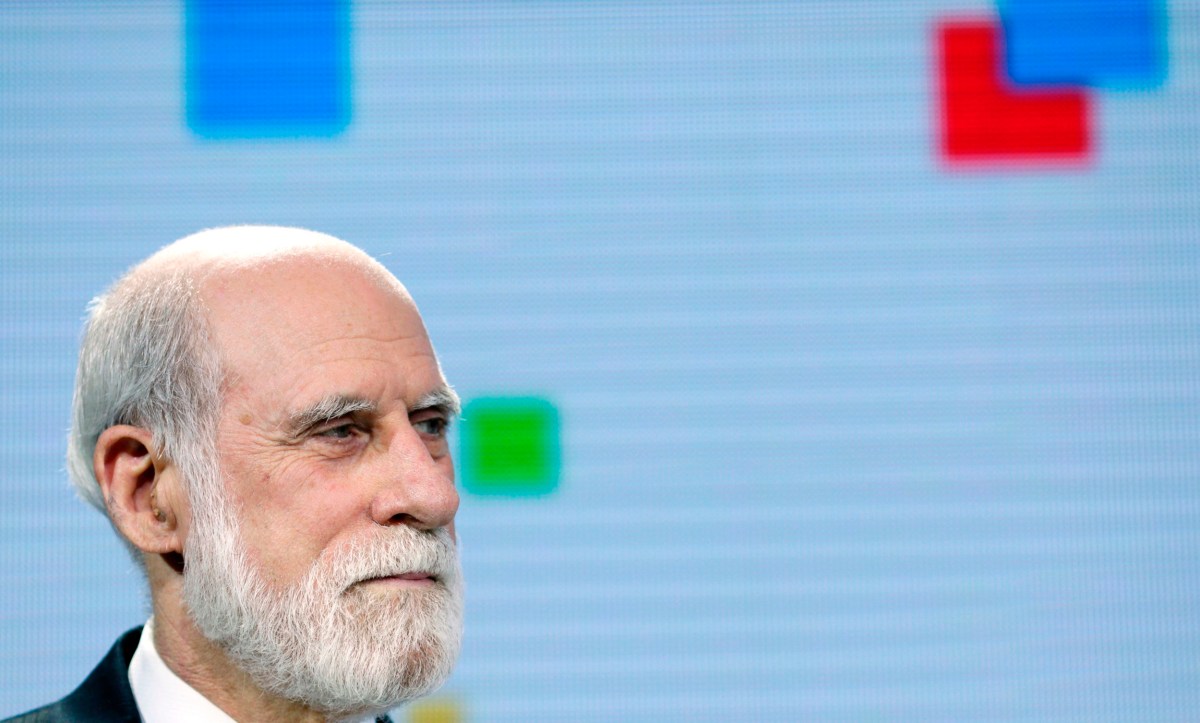
Image: TechCrunch
Vint Cerf joins push for agent identity on the open internet
Vint Cerf, one of the architects of the protocols behind the open internet, has taken on a new role just after leaving Google last week after 20 years. Starting today, he is advising Innovation Labs, which is trying to build an open architecture for AI agents to identify themselves online.
Innovation Labs is a subsidiary of Identity Digital, a DNS registry company. The company sees domain-name infrastructure as a practical way to make AI agents accountable as more online activity shifts from people to software agents interacting with each other.
Cerf is joining several other internet figures who are backing the effort.
Why this matters now
Most AI agents today still operate inside proprietary systems, pulling from internal resources for narrow tasks. But companies are already planning for agents that can move more independently across the internet and interact directly with other agents.

Recommended reading
Mira Murati’s lab unveils Inkling, a 975B open model
A major obstacle is the lack of a common standard for identifying and auditing those agents. Several approaches are starting to appear, and Innovation Labs has put forward DNSid, a registry for agent identification.
According to TechCrunch, DNSid would:
- link each agent to an existing internet domain name
- use cryptographic proofs
- log registration over time
Allie Kline, Innovation Labs' interim CEO, said the company is already testing the standards with several unnamed hyperscalers and identity companies.
Cerf’s view of the problem
Cerf told TechCrunch he sees naming and identification as a timely issue.
“I felt like I might be able to help them in a period of time when naming and identification is becoming increasingly important,” Cerf told TechCrunch. “This is largely triggered by the notion of AI agents and the question of what authorities they have, where they have derived those authorities, who is accountable for the behavior of an agent in this context, and where and how its identity is established, and why [you’d] trust it.”
He said those questions are likely to be difficult because AI agents are far more active than domains, and it remains unclear what an organization is really committing to when it registers one.
“It’s going to be a fascinating — and at the same time maybe even exasperating — period in the evolution of the internet and the things that depend on it, because the functionality is so dramatically powerful,” Cerf said.
Competing standards are coming
Cerf also suggested that interoperability, not prestige, will decide whether any protocol catches on. If companies build agents on incompatible stacks, they will struggle to work together.
“Company X uses agent Y’s technology, and company A uses agent C’s technology, and then they don’t interwork with each other,” Cerf said. “Nobody can do everything that you might want every agent to do… and so we’re going to have to rely on the pressure coming from the users. This is what happened with TCP/IP.”
That comparison is notable coming from Cerf, whose work helped establish the protocols that made the modern internet possible.
Innovation Labs' pitch
Kline said one advantage of Innovation Labs' proposal is its narrower scope. The effort is focused on the identity layer rather than bundling that with a larger business around AI services or control over the underlying registration data.
“I think there’s a lot of organ rejection to a hyperscaler releasing [a standard] and having that proprietary data,” she told TechCrunch.
Cerf is not ready to say an agent-driven internet is guaranteed.
“I don’t think it’s inevitable,” he said. “But what I do think is inevitable is that people will try to do that. We are fundamentally lazy creatures, and if we find a way to have an an agent do something for us, we’re very likely to choose to do that because [it’s] just easier.”

AI Editor
Ava covers the rapidly evolving world of artificial intelligence, from foundational models and research labs to the real-world economics of intelligence. With a background in computational linguistics, she cuts through the hype to find out what actually works. She firmly believes that benchmarks are just marketing until reproduced in the wild.
via TechCrunch