• 4 min read
Uber bets $100 million on former CEO Kalanick
Uber invested $100 million in Travis Kalanick’s Atoms as Tesla reported a 36% drop in paid Robotaxi miles and delayed key production targets.

Image: TechCrunch
Tesla’s latest earnings exposed a sharp decline in paid Robotaxi miles, but the biggest mobility deal this week involved Uber investing $100 million in a company tied to its former CEO, Travis Kalanick.
Tesla’s Robotaxi miles fall 36%
Tesla’s shareholder letter and Elon Musk’s earnings-call remarks revealed that the company has backed away from previous promises to reach “volume production” of the Cybercab, Tesla Semi, and Megapack 3 in 2026. Tesla has also promoted plans to expand its Robotaxi service into more cities in Florida and Texas.
But a closer reading of Tesla’s data shows paid Robotaxi miles falling quarter over quarter. Tesla’s Model Y Robotaxi fleet covered around 1.1 million miles in the first quarter, compared with roughly 700,000 miles in the second quarter—a decline of about 36%.
Musk also said Tesla must collect Cybercab-specific driving data before deploying large numbers of the vehicles. To do that, the company is using Cybercabs retrofitted with steering wheels, accelerator pedals, and brake pedals to calibrate the system to the vehicle’s chassis.
Recommended reading
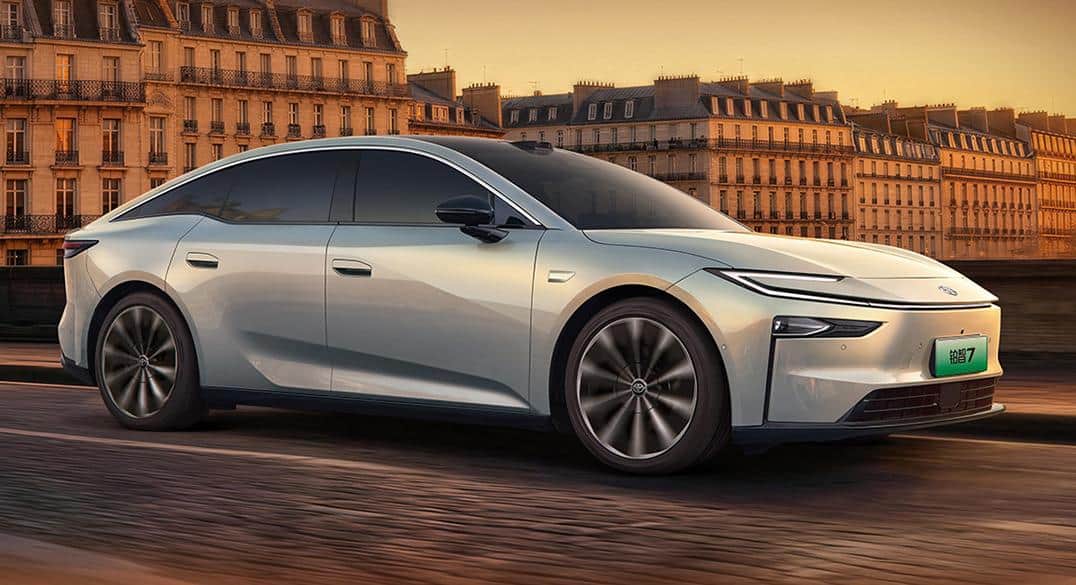
Toyota promises lifetime battery coverage for two EVs
That explanation appears to conflict with Tesla’s longstanding claim that its fleet of nearly 10 million customer vehicles has been collecting data for Full Self-Driving (Supervised) and future robotaxis. It suggests that existing fleet data may not transfer cleanly to the Cybercab.
Tesla’s second-quarter financial results showed heavy investment in next-generation products: capital expenditures doubled, free cash flow returned to negative territory, and net income fell 5% year over year despite higher revenue.
Uber invests in Kalanick’s Atoms
Travis Kalanick has raised $1.7 billion for Atoms, the rebranded holding company above his ghost-kitchen project. Atoms also recently agreed to acquire Pronto, Anthony Levandowski’s industrial automation startup.
Andreessen Horowitz led the funding round, with participation from Bain Capital, Fifth Wall, and Uber. Ben Horowitz will join Atoms' board. The Information reported that Uber invested $100 million, and subsequent reporting confirmed the investment was made six months ago.
The deal is striking given Kalanick’s resignation from Uber nearly a decade ago after a period marked by scandals and lawsuits. Uber’s participation also revives its complicated history with Levandowski. In 2016, while Kalanick was CEO, Uber acquired Levandowski’s self-driving truck startup Otto. Less than a year later, Waymo sued Uber for trade-secret theft; the companies settled on the fifth day of the trial.
Atoms has provided few details about its plans, but an email from Levandowski says Pronto will be central to the strategy:
“Atoms is investing heavily in Industrial AI and physical automation applied to mining and transport.” — Anthony Levandowski “Pronto is a core strategic priority for Atoms, and this round is designed to accelerate exactly what matters most to your operations: scaling practical, OEM-agnostic autonomy.”
Image credit: Bryce Durbin
Other deals included Einride’s $38 million all-stock acquisition of EV charging startup Flipturn, IBM’s agreement to buy quantum computing research lab HRL Laboratories, and Sila’s $300 million funding round. Sila plans to expand its Washington state factory to produce enough anode material for more than 100,000 EVs.
Driverless trucks, Apple Maps, and Waymo safety data
Aurora launched its second-generation driverless trucks with smaller hardware, upgraded sensor-cleaning systems, and extended-range lidar designed for a million-mile service life. The initial fleet will operate on the Dallas-to-Houston route, eventually growing to 200 trucks by the end of the year for customers including Hirschbach, Uber Freight, McLane, and Detmar. The trucks will operate without a human observer in the cab.
Ford will integrate Apple Maps navigation and mapping through MapKit for Automotive into its next electric vehicles, beginning with a $30,000 midsize truck in 2027. Ford said the move does not change Google Automotive Services' role in current and near-term production programs.
The Insurance Institute for Highway Safety found that Waymo robotaxis had a 68% lower overall crash rate than human drivers when police-reportable crashes were included. The study also said national crash and vehicle-miles-traveled data for Level 4 vehicles needs to improve.
Elsewhere, Mobileye CEO Amnon Shashua plans to step down after nearly three decades. NHTSA will examine requirements for safe vehicle exits after a petition concerning emergency mechanical door releases in 2022 Tesla Model 3 vehicles. Rivian sued the U.S. government for a full refund of tariffs paid under President Trump’s “Liberation Day” taxes, and two Volkswagen engineers were charged with securities fraud over alleged insider trading tied to the company’s Rivian joint venture.
Waymo is also discussing how to end its Uber contract. The agreement covering Atlanta and Austin ends in May 2028, while Uber told TechCrunch that Waymo intends to launch its own app in both cities in January 2028.
Image credit: Bryce Durbin
Frontier Editor
Dan is our resident futurist, covering electric mobility, space exploration, and the smart home. He's interested in atoms just as much as bits. Whether it's a new battery chemistry, a reusable rocket, or a protocol that finally makes IoT devices talk to each other, Dan breaks down the engineering that pushes humanity forward.
via TechCrunch