• 3 min read
Musk Says SpaceX Could Outvalue Earth
Elon Musk says SpaceX could be worth more than Earth’s $600 trillion in material assets if Starship achieves its long-term goals.
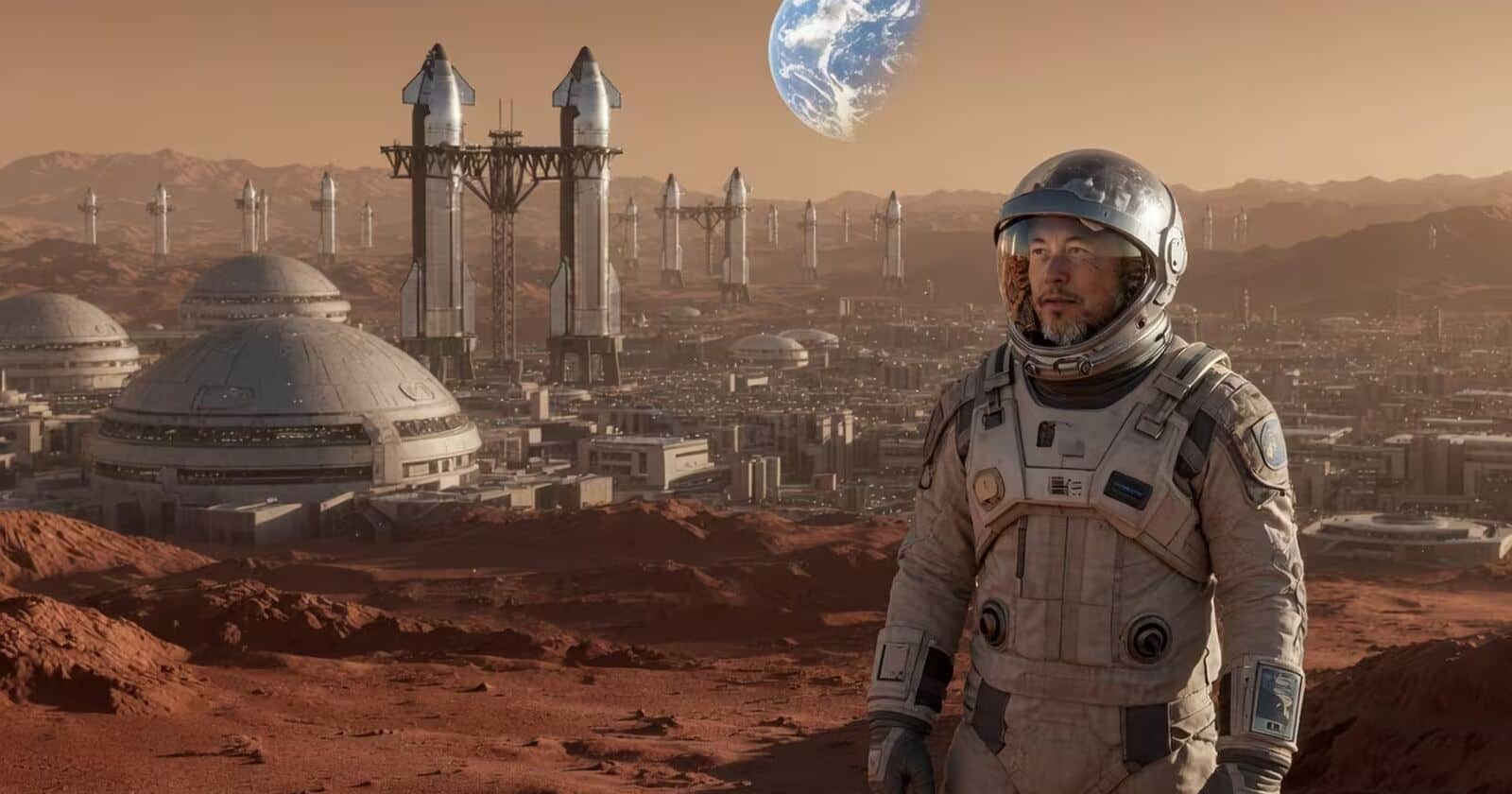
Image: ITzine
SpaceX could one day be worth more than all of Earth’s material assets, Elon Musk said, tying the company’s long-term valuation to access to resources in space.
The claim followed a post by Peter Diamandis, who estimated the combined value of the planet’s material assets at roughly $600 trillion. Musk responded without his usual qualifications:
“I said that SpaceX will be worth more than Earth if we achieve our goals. Obviously, that’s true.”
Musk also took aim at investors betting against SpaceX, saying those short positions have very low odds of surviving for long.
His comments arrived as SpaceX’s valuation faced fresh pressure after the cancellation of one launch involving the heavy-lift Starship rocket. The company’s shares are already trading below the price of its most recent funding round, which was $135. Against that backdrop, the claim of a valuation exceeding Earth sounds particularly stark.
SpaceX’s valuation and its space-resource thesis
Musk’s strategy has remained consistent for years. He is building SpaceX as more than a launch provider: the company combines recurring launches, satellite internet and a longer-term plan for interplanetary logistics.

Recommended reading
U.S. licenses commercial seawater uranium extraction
Starlink is already generating revenue, while Starship is intended to make moving cargo into space significantly cheaper and enable larger missions. SpaceX also has established commercial operations through Falcon 9, one of the most in-demand rockets in the commercial launch market.
That gives the company a rare combination: revenue is already flowing from existing businesses, while its most expensive project has yet to demonstrate its full capabilities. Competitors including United Launch Alliance, Arianespace and Blue Origin each have important strengths, but none combines satellite internet, high-volume launches and a super-heavy rocket under development in the same way.
That mix helps explain why private-market valuations for SpaceX have remained at levels that would appear almost fantastical for a conventional aerospace company.
Starship’s role in the valuation
Starship remains the central piece of the argument. The vehicle is supposed to reduce the cost of launching large payloads and support the missions Musk has associated with SpaceX for years: the Moon, Mars and heavy orbital infrastructure.
For now, every test affects both engineering plans and investor sentiment. Markets see SpaceX as an asset with enormous potential and equally significant risk. Its valuation sits between two realities: an operating business with the world’s largest satellite network, and an expensive flagship project that has not yet proven it can work at the scale needed to support claims of a value greater than Earth’s.
The practical test will be Starship Flight 13, which was postponed to Monday, July 20. A smoother test campaign would give SpaceX another argument for a valuation based on higher launch volumes and the commercialization of orbit. A setback would return the debate to a simpler question: how many future promises is the market willing to pay for in advance?

Frontier Editor
Dan is our resident futurist, covering electric mobility, space exploration, and the smart home. He's interested in atoms just as much as bits. Whether it's a new battery chemistry, a reusable rocket, or a protocol that finally makes IoT devices talk to each other, Dan breaks down the engineering that pushes humanity forward.
via ITzine