• 2 min read
Musk-Altman feud exposes orbital AI data-center gap
Musk and Altman’s dispute highlights the gap between orbital AI data-center plans and the launch costs, satellite production, and reusability they require.
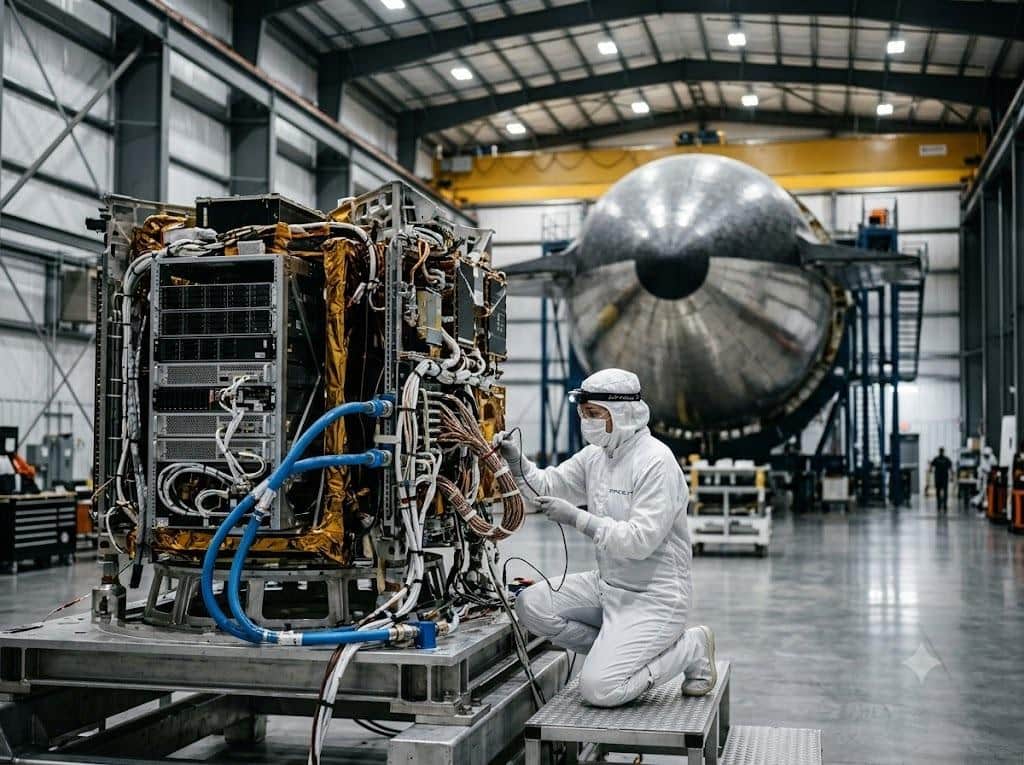
Image: iXBT
Elon Musk and Sam Altman’s public dispute has highlighted a basic problem with orbital data centers for artificial intelligence: SpaceX’s vision depends on launch costs and satellite production capabilities that do not yet exist at the required scale.
The argument began after Musk accused Altman of fraud in a public post. Altman responded by criticizing SpaceX’s plans to put computing systems into orbit, including satellites designed to process AI-model requests.
“Musk is offering public-market investors a concept of space data centers on an overly short timeline.”
The Starship dependency
Supporters say orbital data centers could add computing capacity for AI systems and create a new form of cloud service in space. Aerospace specialists, however, point to two major constraints: much cheaper launches and the ability to manufacture powerful satellites in large quantities.
SpaceX’s answer is Starship, which the company intends to operate as a fully reusable system capable of sharply reducing the cost of placing payloads in orbit. Even if both stages are successfully recovered during upcoming test flights, that would not immediately lead to routine commercial launches. Operational reusability could still be several years away.
SpaceX has also told investors that Starship may initially operate without full reusability, with the second stage lost after each launch. That model would make an economically viable orbital data-center infrastructure far harder to build.

Recommended reading
Copilot Could Diagnose Your PC—If It Doesn’t Slow It Down
Individual satellites carrying computing equipment could launch in the coming years. Mass deployment, however, depends on technologies that may not arrive until the 2030s.

AI Editor
Ava covers the rapidly evolving world of artificial intelligence, from foundational models and research labs to the real-world economics of intelligence. With a background in computational linguistics, she cuts through the hype to find out what actually works. She firmly believes that benchmarks are just marketing until reproduced in the wild.
via iXBT