• 3 min read
Orbital data centers ditch pumps in new US patent
Sophia Space and Caltech patented TILE, an orbital data-center design using solar power and passive infrared heat rejection instead of liquid cooling.
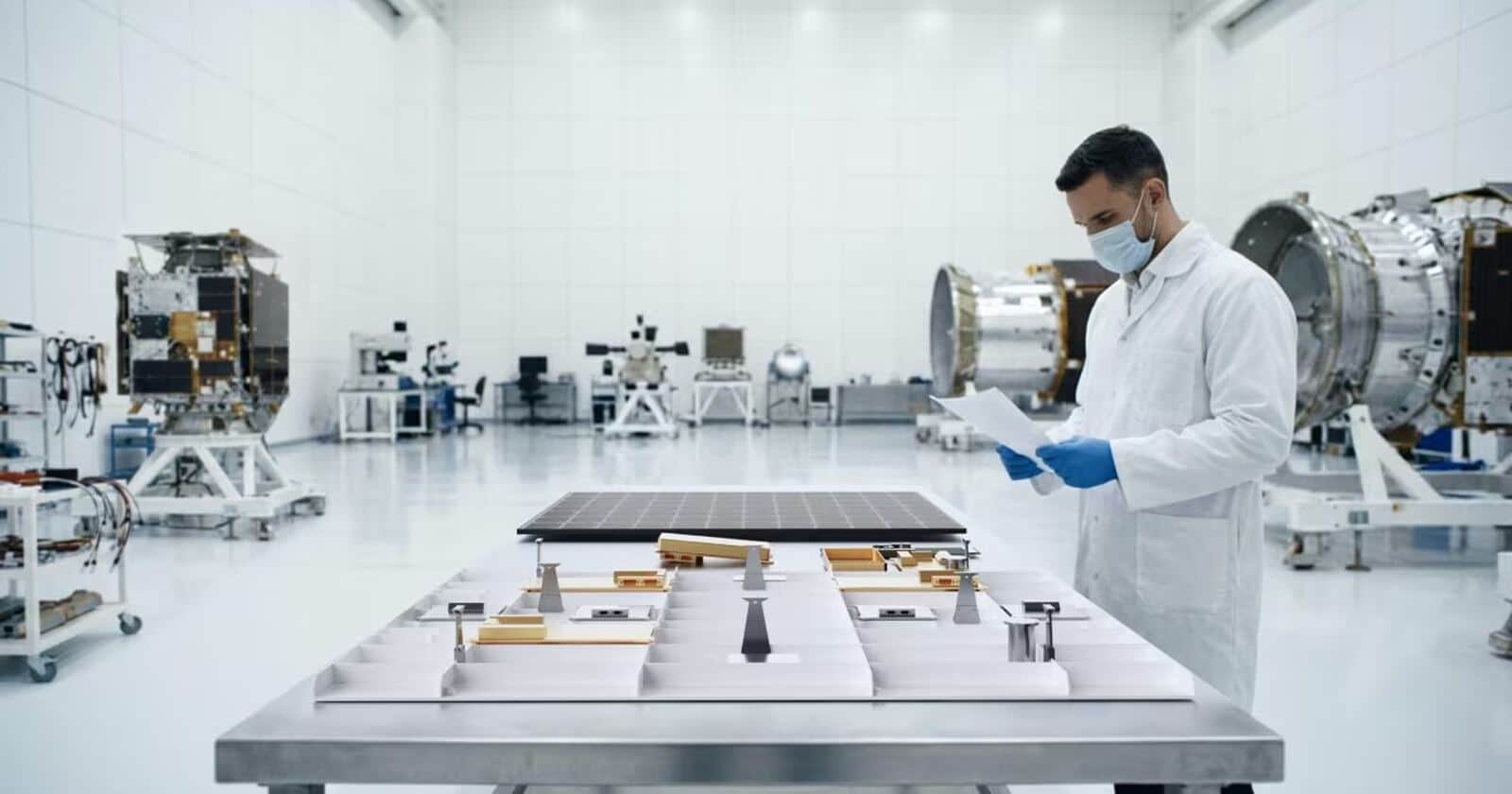
Image: ITzine
Sophia Space and the California Institute of Technology have received a US patent for a modular architecture for orbital data centers that eliminates the pumps, pipes and liquid-cooling loops common in terrestrial facilities. The patent was issued on July 14.
The design uses solar power and rejects heat directly into the vacuum of space. Instead of transferring heat to air or a liquid heat exchanger, the system radiates it away as infrared energy from the outside of each module.
How Sophia Space’s TILE modules work
The architecture is built around scalable computing and storage units called TILE. Rather than placing all the hardware inside one large satellite with shared infrastructure, Sophia Space proposes connecting independent modules as demand grows. A new TILE can be added without rebuilding the wider orbital platform.
Each module is designed to:
Recommended reading
China launches Tianlian III-01 relay satellite
- Support four processors;
- Generate power using solar cells on the sun-facing side;
- Release heat through the opposite side of its enclosure;
- Communicate with other modules through fiber-optic links;
- Operate without shared power or heat-transfer loops.
That separation is central to the concept. In a conventional data center, heat must be collected from servers, moved to a heat exchanger and then discharged. TILE instead places the heat-rejection function at the module’s outer surface, allowing the vacuum environment to serve as the final stage of the cooling process.
The approach also reduces the number of mechanical components. Removing pumps, pipelines and common liquid circuits means fewer moving parts, lower mass and fewer potential failure points. Independent modules should also make the system easier to expand, because each computing unit is not dependent on a central cooling installation.
The patent describes the architecture, but the source does not provide performance figures for processor capacity, heat-rejection rates or energy efficiency. It also does not establish that the system has already operated under a sustained computing load.
Why orbital data centers are attracting renewed interest
The project grew out of Caltech’s Space-based Solar Power Project, which studied systems for collecting solar energy in space. The attraction is straightforward: orbital hardware can access sunlight without the cloud cover, nighttime interruptions and grid constraints faced by large terrestrial computing facilities.
That idea is being revisited as operators confront two linked problems: rapidly rising demand for computing capacity for AI workloads and the difficulty of removing heat from increasingly dense server racks. Operators in the United States and Europe are discussing power shortages, delays in connecting new data centers to electrical grids and rising cooling costs.
These pressures give orbital computing projects a reason to seek serious evaluation. Moving computation beyond ground infrastructure could address some limits on power availability and cooling, but it would still have to compete with improvements on Earth. Ground-based data centers are adopting liquid cooling, locating near cheaper energy and shifting workloads to regions with surplus generation.
The source does not include a cost model or a comparison with those terrestrial approaches. As a result, the patent demonstrates a specific engineering strategy, not commercial viability. Orbital data centers would need to prove both that passive radiation cooling can handle real workloads and that the resulting system makes economic sense.
TILE testing and launch plans
Sophia Space plans to conduct the first TILE test in orbit in 2027. The company expects to begin selling modules in 2028, followed by testing a full constellation of four to six spacecraft in 2029–2030.
The startup has raised $22 million and is working with Caltech. Its next two years will therefore test more than the basic idea of an orbital data center: they will show whether a modular unit with passive cooling can sustain practical computing loads in orbit.
Frontier Editor
Dan is our resident futurist, covering electric mobility, space exploration, and the smart home. He's interested in atoms just as much as bits. Whether it's a new battery chemistry, a reusable rocket, or a protocol that finally makes IoT devices talk to each other, Dan breaks down the engineering that pushes humanity forward.
via ITzine