• 4 min read
Smart glasses face a privacy test
Smart glasses are selling rapidly despite privacy concerns over hidden recording, disabled indicators, face recognition, and proposed California rules.
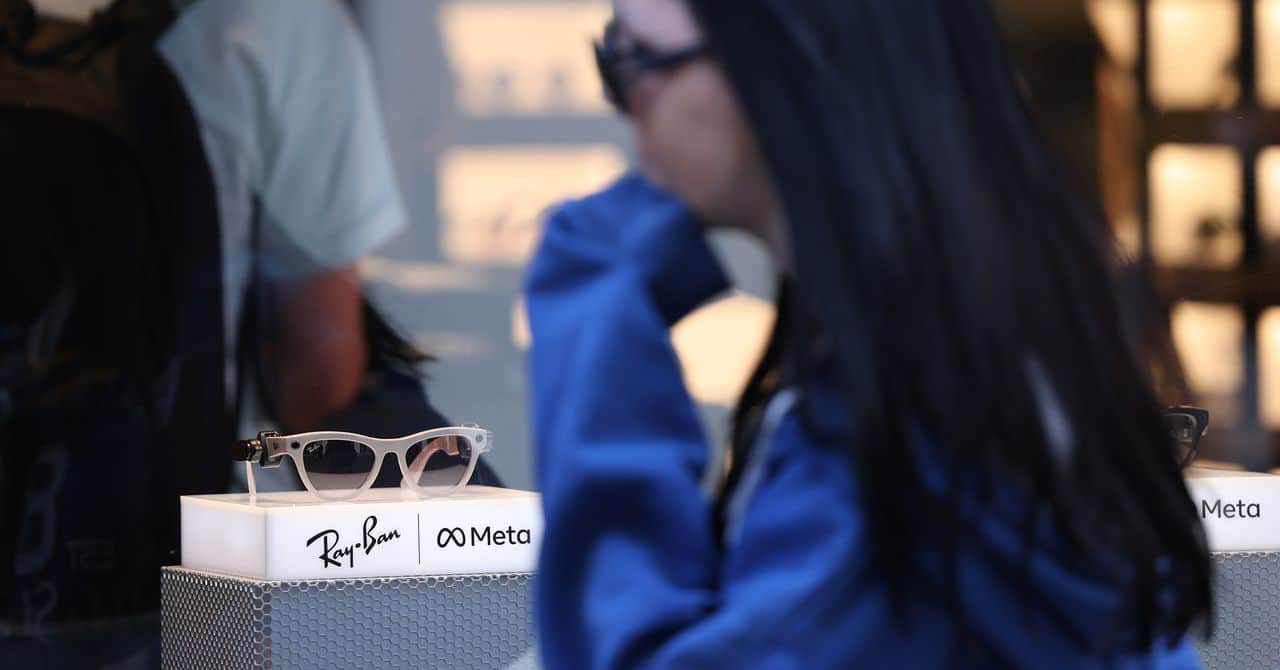
Image: Wired
Smart glasses are gaining momentum, but their built-in cameras are creating a privacy problem that smartphones largely avoided. The devices can capture images, audio, and video from the wearer’s point of view without requiring them to raise a phone, making recording less conspicuous.
Meta’s glasses put privacy concerns in focus
Meta is the largest company in the category and the main target of criticism. Its smart glasses include an indicator light intended to warn people nearby when recording is active. Some users have found ways to bypass the safeguard and disable the light, prompting Meta to add anti-tamper features that shut down the glasses if they have been modified.
Meta also briefly built face recognition into its software. Earlier this year, WIRED reported on a feature called Name Tag, which would have added face-recognition capabilities to the glasses. Meta later removed the code from its app. CTO Andrew Bosworth confirmed that Name Tag existed on The Atlantic’s podcast The Most Interesting Thing in AI.
At an event in June, Meta said it was considering camera-free smart glasses. The privacy debate is likely to intensify as Google and Samsung enter the market later this year. Apple is reportedly developing smart glasses for 2027, although production has reportedly been delayed to address privacy issues.
Be seeing you! Photograph: Julian Chokkattu/WIRED

Recommended reading
Google pulls Nano Banana from Earth after one day
Why smart glasses are harder to make discreet
The basic privacy concern is not new. Privacy advocates objected when cameras were added to smartphones, laptops, and other personal devices. But a phone usually has to be pulled out, held up, and activated before it records. Smart glasses can record through small, built-in cameras while appearing to be ordinary eyewear.
“The fact that they are designed to be innocuous is the biggest difference. Someone pointing their phone or a camera is going to be pretty obvious. Even with a phone, you can’t totally disguise what you’re doing.”
Making the recording indicator brighter or the hardware more visibly camera-equipped could help. Snapchat’s early, bold camera glasses took that approach. But consumers generally want glasses that look normal, and the conspicuous Google Glass headsets released in 2013 were mocked as “Glassholes.”
Jitesh Ubrani, director of research on consumer devices at International Data Corporation, says that creates a fundamental conflict: people want the capabilities of smart glasses while also wanting them to resemble conventional glasses.
“I don’t think it’s really possible to create such a pair of smart glasses. There is certainly a market incentive, right? People want this kind of thing, but at the same time, they also want glasses that look normal and look like regular glasses.”
Camera-free designs and physical safeguards
Privacy-focused alternatives are already appearing. Even Realities makes glasses without cameras, deliberately separating its products from Meta’s approach. The new Solos frames include a privacy shield that users can place over the camera lenses in sensitive environments.
The demand for safeguards exists alongside strong interest in the products. Meta has sold tens of millions of units, and sales are reportedly stronger than ever despite criticism from technology watchdogs and the public. Users cite quick photos and GoPro-style video, including footage of mountain-bike rides, as practical reasons to wear them.
The glasses also support accessibility features. Artificial intelligence can provide real-time captions for conversations, while Meta’s partnership with Be My Eyes uses the glasses' camera to help visually impaired people interact with the world around them.
Matt Margolis, vice president of business development at enterprise optics manufacturer Vuzix, sees the debate itself as evidence that the market is approaching broader adoption.
“The fact that it’s even a discussion point is really great for the industry. If it didn’t matter, it wouldn’t be a point of focus, which means we’re really close to having critical mass of products into the market.”
Proposed rules for recording indicators
Stacey Higginbotham, a policy fellow at Consumer Reports, argues that smart glasses do not have to become a privacy nightmare, but says current social and economic incentives push companies in that direction. She and Justin Brookman, Consumer Reports' director of technology policy, are advocating for legislation in the California Senate.
The proposal would require devices capable of recording audio and video to include visible indicators and would prohibit users from disabling those indicators. It comes as other surveillance systems face growing criticism, including Flock cameras recording in streets and the surveillance network at Madison Square Garden.
“As technology develops and has the capacity to increasingly collect everything about all of us all the time, then that’s where policy needs to come in.”
The source does not say whether the California legislation has advanced, nor does it identify a release date for Meta’s possible camera-free glasses. For now, the central design problem remains unresolved: the more ordinary smart glasses look, the harder it is for bystanders to know when they are being recorded.
AI Editor
Ava covers the rapidly evolving world of artificial intelligence, from foundational models and research labs to the real-world economics of intelligence. With a background in computational linguistics, she cuts through the hype to find out what actually works. She firmly believes that benchmarks are just marketing until reproduced in the wild.
via Wired