• 3 min read
Google pulls Nano Banana from Earth after one day
Google pulled its Nano Banana 2 image tool from Google Earth after users created and shared deceptive real-world scenes.
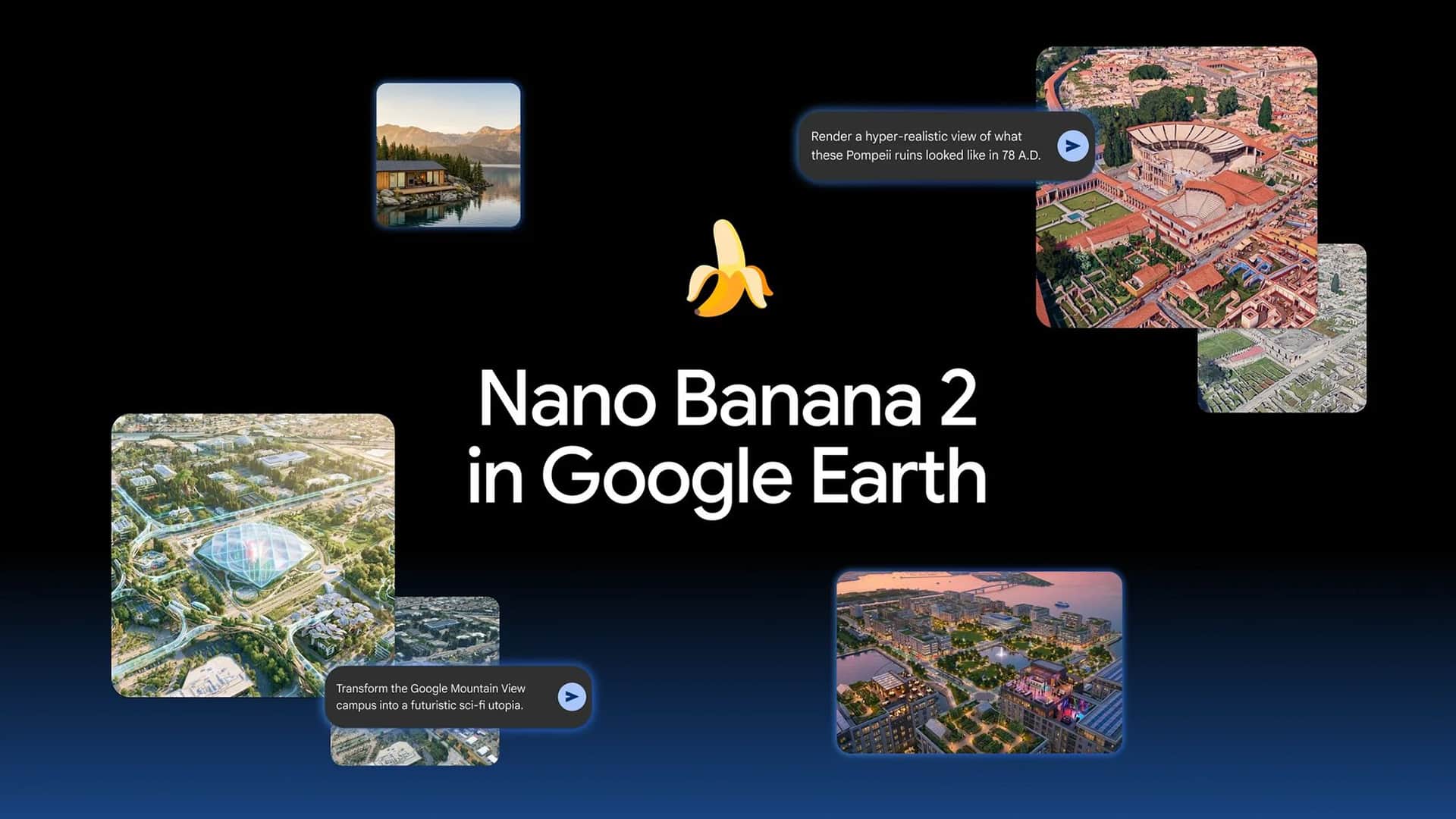
Image: TechRadar
Google has pulled an AI image-generation feature from Google Earth after it was used to create and share deceptive images of natural disasters, terrorist attacks, giant sinkholes, alien activity and refugee populations in places where those events never occurred.
The feature was available for only one day, according to TechRadar’s report. Its rapid removal shows how quickly a tool can be redirected from benign demonstrations to misinformation—particularly when generated content is built on top of imagery that users already perceive as authoritative.
How Google Earth’s Nano Banana feature worked
The feature brought Nano Banana 2, Google’s image-generation model, into Google Earth on the web. Google had previously promoted Nano Banana 2 in the Gemini app, but the Earth integration added a new layer: users could generate images grounded in Google Earth’s existing satellite, aerial and 3D imagery.
Users only needed to enter a text prompt. Google Earth would combine its real-world geographic data with the model’s generated content to produce a custom image. Google suggested uses including:
- Creating an infographic about the Statue of Liberty
- Visualizing a dream home beside a lake
- Showing what a neighborhood might look like 100 years in the future
- Reimagining Pompeii before the eruption of Mount Vesuvius buried it in ash and rock
Google described the feature as a way to “generate custom images to help you visualize history, create real estate plans, and more.”
Recommended reading
Smart glasses face a privacy test
“For the first time, you can generate custom images using Google Earth’s satellite, aerial, and 3D imagery alongside Nano Banana, which creates concepts grounded in the real world.”
The model itself was not new. The significant change was placing its output alongside accurate, recognizable imagery from Google Earth, giving fabricated scenes a stronger appearance of authenticity.
Why Google removed the feature
The tool was quickly used to create deceptive images that were then widely shared on social media. Some were jokes, but others were made deliberately to spread confusion and misinformation. The use of real Google Earth imagery made those fakes appear more credible than entirely synthetic images might have been.
Google said it saw a flood of images “that appear to violate our policies” and was therefore removing the feature while it develops stronger protections.
“We’re rolling back this feature in Google Earth while we work on implementing stronger guardrails.”
The company also said that generated images did not appear in the main Google Earth experience for other users and were watermarked as AI-generated. That safeguard did not prevent users from exporting or sharing the images elsewhere, however, and the feature was pulled before Google announced when it might return.
The problem with adding AI everywhere
The episode has also fueled criticism from users who say some products do not need an AI prompt box. TechRadar reports that Reddit users described a feature like this as having “zero use” and complained that AI was being “shoved down our throats.”
The article points to Microsoft’s recent rollback of some AI features in Notepad after user complaints. In both cases, the issue is not simply whether the technology works, but whether it belongs in a product whose value is tied to simplicity or trusted information.
Google’s withdrawal also illustrates the gap between a controlled product demonstration and public use. Before releasing an AI feature, companies must account for people immediately testing its limits in deceptive and harmful ways, rather than relying only on intended use cases.
For users, the practical consequence is broader skepticism toward images and videos from untrusted sources. Google’s feature included watermarks, but the company’s own statement confirms that stronger guardrails were still needed after the first day of public availability.
AI Editor
Ava covers the rapidly evolving world of artificial intelligence, from foundational models and research labs to the real-world economics of intelligence. With a background in computational linguistics, she cuts through the hype to find out what actually works. She firmly believes that benchmarks are just marketing until reproduced in the wild.
via TechRadar