• 4 min read
SpaceX alum Senra raises $65M to modernize wire harnesses
Senra, founded by a former SpaceX engineer, raised $65M Series B to bring software and automation to Cold War–era wire harness manufacturing.
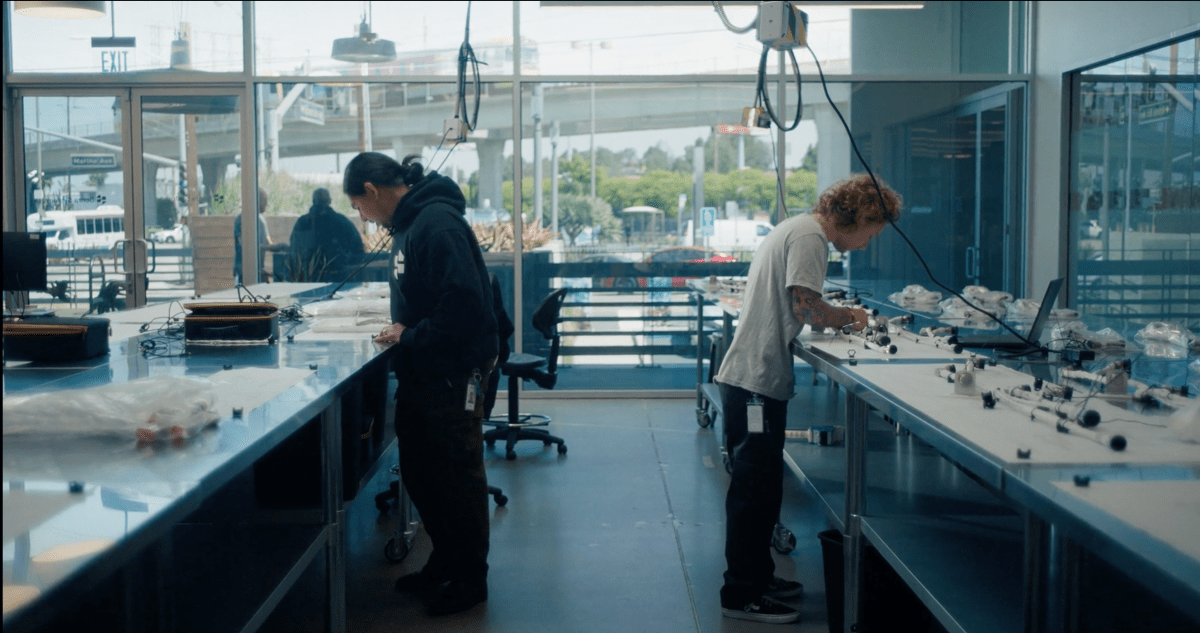
Image: TechCrunch
From Starship wiring headaches to a new startup
When Senra CEO Jordan Black was an engineer at SpaceX, he was tasked with scaling the company’s wire harnesses for Starship, the next‑generation rocket. Wire harnesses are exactly what they sound like: internal electrical cabling running through a rocket, car, plane, or tractor, and they get more critical as those systems add sensors and compute.
They’re typically custom‑built by technicians who function as skilled craftspeople.
“I traveled all over the world to go visit wire harness companies,” Black told TechCrunch last month. “It really hasn’t changed since the Cold War era of wooden tables [and] manual processes.”
Black and co‑founder Benjamin Shanahan launched Senra in 2023 to offer a more modern stack to vehicle manufacturers.
$65M to update a Cold War process
Senra is announcing a $65 million Series B round, co‑led by Lowercarbon and Interlagos, with participation from General Catalyst, Sequoia Capital, Andreessen Horowitz, and Founders Fund, among others.
Recommended reading
Mira Murati’s lab unveils Inkling, a 975B open model
The company is not trying to remove humans from the process entirely, at least not yet. Robots still struggle to manipulate flexible wires, and relevant training data is limited. Instead, Senra is focused on software tools and targeted automation that wrap around and upgrade traditional manual work.
Defense cash and mission‑critical wiring
Senra is benefiting from the current surge of investment into U.S. manufacturing, particularly the defense industrial base. Black declined to name specific customers, but said they include builders of:
- Submarines and maritime vehicles
- Defense vehicle systems on land
- Launch vehicles
- Satellites
If that sounds abstract, Black points to a recent, expensive lesson in what happens when wiring goes wrong.
In 2023, Boeing discovered that its Starliner spacecraft’s wiring was held together with flammable tape. The issue forced a costly delay while the entire wiring system was redone. Black cites that fiasco as an argument for raising standards on harness design and tracking, using automated systems to monitor materials and engineering changes.
“Having it all in the same software is probably the most important thing, because it’s all the little inputs that happen that can make a catastrophic change down the road,” he said.
Amp software and a digital twin for harnesses
Senra’s core product is Amp, a proprietary software platform that standardizes inputs across the wiring process. Amp generates a digital twin of the harness to guide technicians during assembly.
Those technicians are trained by Senra itself in what Black says is the only federally certified wire harness training program. As the company grows, it is also finding additional parts of the process it can automate.
“It goes back to the Elon principle of, 'automation is last,'” Black told TechCrunch. “We’re working on it now, but a lot of it the standardization and the foundation building that made SpaceX be able to scale something like rockets, which you could only build one a year if you were lucky, and now they do hundreds a year.”
Scaling output and a name with an attitude
Senra currently produces 1,000 harnesses each month across two different factories. The plan is to increase output to 10,000 a month in 2027.
The name itself is a small jab at legacy practices. Senra is “harness” spelled backwards, minus the “h” and “s,” because, as Black puts it, the company takes the *“horsesht”** out of harnesses.
When you purchase through links in TechCrunch articles, the publication may earn a small commission. This doesn’t affect its editorial independence.
Tim Fernholz is a journalist who writes about technology, finance and public policy. He has closely covered the rise of the private space industry and is the author of Rocket Billionaires: Elon Musk, Jeff Bezos and the New Space Race. Formerly, he was a senior reporter at Quartz for more than a decade and began his career as a political reporter in Washington, D.C. You can contact or verify outreach from Tim by emailing tim.fernholz@techcrunch.com or via encrypted message at tim_fernholz.21 on Signal.

AI Editor
Ava covers the rapidly evolving world of artificial intelligence, from foundational models and research labs to the real-world economics of intelligence. With a background in computational linguistics, she cuts through the hype to find out what actually works. She firmly believes that benchmarks are just marketing until reproduced in the wild.
via TechCrunch