• 3 min read
Rooftop solar changes neighbors' energy choices
A study of 260,000 Swiss households finds nearby solar installations boost solar adoption, EV purchases and energy conservation.
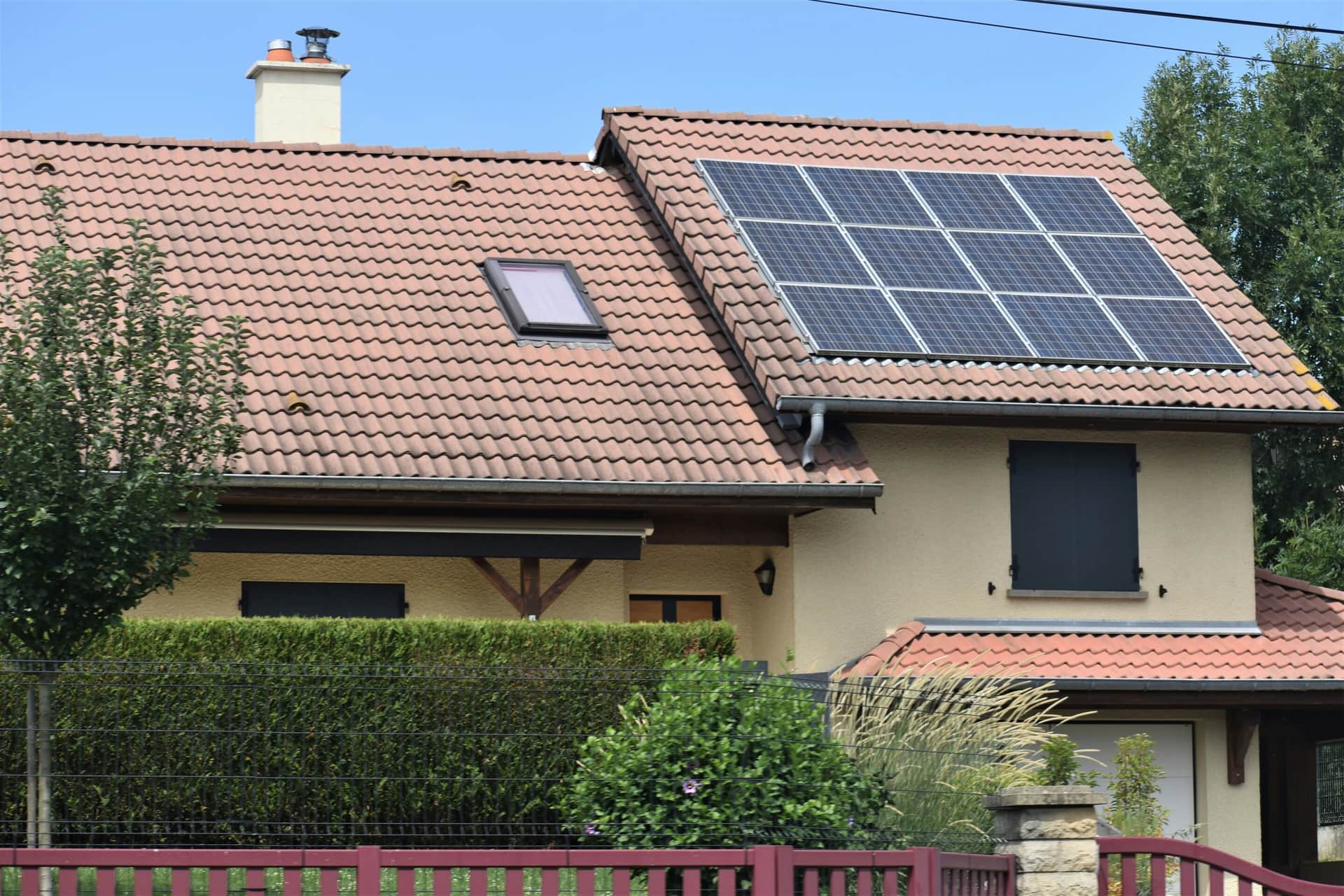
Image: TechXplore
A solar panel installation can influence far more than the household that owns it. Research from the University of Passau and the University of Lausanne finds that rooftop solar systems change nearby households' decisions about solar power, electricity use and electric vehicles.
The study, “Green Spills: Peer effects in pro-environmental behaviors,” was published in the Journal of Public Economics. It uses data from more than 260,000 households in Switzerland’s Canton of Bern, covering 2008 to 2019.
How rooftop solar affects neighbors
The researchers found that one additional solar PV installation located 100 meters (328 feet) away produces several measurable effects:

Recommended reading
Cyanobacteria biobattery powers clocks without lithium
- It raises the probability that a neighboring household will install its own solar PV system by around 2%.
- It increases the probability that a household will purchase an electric vehicle by around 2.3%.
- It reduces annual household electricity consumption by 0.2%.
The electricity-saving effect is especially strong when a household’s own roof is poorly suited to solar panels. In those cases, residents may respond to nearby installations by conserving energy rather than installing a system themselves.
Distance matters sharply. An installation 10 meters (33 feet) away has an estimated effect 10 times larger than one located 100 meters away. The influence declines markedly as the distance increases.
“We believe that social norms play a central role. Neighbors observe the installation, interpret it as a contribution to climate protection and feel that they should also do more to help protect the climate.”
Using rooftop suitability to isolate the effect
The researchers combined administrative records on solar PV ownership, annual electricity consumption and car ownership with data from the Swiss Federal Office of Energy. That government dataset estimates the solar suitability of millions of Swiss rooftops based on factors including roof slope, orientation and location. A building shaded by a mountain, for example, receives less sunlight and is less suitable for solar generation.
These differences allowed the researchers to examine whether variations in the number of nearby installations caused changes in other households' behavior. Because rooftop suitability varies across neighborhoods, the team could use it to identify the causal effects of additional solar installations rather than simply observing that environmentally minded households tend to cluster together.
Janzen conducted the research with Dr. Patrick Bigler of the University of Lausanne as part of a project he began while he was a doctoral student at the University of Bern. He has researched and taught at the University of Passau since October 2024.
Implications for solar subsidies
Janzen said he had expected neighboring solar systems to influence household behavior based on existing research. What surprised him was the range of responses: some households followed their neighbors by installing solar panels, while others reduced electricity consumption or purchased an electric vehicle instead.
The researchers say these spillover effects should be included when governments evaluate policies supporting green technologies. A solar installation can generate additional energy-related benefits beyond the property where it is installed, potentially improving the cost–benefit balance of solar subsidies.
“The fact that installing a solar PV system generates additional positive effects on energy-related behavior in the surrounding neighborhood ultimately improves the cost–benefit balance of solar subsidies.”
The paper is *Patrick Bigler et al., “Green spills: Peer effects in pro-environmental behaviors,” Journal of Public Economics (2026). DOI: 10.1016/j.jpubeco.2026.105722*.
Frontier Editor
Dan is our resident futurist, covering electric mobility, space exploration, and the smart home. He's interested in atoms just as much as bits. Whether it's a new battery chemistry, a reusable rocket, or a protocol that finally makes IoT devices talk to each other, Dan breaks down the engineering that pushes humanity forward.
via TechXplore