

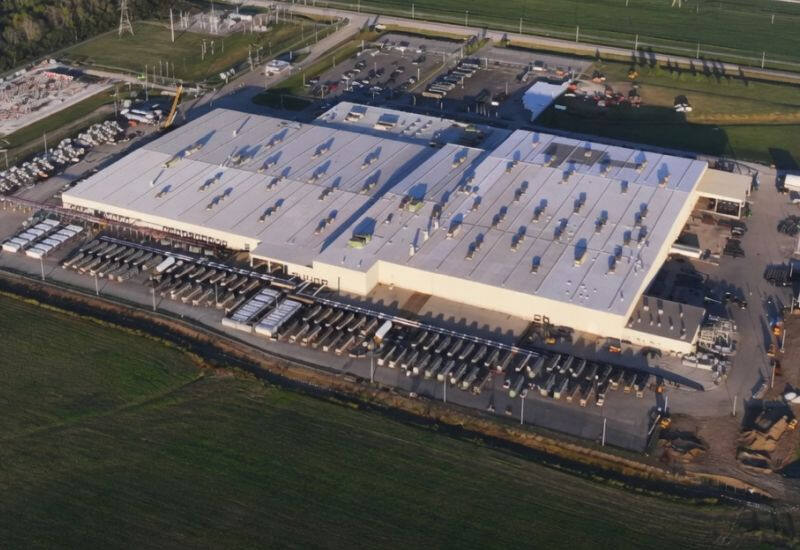
SpaceX may be about to turn another giant data center into a cash machine. Reflection AI, the open-source model startup backed by Nvidia and others, is set to pay SpaceX $150 million a month starting in July for access to Colossus 2. The lease runs formally to the end of 2029 and could be worth $6.3 billion if it lasts that long.
The deal fits a pattern that is becoming hard to ignore: SpaceX is building for the future in space, but monetizing serious compute on Earth right now. Other customers, including Anthropic, Google, and Cursor, have already been linked to similar arrangements, and SpaceX is clearly happy to let its infrastructure do double duty while the orbital dreams stay on the whiteboard.
Reflection AI gets access to Nvidia GB300 chips
For Reflection AI, the attraction is straightforward. Colossus 2 in Tennessee gives the startup access to Nvidia GB300 chips, which are exactly the sort of scarce hardware that can make an AI company look productive instead of merely well-funded.
That matters because Reflection AI is betting on open-source models, a pitch that has gained extra traction as some customers grow wary of locked-down systems and unpredictable provider rules. The company is also working with U.S. government agencies, but it is not yet selling its models to the general public, so access to top-tier compute is as much a business-development move as a technical one.
- $150 million a month from July
- Lease formally runs until the end of 2029
- Potential total value: $6.3 billion
- Colossus 2 is located in Tennessee
The lease terms favor flexibility, not romance
Like SpaceX’s other big compute deals, this one can be ended after the first three months, as long as either side gives 90 days’ notice. That is the kind of escape hatch you want when your customer base includes AI startups, hyperscalers, and government-adjacent buyers, all of whom can change their minds faster than a launch window.
The economics are still impressive even without the headline number. SpaceX has previously been linked to arrangements with Google and Anthropic that could bring in $30 billion and $45 billion, respectively, by mid-2029, so Reflection AI is not the biggest check in the stack – just another sign that the real money in AI infrastructure is increasingly being made by whoever owns the chips, the power, and the buildings.
Why open-source AI is suddenly an attractive tenant
Reflection AI was founded by two former Google DeepMind employees and is valued at $25 billion, which helps explain why it can play in this league. The larger story is that open-source AI is becoming a more practical sales pitch: if customers want more control over how models behave and are deployed, startups like Reflection AI can use that as a wedge against closed platforms.
The open question is whether that advantage translates into enough demand to justify leases at this scale. If it does, more AI companies will be lining up for expensive rented compute rather than building their own; if it does not, SpaceX will still be fine. The landlord usually is.