

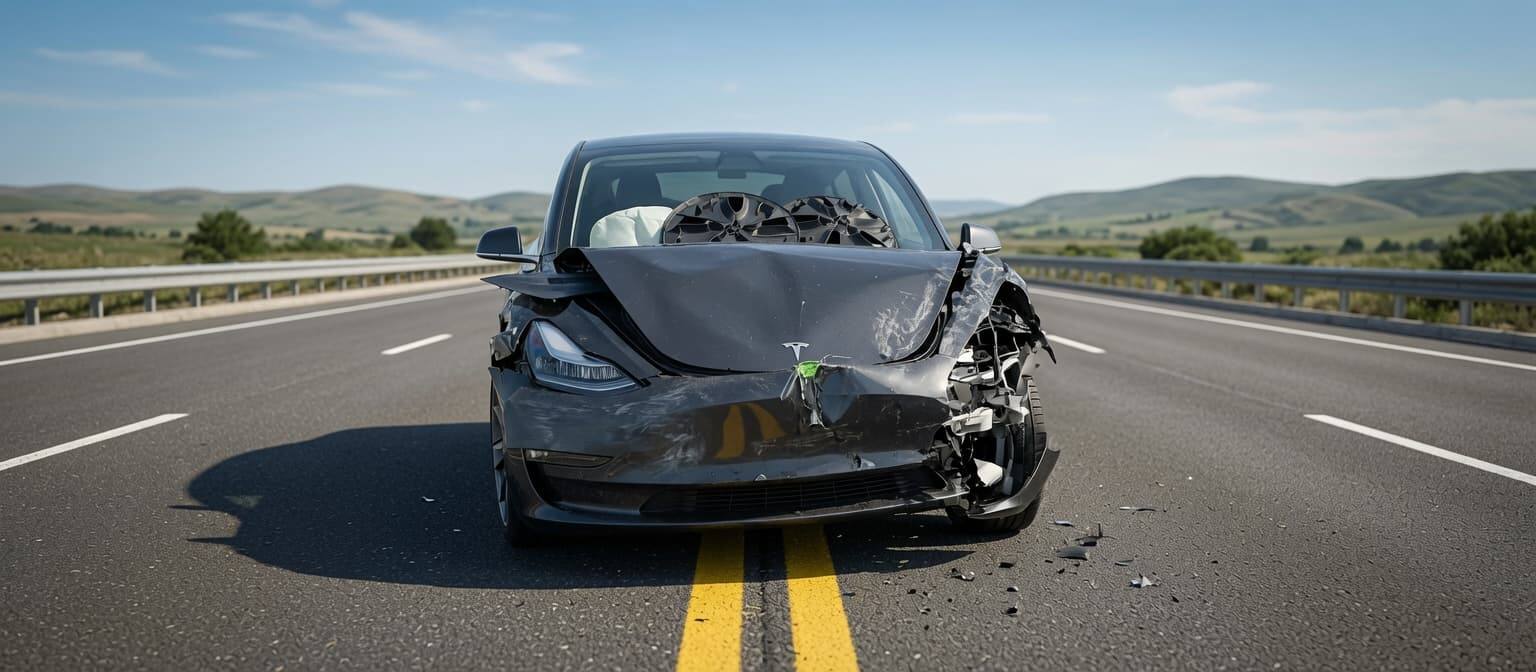
Tesla is again facing accusations of sudden acceleration after a Model 3 crash in China, but the company says its preliminary data shows no abnormal brake behavior before the impact. The owner says he pressed the brake at a junction, yet the car kept going and reportedly reached 110 km/h, damaging two vehicles and leaving one repair bill above 90,000 yuan, or $13,000.
The twist is almost absurd even by insurance standards: the driver says he bought a brand-new policy on the day of the crash, and it had not yet taken effect. If that detail holds, the financial fallout could get messy fast, especially with Tesla now signaling that it will work with regulators if the owner challenges its conclusion.
What the driver says happened
According to the owner, he was driving his Tesla Model 3 when he braked hard at an intersection to slow down and avoid an obstacle. He says the car did the opposite of what was requested, accelerating instead of stopping. He also says he has more than 20 years of driving experience and normally uses two-pedal driving, not the more controversial one-pedal mode.
That claim will sound familiar to anyone who has followed Tesla controversies in the US, Europe, or China: when a crash is blamed on the car, the fight usually becomes a tug-of-war between driver error and software fault. Tesla has spent years insisting that logged vehicle data tells the real story, which is why these cases often hinge on telemetry rather than witness testimony.
Tesla Model 3 crash in China: the data dispute
Tesla said its initial review found no irregularities in the braking system before the accident. The company also said it would fully cooperate with the relevant regulators if the owner disputes the findings and the investigation continues.
That is a familiar corporate playbook: deny the mechanical failure, point to the data, and let the regulator referee. It is also a reminder that Chinese EV buyers are now part of the same global debate over driver-assist systems, sensor logs, and whether a mistake behind the wheel can be separated from a software problem inside the car.
Tesla sudden acceleration claims in China
The crash may not stay a local insurance dispute for long. Tesla has already been pulled into high-profile legal and regulatory fights over alleged autonomous-driving failures elsewhere, and every fresh incident keeps the company under a brighter spotlight than most carmakers would ever enjoy.
If the owner pushes the case, the next question is simple: will independent investigators side with the driver’s memory or Tesla’s logs? In cases like this, the answer usually decides not just liability, but public trust.