

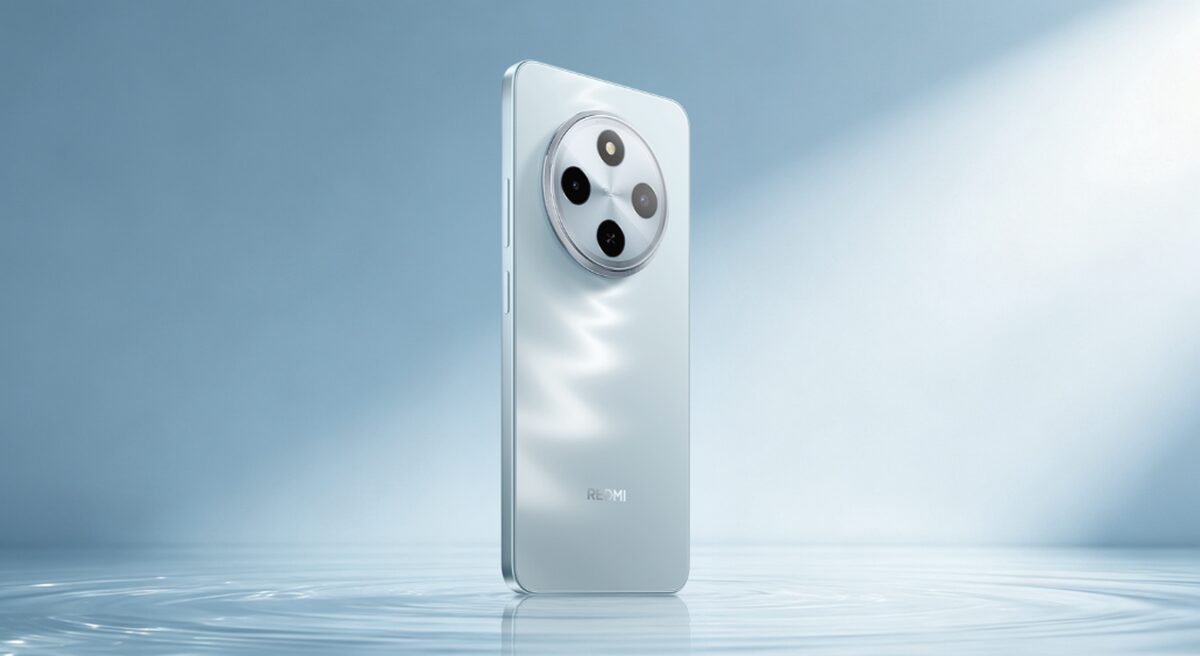
Xiaomi has started selling the Redmi 17C in China, and the pitch is simple: this is the company’s cheapest new phone of 2026 so far. For 799 yuan, it brings a 120 Hz display, a 3.5 mm headphone jack, and a side-mounted fingerprint reader – a combination that sounds almost rebellious in a market obsessed with removing ports and adding price.
The Redmi 17C price starts at 799 yuan ($115), with a 4 GB + 128 GB version priced at 899 yuan ($130). The phone is already listed on Chinese e-commerce platforms, including Xiaomi Mall, and it lands squarely in entry-level territory, where volume matters more than bragging rights.
Redmi 17C price and storage options
- 4 GB + 64 GB: 799 yuan ($115)
- 4 GB + 128 GB: 899 yuan ($130)
That pricing is hardly surprising, but the feature list is more generous than the sticker suggests. Xiaomi is clearly trying to make the Redmi 17C look less like a stripped-down budget phone and more like a sensible daily driver for buyers who care about battery life, smooth scrolling, and basic practicality.
Redmi 17C specs and features
The Redmi 17C uses a 6.88-inch display with a 1640 x 720 resolution and a refresh rate of up to 120 Hz. Xiaomi also says the screen includes DC dimming and TUV Rheinland certification for reduced eye strain, which is exactly the sort of checkbox spec budget shoppers notice after a couple of hours of doomscrolling.
Inside, it runs on a MediaTek Helio G81-Ultra octa-core chip clocked at up to 2.0 GHz, paired with Xiaomi HyperOS 3. The rear camera is a 13-megapixel unit, while the 5160 mAh battery supports wired charging at up to 18 W.
Old-school features still sell
The Redmi 17C leans into the sort of features many brands have quietly dropped from their cheapest phones. It has a side fingerprint scanner, a 3.5 mm headphone jack, support for Xiao Ai, and Xiaomi Super Island for notifications. The phone also comes in black, red, and blue, with a Starry Deco design that is clearly meant to make an entry-level device feel a little less entry-level.
Xiaomi says the battery retains at least 80% of its capacity after 1000 charge cycles. That is the kind of durability claim that matters more than flashy marketing in this segment, especially as rivals keep pushing low-cost phones with bigger batteries but fewer useful extras. The real question is whether Xiaomi keeps the Redmi 17C limited to China, or uses it as a template for more markets where affordable phones still need to feel complete.