• 4 min read
Police AI Is Booming as Vendors Target Every Step of the Job
At a major police tech conference, vendors pitched AI for reports, surveillance, and dispatch as Axon and Motorola race to own the stack.
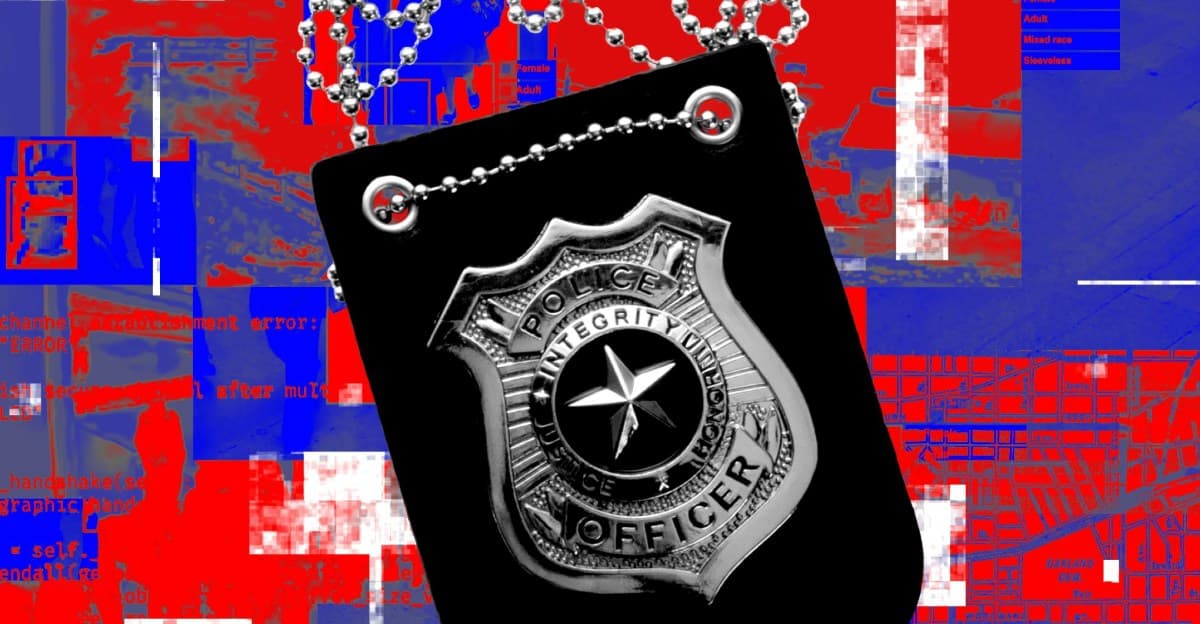
Image: The Verge
At the International Association of Chiefs of Police Technology Conference in Fort Worth, Texas, this May, vendors pitched AI as the next operating system for American policing. The products on display ranged from facial-recognition cameras, automated license plate readers, and body cameras to chatbots for non-emergency 911 calls, gunshot detection platforms, drones, and report-writing tools.
The core sales pitch was familiar: let software handle routine work so officers can focus on higher-value tasks. But in policing, that “busywork” includes steps with major legal consequences, such as writing reports or reviewing a suspect’s history. As The Verge reports, that is pushing automation closer to the center of police decision-making.
Real-time crime centers and the new police software stack
A growing set of startups now sell what amounts to an AI control layer for departments: systems that aggregate incoming police data and recommend how to deploy resources. Companies describe these tools as real-time crime centers, or RTCCs. The model is to pull together feeds from 911 dispatch, CCTV cameras, and license-plate scanners, then give officers a summary before they arrive on scene.
Jason Truppi, a former FBI cybercrime agent and cofounder of ForceMetrics, said police departments are overwhelmed by the amount of information they already collect. ForceMetrics sells a platform called Velocity, which its website says uses AI to turn public safety data into “clear, actionable insights.”
Not everyone buying the pitch is convinced.

Recommended reading
Oversight Board warns AI models may curb speech
“A lot of it is sales gimmicks that don’t actually deliver on what the promise is.”
The skepticism has history behind it. Earlier data-driven policing systems such as CompStat and PredPol were sold as more objective ways to guide police work, but critics say they often reinforced the very problems they were meant to solve. Nina Loshkajian, a fellow at the New York University Center on Race, Inequality, and the Law, told The Verge that departments were already using predictive algorithms well before 2020, and those systems did not stop violent encounters between police and civilians.
Axon, Motorola, and the business of policing AI
The biggest companies in this market are trying to own not just the analytics layer, but the whole technology pipeline. Axon Enterprise and Motorola Solutions both sell RTCC platforms alongside the surveillance and data-collection tools that feed them.
In early 2024, Axon acquired surveillance tech company Fusus and launched Axon Fusus. The company already sold stun guns, body-worn cameras, automated license plate readers, drones through Axon Air, an AI chatbot, and the AI report-writing tool Draft One. The strategy is now extending to subscriptions: in late 2024, Axon introduced its AI Era Plan, which gives customers access to current AI tools and future ones for a flat annual fee.
According to an investor earnings call transcript cited by The Verge:
- AI Era Plan subscriptions rose 140 percent between the first quarter of last year and the same time this year
- Axon’s AI product revenue grew 700 percent year over year
“We are determined to become the AI company in public safety, and we are well on our way.”
The market is also drawing investors. Amber Schroader, a tech entrepreneur interviewed in Fort Worth, said about one-quarter of attendees on the showroom floor were from equity firms looking to invest in the latest tech.
One reason adoption is accelerating is paperwork. A 2024 study conducted by Axon found that the average police officer spends 40 percent of a typical shift writing reports. That makes tools like Draft One and Field Notes, made by Truleo, easy to sell.
But the risks are obvious. Axon says Draft One is based on a modified version of ChatGPT trained for police reports, with “creativity” turned down to zero. Even so, The Verge notes a case earlier this year in which Draft One wrote that a Utah officer had morphed into a frog after picking up background audio from The Princess and the Frog.
That error was absurd, but the underlying issue is not. When a human officer writes a report, they can be cross-examined about what they saw, why they included certain details, and what they left out. A black-box system cannot be questioned the same way. The Verge also reports that, when Draft One launched in 2024, submitted reports did not preserve a clear record showing which parts were written by the AI and which by the officer.

AI Editor
Ava covers the rapidly evolving world of artificial intelligence, from foundational models and research labs to the real-world economics of intelligence. With a background in computational linguistics, she cuts through the hype to find out what actually works. She firmly believes that benchmarks are just marketing until reproduced in the wild.
via The Verge