• 3 min read
MIT’s GIFT cuts CAD compute to 20%
MIT and collaborators built GIFT, a system that helps image-to-CAD models learn from near-misses and produce more accurate 3D designs with far less compute.
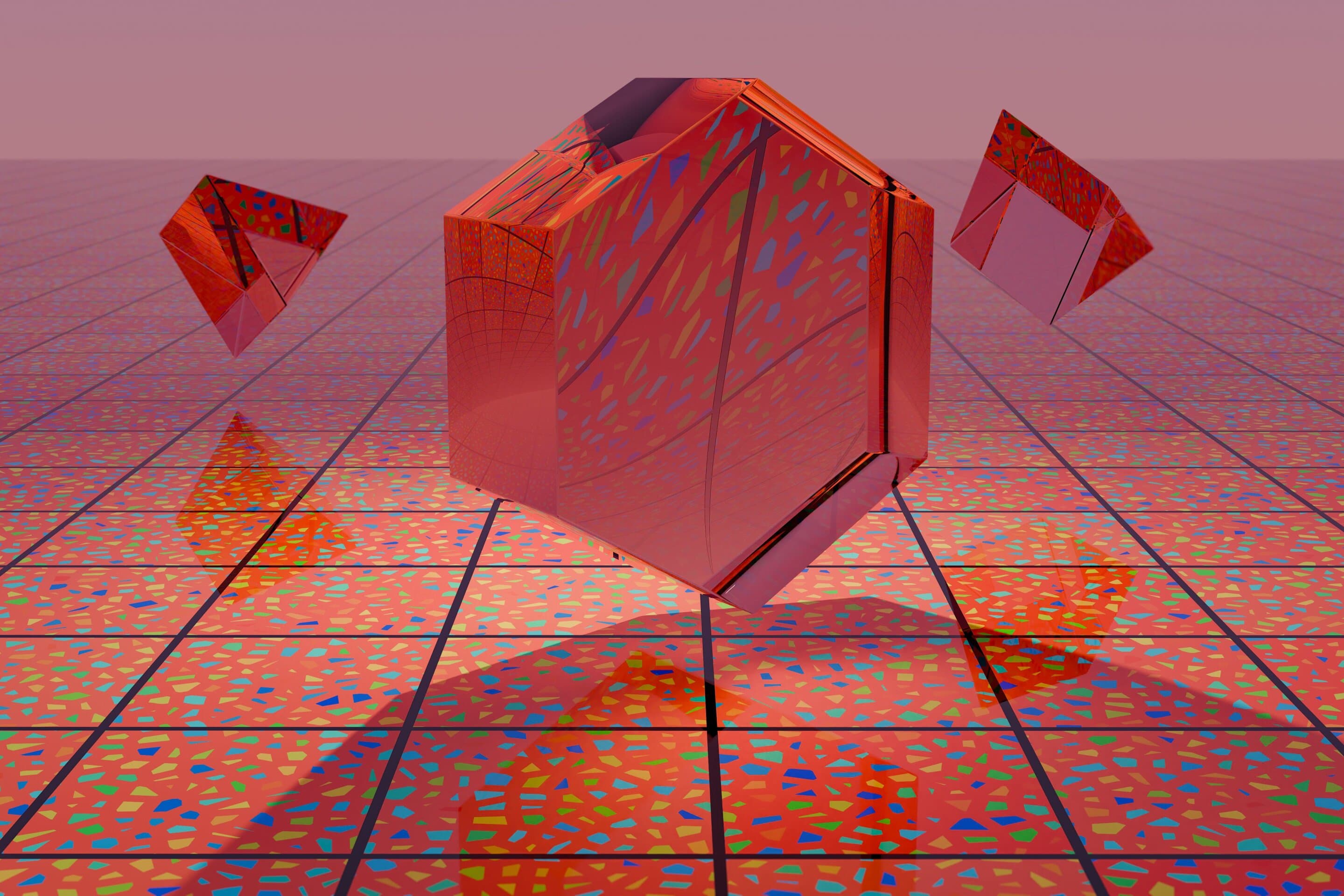
Image: TechXplore
Researchers from MIT, Red Hat, and IBM say they have found a more efficient way to turn 2D designs into executable CAD programs for 3D models—a key step in rapid prototyping for products such as airplane and automobile components.
The system, called GIFT (Geometric Inference Feedback Tuning), is designed to improve vision-language models that take an image plus text and output Python code for CAD software. Instead of relying on larger human-made datasets or expensive retraining, GIFT studies where a model succeeds, where it fails, and especially where it comes close.
“We want engineers to be able to point our framework at an underperforming CAD model, set a compute budget, and let the system take over—turning the model’s own mistakes into better training data.”
How GIFT improves image-to-CAD models
The team argues that one of the biggest limits on current image-to-CAD systems is the lack of diverse, high-quality CAD datasets. Traditional data augmentation typically tweaks existing examples at random. GIFT takes a different route: it generates new training data based on a model’s actual behavior on the task.

Recommended reading
Microsoft tells sales teams to take on OpenAI
It asks the model to solve the same CAD generation problem multiple times in parallel, then checks which outputs are correct, which are wrong, and which are nearly correct. Those near-misses are especially useful. GIFT adjusts them into valid solutions and adds both the corrected outputs and successful attempts into a new dataset that teaches the model how to fix the kinds of errors it commonly makes.
Giannone said models can often produce code that is almost right, but generating CAD code that is perfectly correct and executable is much harder. By focusing on cases where the model succeeds only part of the time, GIFT creates data that is both model-aware and task-aware.
Results and next steps
According to the researchers, GIFT outperformed several competing methods while using only about 20 percent as much computation. The resulting CAD models were also closer in shape to the ground-truth models.
The system works through inference-time scaling, which improves outputs from a pre-trained model without retraining the entire system. That means users can set a compute budget based on their time and cost constraints.
“Nearly every physical product around us, from airplanes to appliances, begins its life as a CAD model. Industry teams are eager for AI that can help speed up the creation of these designs, but today’s models often produce simple shapes inadequate for practice. What excites me about this work is that it gives many image-to-CAD-code models a way to improve themselves, learning from their own errors rather than waiting for more human-made data—and that brings trustworthy AI design tools much closer to everyday engineering.”
The researchers started by focusing on geometry, arguing that if a 3D shape’s geometry is wrong, nothing else will be right either. Next, they want to extend GIFT so models can generate CAD programs that also improve performance and manufacturability, and apply the approach to larger models and a broader range of CAD tasks.
The paper, “GIFT: Bootstrapping Image-to-CAD Program Synthesis via Geometric Feedback,” by Giorgio Giannone et al, was recently presented at the International Conference on Machine Learning. It is also available on arXiv (2026) with DOI 10.48550/arxiv.2603.27448.

Enterprise Editor
Marcus follows the money. He covers enterprise software, cloud architecture, and the tectonic shifts in Big Tech strategy. He translates dense earnings calls and complex M&A activity into actionable insights about where the industry is actually heading. If a tech giant makes a silent pivot, Marcus is usually the first to notice.
via TechXplore