• 2 min read
PennyLane brings quantum algorithms to Python
PennyLane is an open-source Python platform for quantum computing, machine learning, and chemistry, with simulator and hardware support.
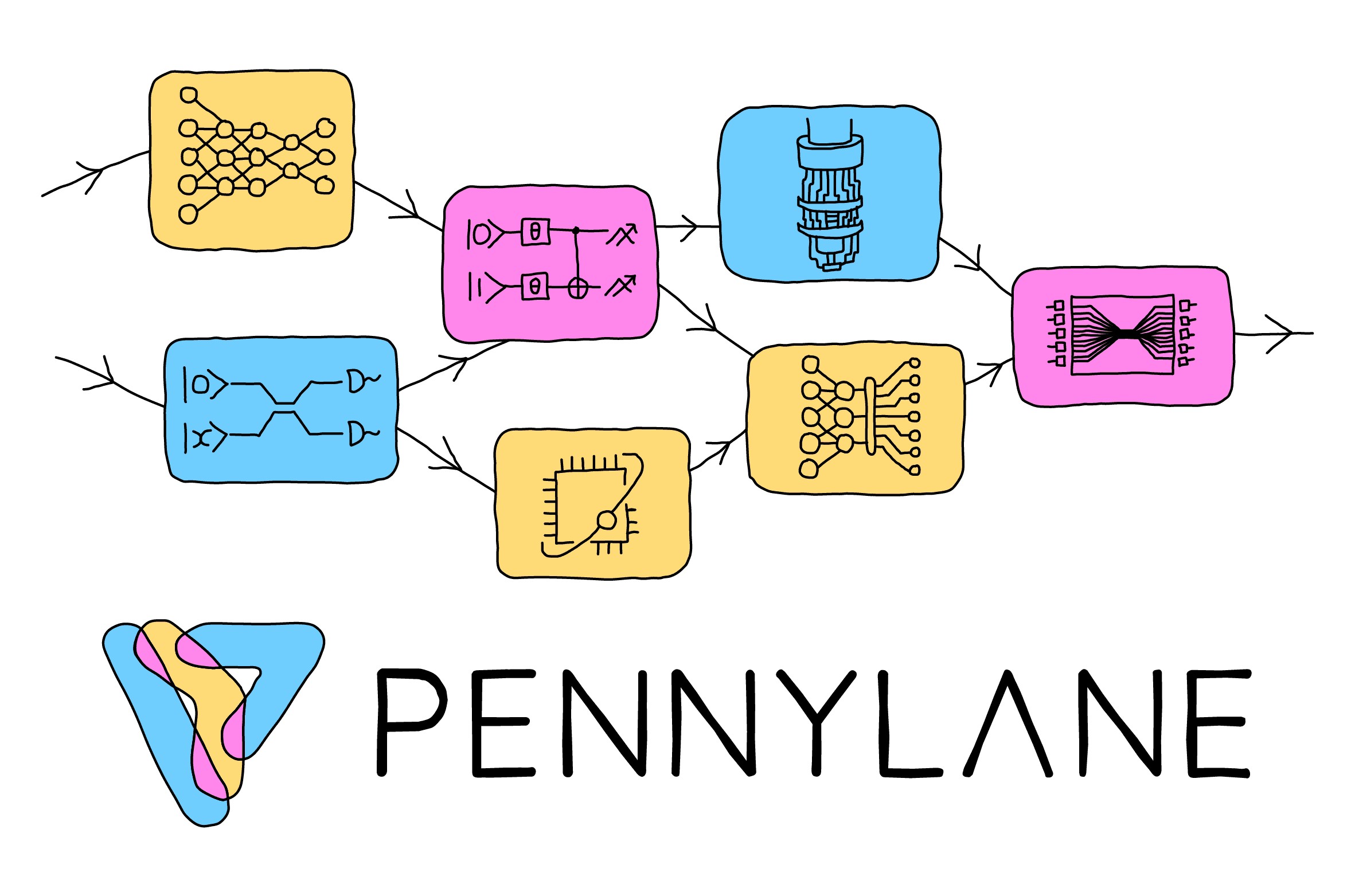
Image: Hacker News
PennyLane is an open-source software platform for quantum computing, quantum machine learning, and quantum chemistry. The project, hosted on GitHub, is designed to take quantum algorithms from research concepts to working implementations while supporting both simulators and quantum hardware.
PennyLane features and hardware support
The platform combines a library of research demonstrations, interactive tutorials, and components for work in quantum chemistry, quantum information, optimization, and quantum machine learning. Its documentation is aimed at both experienced researchers and developers beginning with quantum programming.
PennyLane also targets performance across the workflow:
- Execution, compilation, and analysis: The project includes the Catalyst compiler and industrial resource-estimation tools.
- High-performance simulation: Lightning simulators can scale across GPUs, supercomputers, and cloud infrastructure.
- Hardware compatibility: PennyLane supports superconducting qubits, trapped-ion systems, neutral atoms, and photonics, with tools for estimating resources and compiling circuits for specific devices.
Installation and learning resources
PennyLane requires Python 3.11 or later. The package and its dependencies can be installed with pip:

Recommended reading
Apple Delays Baltra AI Server Chip
''bash python -m pip install pennylane ''
Docker images are available through the PennyLane Docker Hub page, which also documents the project’s Docker support.
New users can begin with PennyLane’s interactive tutorials and quickstart guide. The project also offers a research-demo library, the Codebook and Coding Challenges, developer guides, documentation, and a discussion forum for support and collaboration.
The PennyLane Demos collection covers fundamental quantum concepts as well as recent quantum-algorithm research. Developers can submit their own demos using the project’s demo submission guide.
Contributions and licensing
Contributors can fork the repository and submit a pull request. The project also accepts bug reports, feature suggestions, enhancements, and links to applications built with PennyLane. Contributors are listed as authors on releases.
PennyLane is released under the Apache License, Version 2.0. The project credits many contributors; researchers using it are asked to cite Ville Bergholm et al., “PennyLane: Automatic differentiation of hybrid quantum-classical computations,” 2018, arXiv:1811.04968.

AI Editor
Ava covers the rapidly evolving world of artificial intelligence, from foundational models and research labs to the real-world economics of intelligence. With a background in computational linguistics, she cuts through the hype to find out what actually works. She firmly believes that benchmarks are just marketing until reproduced in the wild.
via Hacker News