• 2 min read
PD-35 Could Force a Major Il-96 Redesign
Russia’s PD-35 engine may require a redesigned Il-96 wing, landing gear and onboard systems—not just a new engine installation.
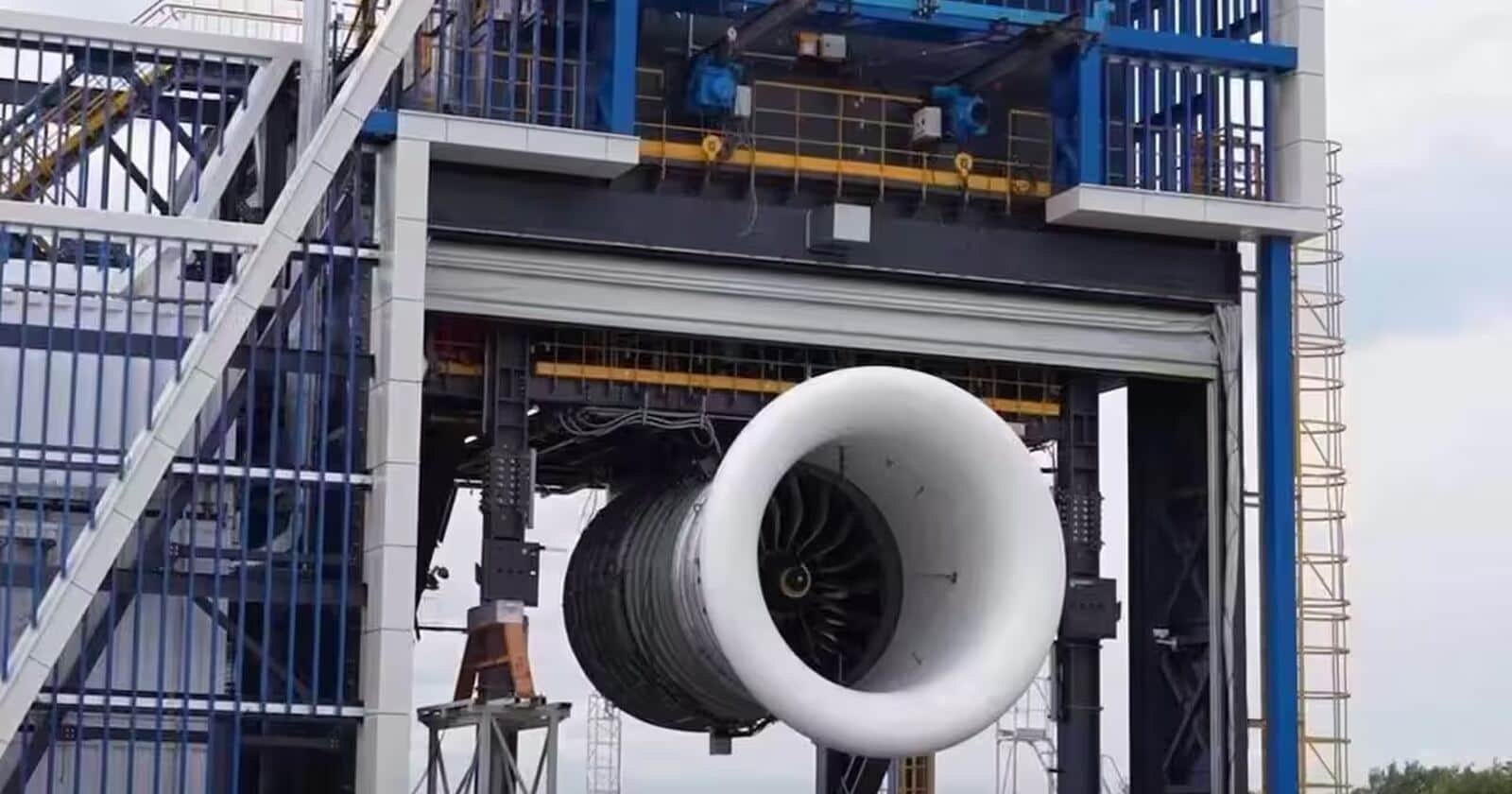
Image: ITzine
Russia’s PD-35 engine could require far more than a straightforward powerplant swap on the Il-96. Aviation expert Roman Gusarov says the aircraft’s wing, landing gear and some onboard systems would need to be reconsidered because the engine is significantly larger and heavier than the four relatively compact engines the Il-96 was designed to use.
The changes would extend beyond the engine pylons. The wing’s entire load-bearing structure could require review, while the landing gear would have to accommodate a different aircraft weight and operating profile. Gusarov also stressed that the PD-35 has not reached operational service, so there is no ready engine for a production upgrade today.
What the PD-35 means for the Il-96
If the engine reaches series production, manufacturers would face a choice: extensively modify the existing Il-96 or develop a new platform around the more powerful propulsion system. In practice, the new engine could bring along an almost entirely new aircraft.
The Il-96 is no longer a mass-market passenger aircraft. Production in Voronezh remains limited, with the plant capable of building only about two aircraft per year even at its current rate. The facility also produces components for other programs, including the Superjet and MC-21.
That makes the PD-35's development a key constraint. In the wide-body segment, Boeing and Airbus have long dominated, while new aircraft programs often stall without an efficient, production-ready engine. For now, the Il-96 is better viewed as a reserve platform than as a candidate for a rapid engine replacement.

Recommended reading
Electric mountain bikes finally won me over

Frontier Editor
Dan is our resident futurist, covering electric mobility, space exploration, and the smart home. He's interested in atoms just as much as bits. Whether it's a new battery chemistry, a reusable rocket, or a protocol that finally makes IoT devices talk to each other, Dan breaks down the engineering that pushes humanity forward.
via ITzine