• 3 min read
Parker Solar Probe survives another pass through the Sun’s corona
NASA’s Parker Solar Probe has done it again: the spacecraft survived its 28th plunge through the Sun’s outer atmosphere, then phoned home after nine days flying solo and out of contact. The flyby pushed it to about 6.1 m
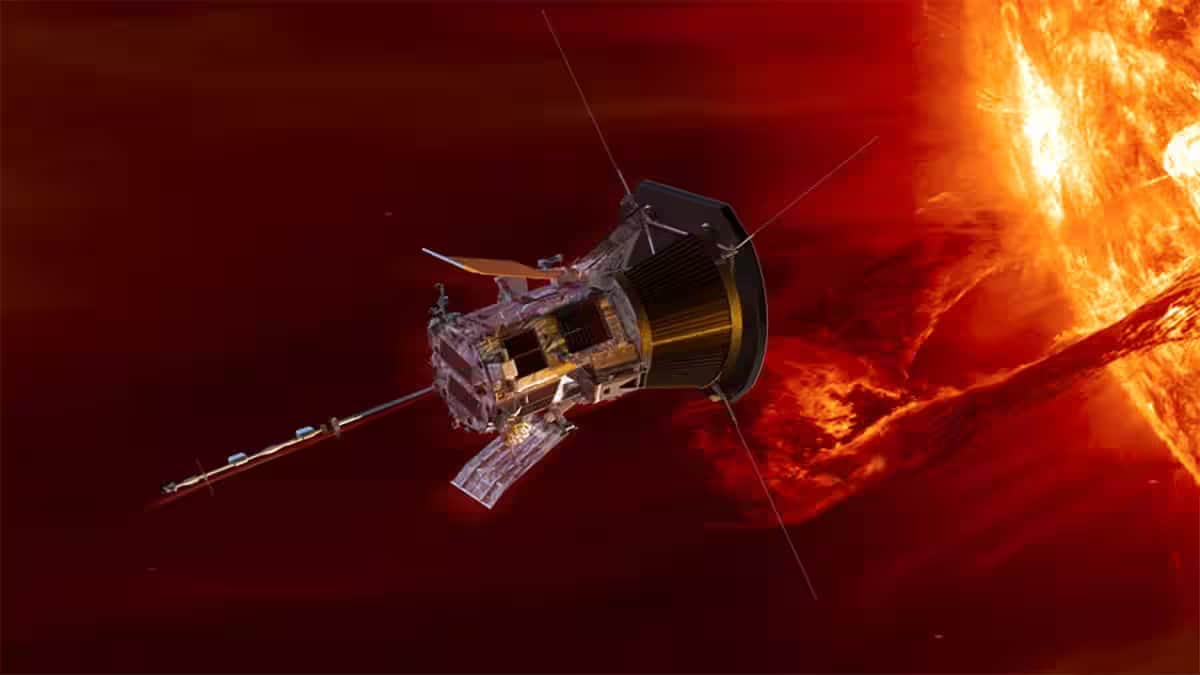
Image: ixbt.com
NASA’s Parker Solar Probe has done it again: the spacecraft survived its 28th plunge through the Sun’s outer atmosphere, then phoned home after nine days flying solo and out of contact. The flyby pushed it to about 6.1 million kilometers from the Sun and nearly 692,000 km/h, a speed that makes even the Moon look inconveniently close.
The timing matters almost as much as the numbers. This Parker Solar Probe pass happened during solar maximum, when the Sun is most active and the chances of eruptions, plasma blasts, and geomagnetic headaches on Earth all rise together. That makes Parker less of a stunt machine and more of a very expensive, very brave field lab sitting inside the furnace.
A record-setting Parker Solar Probe flyby
The spacecraft’s current observing phase began on 3 June, and the main data transfer is scheduled to wrap up on 13 June before scientists start downloading the science haul. The closest approach came on 8 June, with Parker repeating its own performance by skimming past the Sun at less than 5% of the Earth-Sun distance.

Recommended reading
NASA staff cuts hit 25 major programs
That kind of closeness is exactly why Parker matters. Other solar missions can watch from afar; this one samples the corona directly, where the solar wind is born and magnetic fields twist into the kind of chaos that later shows up as space weather.
Why the heat shield still matters
The probe’s 11.4-centimeter thermal shield is the unsung hero here. Built from carbon composite and coated with a white ceramic layer, it is designed to reflect some of the Sun’s heat while keeping the instruments inside within a safe operating range.
- Closest approach: about 6.1 million kilometers from the Sun
- Top speed: nearly 692,000 km/h
- Shield thickness: 11.4 centimeters
- Shield surface temperature: about 926 degrees Celsius
- Some instrument elements: more than 1,300 degrees
Engineers say the key sign of success is not just that Parker survives, but that its internal temperature stays stable enough for electronics and instruments to keep working. That’s the part that separates a heroic one-way dive from a functioning mission.
What scientists expect from the June data
From 14 June, Parker will begin sending detailed engineering telemetry, followed by the main science data between 17 and 30 June. Those measurements should help researchers refine models of the solar wind, magnetic fields, and the processes that drive space weather.
That is not just academic housekeeping. Better space-weather forecasts help protect satellites, communications, navigation systems, power grids, aviation, and the next wave of crewed missions heading toward the Moon and Mars. If Parker keeps performing like this, the Sun gets harder to ignore and easier to predict, which is probably the best outcome anyone can ask for from a probe built to flirt with 1,300-degree heat.
Frontier Editor
Dan is our resident futurist, covering electric mobility, space exploration, and the smart home. He's interested in atoms just as much as bits. Whether it's a new battery chemistry, a reusable rocket, or a protocol that finally makes IoT devices talk to each other, Dan breaks down the engineering that pushes humanity forward.
via ixbt.com