• 3 min read
Open Book Touch Makes Open-Source Reading Pocket-Sized
Open Book Touch is a $149 open-source e-reader with a 4.26-inch front-lit display, EPUB support, expandable storage, and a replaceable battery.
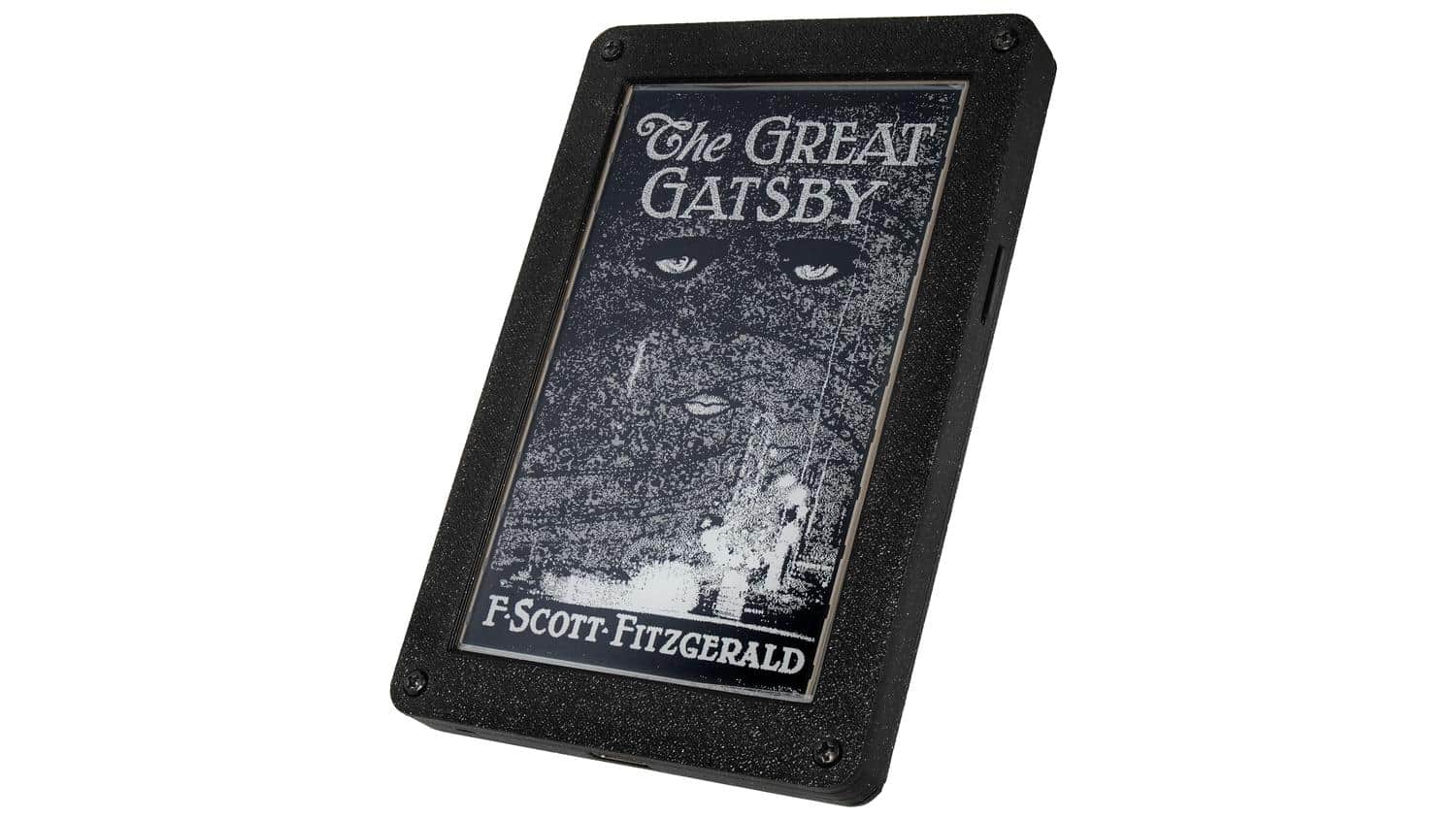
Image: Hacker News
A 4.26-inch front-lit e-paper touchscreen is the defining feature of Open Book Touch, an open-source e-reader from Oddly Specific Objects. The pocketable device is 10 mm thick, weighs approximately 3 oz (85 grams), and has no physical buttons on its front.
The Crowd Supply campaign has raised $45,299 against a $45,000 goal and is listed as 100% funded, with 34 days left. Purchasing options range from $149 to $249, and funding ends on August 20, 2026, at 04:59 PM PDT.
A focused e-reader with open hardware
Open Book Touch is designed for reading rather than general-purpose computing. It has no browser, notifications, or social feeds. Wi-Fi is intended for syncing the time and transferring books through a browser, while a microSD card provides local storage.
Recommended reading
Topcoat brings full-stack Rust to one framework
The device reads EPUB and plain-text files, with justified text, hyphenation, inline images, highlights, dictionary lookups, bookmarks, and customizable shelves. Its typesetting engine uses bitmap versions of Lucida Bright and Lucida Sans, with true bold and italic forms across three sizes.
The 480 × 800-pixel display packs roughly 220 ppi into its 4.26-inch diagonal. It supports fast 1-bit rendering for page turns and 2-bit grayscale for lock-screen images and book covers. A frontlight with five warm and five cool LEDs allows independently adjustable brightness and color temperature.
ESP32-S3 hardware and language support
At the center is an ESP32-S3 dual-core MCU with Wi-Fi and Bluetooth LE, backed by 16 MB of flash and 8 MB of PSRAM. Other hardware includes a microSD slot, USB Type-C with integrated LiPo charging and monitoring, and a 32.768 kHz crystal for timekeeping.
The user-replaceable battery will be at least 800 mAh; the team is testing a 1,200 mAh cell and plans to ship the largest battery it can reliably source. Testing indicates about one week of reading with the frontlight off and well over a month of standby.
GNU Unifont provides a fallback covering roughly 70,000 glyphs across the world’s writing systems. The interface is localized into English, Spanish, French, German, Japanese, Arabic, and Hebrew, with right-to-left layout and Perso-Arabic letter shaping supported. Complex Indic scripts do not yet fully shape.
Source release and delivery plans
The firmware is MIT-licensed and built with ESP-IDF and FreeRTOS, with SQLite managing library metadata. The project is also releasing Focus, a platform-agnostic C++ application framework with view controllers, touch and gesture handling, widgets, and an on-screen keyboard. Board files, enclosure CAD, and the remaining source are planned for release as units reach backers.
The planned enclosure is a snap-fit, 3D-printed shell with files for custom cases. Injection molding remains a stretch goal. Manufacturing involves NextPCB’s Launchpad program and display partner Good Display.
Crowd Supply and fulfillment partner Mouser are targeting early 2027 for the first deliveries. The project identifies the display supply chain as its main risk: e-paper driver IC lead times have stretched to at least eight months, while Good Display has said it will try to reserve about 1,000 units from its next production run, without guaranteeing that allocation until an order is placed.

Computing Editor
Tomas lives in the terminal. He covers chips, laptops, and operating systems with a focus on performance and efficiency. He reads kernel changelogs the way other people read fiction, and he's always on the hunt for the perfect mechanical keyboard switch. If it processes data, Tomas has an opinion on it.
via Hacker News