• 3 min read
NASA’s small aircraft are speeding up flight tests
NASA is using remotely piloted subscale aircraft to test parachutes, wildfire sensors, and collision-avoidance systems faster and at lower cost.
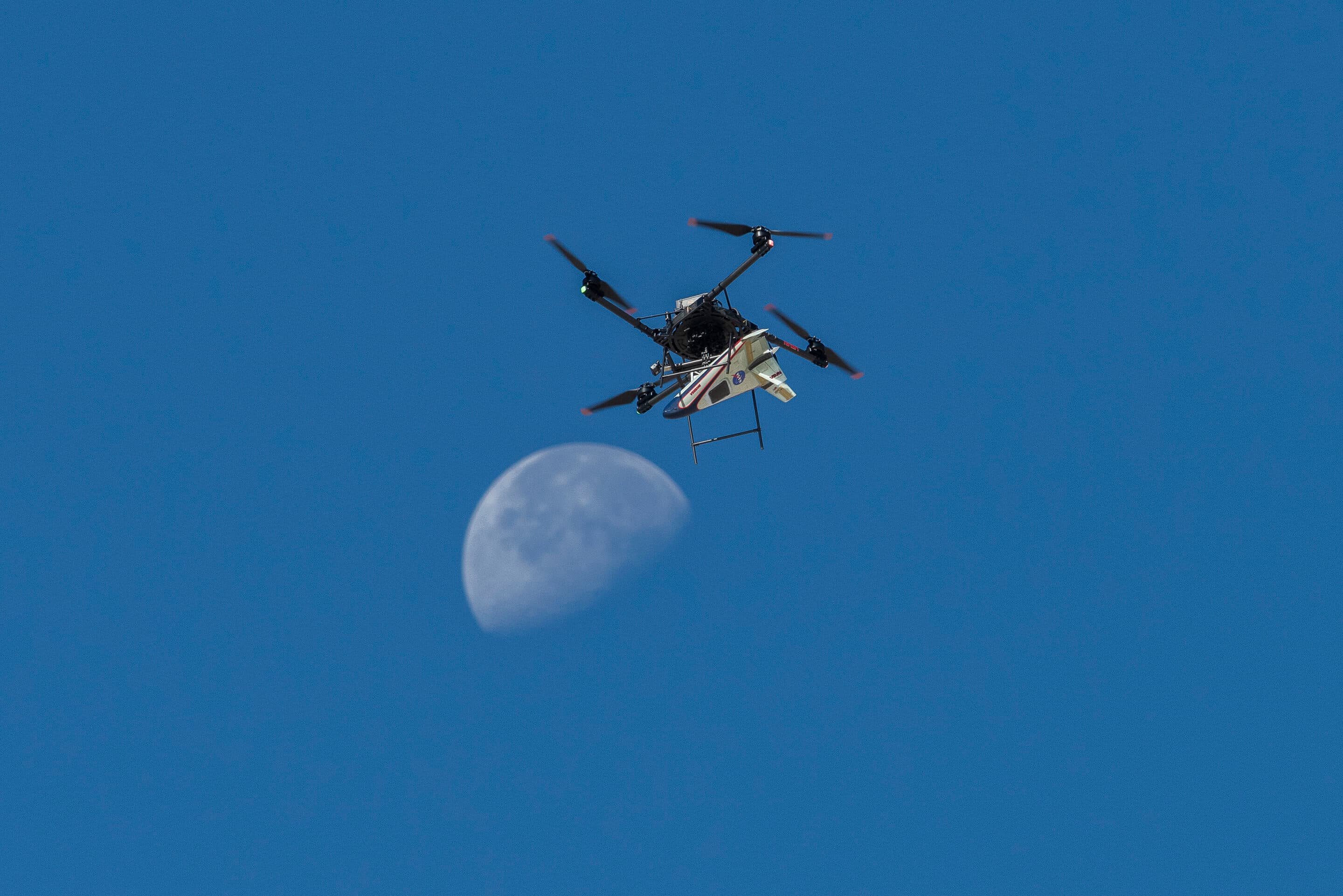
Image: TechXplore
NASA is leaning on subscale aircraft to move flight research faster and cut risk before ideas reach full-scale testing. At the Dale Reed Subscale Flight Research Laboratory at NASA’s Armstrong Flight Research Center in Edwards, California, small remotely piloted and autonomous aircraft are being used as lower-cost platforms to validate new aerospace concepts.
The lab’s available flight platforms include the Alta-X quadrotor, the Dryden Remotely Operated Integrated Drone (DROID) with a 10-foot (3-meter) wingspan, the Multi-Use Cub with a 14-foot (4-meter) span and expandable payload capacity, and the HQ-90 quadrotor for electric vertical takeoff and landing testing. Once a vehicle and payload are cleared, certified lab pilots handle both ground and flight operations, including missions involving one-off or modified commercial aircraft.
Flight tests for fires, parachutes, and safety systems
One recent example is NASA’s FireSense project in the Geneva State Forest, about 100 miles (160 kilometers) south of Montgomery, Alabama. NASA Armstrong staff integrated a sensor onto an Alta-X drone, tested it, then deployed it in the forest. The goal was to show that remotely piloted aircraft can collect localized weather data that affects smoke movement and fire behavior, information that could help agencies make better wildfire decisions and allocate firefighters and equipment more effectively.
Recommended reading
Solar panels that fold for hail boost output by nearly 40%
Closer to Armstrong, the Enhancing Parachutes by Instrumenting the Canopy (EPIC) project used the Alta-X to air-launch a capsule carrying a parachute and flexible sensor. Lab staff helped design and integrate the parachute-drop mechanism and safety system. According to NASA, the tests showed the flexible sensor could help researchers study supersonic parachutes, with future work aimed at improving computer models and making parachute delivery of science instruments and payloads to Mars safer and more reliable.
NASA also used the lab’s aircraft in work on Automatic Collision Avoidance Technology. At Armstrong, researchers developed a simplified Automatic Ground Collision Avoidance System and installed it on DROID for testing. NASA said the system, intended for general aviation pilots as well as remotely piloted and autonomous aircraft, performed well enough to lead to additional research on a version that can provide alerts and steering cues. The NASA Armstrong Technology Transfer Office is now working to license the technology for U.S. businesses.
Prandtl-D and rapid prototyping at Armstrong
The lab has also supported aerodynamic work such as the Prandtl-D (Preliminary Research Aerodynamic Design to Lower Drag) flying-wing glider. Built and flown at NASA Armstrong, the aircraft’s twisted wing design was found to reduce drag and generate thrust at the wingtips, a concept that could improve fuel economy in future aircraft. The original Prandtl-D is now in the Smithsonian National Air and Space Museum in Washington, while the Prandtl-D3 is at the California Science Center in Los Angeles.
Behind those flight campaigns is a broader engineering setup: rapid prototyping, advanced 3D manufacturing, composite and conventional fabrication, and support for electrical and mechanical design, hardware and software integration, plus safety and flight-readiness work. NASA’s pitch is straightforward: use small aircraft to prove out big ideas before they become expensive ones.

Frontier Editor
Dan is our resident futurist, covering electric mobility, space exploration, and the smart home. He's interested in atoms just as much as bits. Whether it's a new battery chemistry, a reusable rocket, or a protocol that finally makes IoT devices talk to each other, Dan breaks down the engineering that pushes humanity forward.
via TechXplore