• 2 min read
Firefox will ship updates every two weeks
Mozilla will shift Firefox desktop and Android releases to a two-week cadence in September 2026, while Firefox 153 becomes the next ESR.
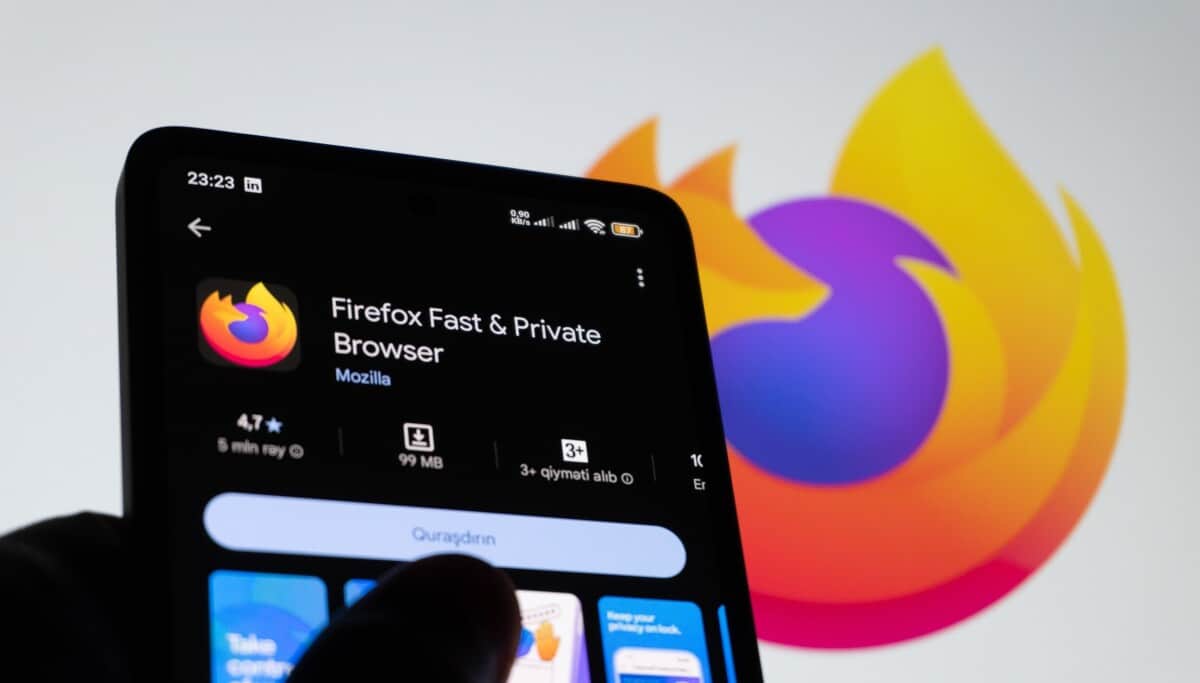
Image: The Register
Firefox releases will move from every four weeks to every two weeks for Mozilla’s desktop and Android browsers starting in September 2026. Extended Support Releases (ESR), however, will continue on an annual schedule.
Mozilla engineering director Sylvestre Ledru announced the plan last week on the dev-platform@mozilla.org mailing list. The change is being treated as an experiment, and Mozilla says unfinished work will not be rushed to meet the faster cadence.
“We are planning to move Firefox Desktop and Android from a 4-week release cadence to a 2-week release cadence starting in September 2026.”
Mozilla currently targets Firefox 155 for September 1, 2026, rather than September 15. The release calendar shows Firefox 153 and 154 retaining the existing four-week schedule, followed by releases at roughly two-week intervals. Mozilla says it will monitor the results and adjust the plan if necessary.
The move is not unprecedented. Mozilla last adopted a similar schedule more than a decade ago. Google announced a comparable Chrome change in March, after previously moving to six-week releases in 2010 and four-week releases in 2021.

Recommended reading
Google Will Count Android Backups Toward Storage
Firefox 153 features and security changes
The next release, Firefox 153, is scheduled for Tuesday, July 21. Its final release notes were still blank at the time of writing, but the beta notes point to several additions:
- PDF editing will support merging multiple documents through drag-and-drop in the PDF sidebar, inserting images as new pages, and improved text highlighting.
- Firefox will generate QR codes for sharing web pages offline, including through printed documents.
- The browser will verify and display the EU’s new Qualified Website Authentication Certificates (QWACs), introduced as part of the eIDAS legislation.
- Extensions will lose local-file access by default, although users can grant that permission separately.
- A map-pin icon will appear in the address bar when a tab is using location data.
Address-bar commands will also expand beyond muting sound. Users will be able to pick colors from pages and access experimental Labs features. Firefox 153 additionally includes experimental JPEG XL support, improved controls for pop-up video players, and HDR video playback on Windows systems with compatible GPUs and drivers.
On macOS, the browser will support the Fn+F keystroke for switching to full-screen mode.
Firefox 153 becomes the next ESR
Firefox 153 will be significant beyond its feature set because it is scheduled to become the next ESR release. It will receive security updates for at least 15 months, through late 2027.
Mozilla is still supporting Firefox 115, which is now scheduled to receive updates until March 2027. Firefox 153 also forms the basis of the latest beta of Waterfox, the AI-free Firefox fork that recently integrated built-in ad blocking.

Computing Editor
Tomas lives in the terminal. He covers chips, laptops, and operating systems with a focus on performance and efficiency. He reads kernel changelogs the way other people read fiction, and he's always on the hunt for the perfect mechanical keyboard switch. If it processes data, Tomas has an opinion on it.
via The Register