• 3 min read
Insta360's camera robot vision raises privacy fears
Insta360 CEO Liu Jingkang envisions imperceptible camera robots that compose and record automatically, raising questions about creativity and consent.
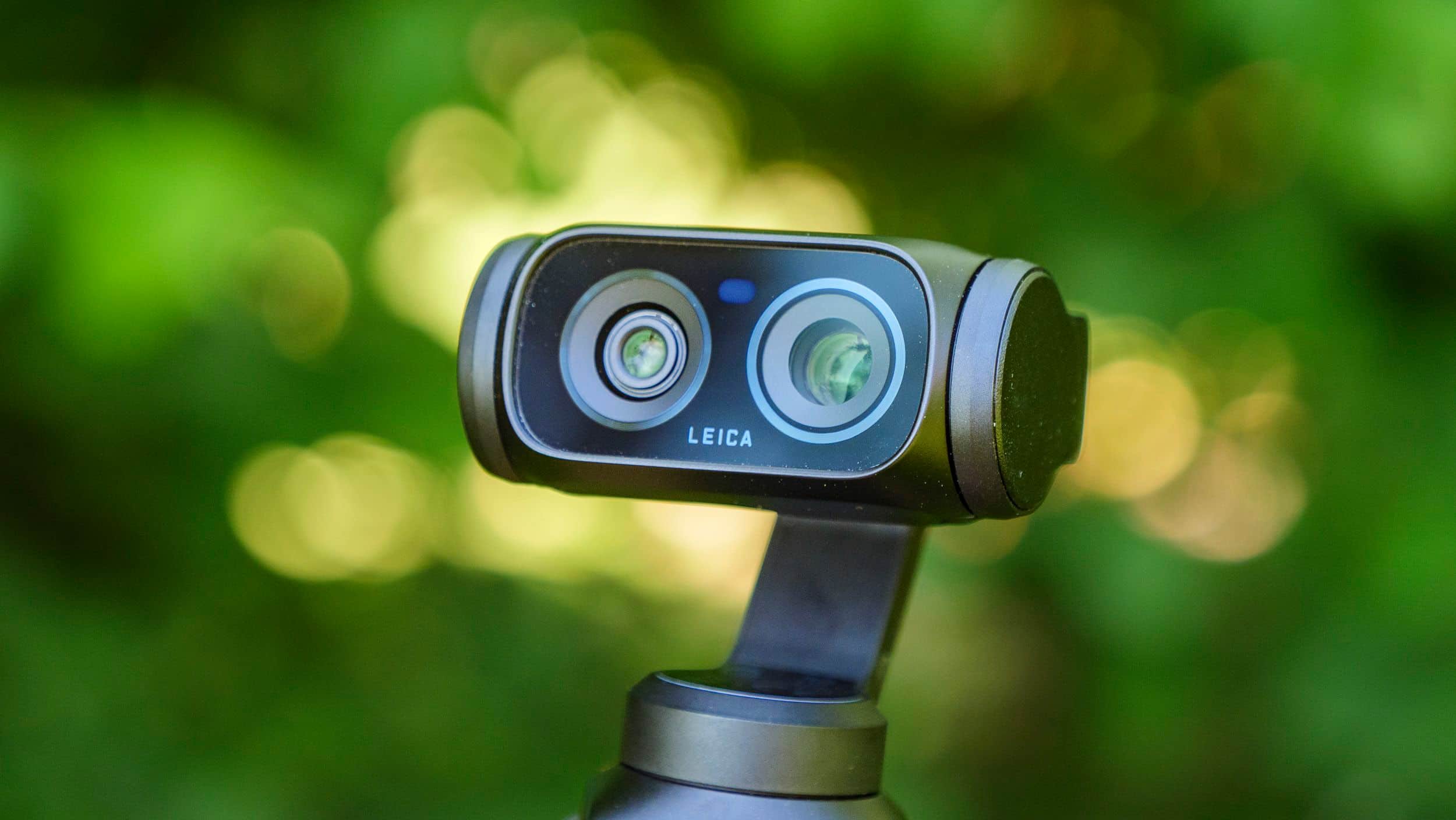
Image: TechRadar
Insta360 founder and CEO Liu Jingkang, known as “JK,” says the company wants to build an intelligent camera that can compose and capture scenes like a professional photographer. His longer-term vision is even more ambitious: cameras that become so unobtrusive they effectively disappear into everyday life.
The comments appeared in a recent Weibo post, picked up and translated by The New Camera. JK wrote:
“Our product vision is to build a 'Cameraman' — an intelligent photography robot capable of automatically composing shots and capturing moments like a professional photographer, allowing users to remain fully immersed in the present.”
He added that advances in AI are making the “Cameraman’s brain” increasingly capable and could unlock new forms of creative imaging. The ideal end state, he said, is for recording to require no effort and become “a natural part of life.”
The proposal follows several recent experiments from Insta360. The company is a major player in 360-degree cameras and is incubating the first 360-degree drone in 2025, the Antigravity A1. It has also released the dual-lens Luna Ultra, a compact vlogging camera with an unusual robot-like design, 8K video, a detachable remote screen and a microphone.

Recommended reading
How to protect your CDs, DVDs and Blu-rays from disc rot
The Luna Ultra already supports a degree of automated filming through an optional POV head tracker, which synchronizes the camera with the user’s head movements. Insta360 is also working with Bambu Lab on a design challenge encouraging fans to exaggerate the camera’s robot-like appearance.
An autonomous camera operator
JK’s vision suggests a future product that could compose, shoot and edit photos or video with little human involvement: effectively, a personal camera operator and editor that follows its user, identifies the action and assembles the best moments into a finished reel.
That could be particularly useful for 360-degree footage, where deciding what to show at each moment and creating a coherent edit can be time-consuming. An intelligent editor that finds the action automatically would offer a practical benefit, even if the camera itself remains under human control.
There is also a creative trade-off. Photography is not only about recording an event; framing, timing and selection are part of the photographer’s contribution. A system that makes every decision could make filming easier while stripping away much of that process.
The privacy problem with “imperceptible” cameras
The more troubling part of JK’s post is the idea that cameras should become “imperceptible.” That implies recording devices that people gradually accept as part of daily life, potentially capturing public spaces without drawing attention.
Privacy concerns around discreet cameras are already growing. Modders have reportedly found ways to disable the recording indicator light on Meta Ray-Ban smart glasses, prompting Meta to say that additional measures would be introduced to prevent it.
Conventional cameras in public places are already common, particularly in tourist destinations. Usually, however, someone is operating them and can be asked to stop recording. Autonomous cameras that continuously decide what to film would make consent considerably harder to establish.
TechRadar says it has asked Insta360 to clarify what an intelligent photography robot would look like and how the company intends to address privacy concerns. The company’s response could determine whether this is a useful hands-free camera concept—or a step toward cameras that record first and ask questions never.

Computing Editor
Tomas lives in the terminal. He covers chips, laptops, and operating systems with a focus on performance and efficiency. He reads kernel changelogs the way other people read fiction, and he's always on the hunt for the perfect mechanical keyboard switch. If it processes data, Tomas has an opinion on it.
via TechRadar