• 2 min read
Graphite Seal Survives 2,300 Hours in Molten Salt Test
A University of Michigan graphite shaft seal ran for 2,300 hours in hot FLiNaK salt without noticeable degradation.
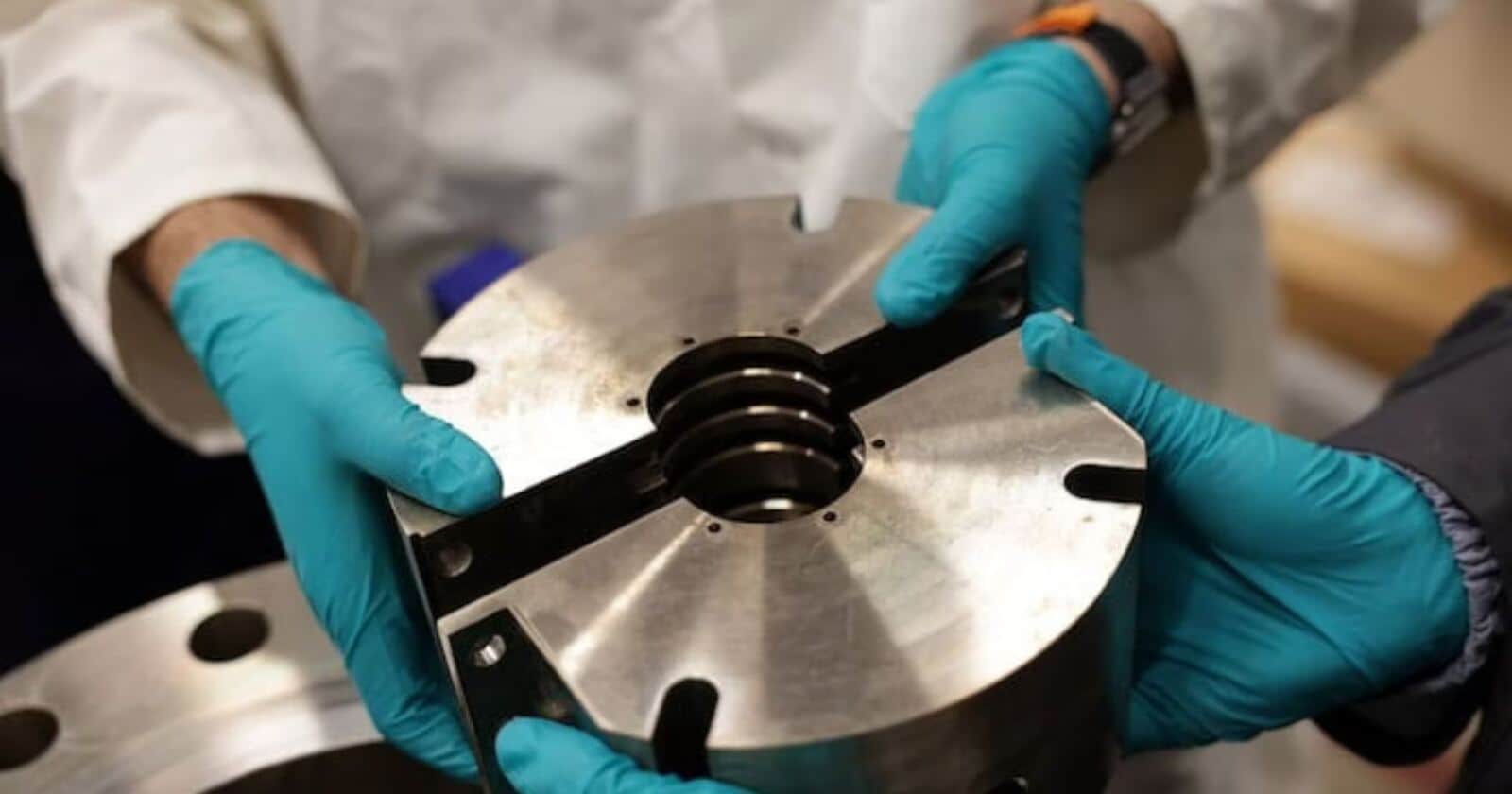
Image: ITzine
Engineers at the University of Michigan ran a commercially available graphite shaft seal for 2,300 hours in conditions designed to resemble those inside a molten salt reactor. The component showed no noticeable degradation by the end of the test, a result aimed at one of the technology’s most difficult engineering problems: containing hot, chemically aggressive fluids around rotating equipment.
Testing the seal in molten FLiNaK salt
The experiment took place at the university’s Shaft Seal Test Facility, built to evaluate sealing systems for rotating pump components. In a future reactor, such a seal would need to keep molten salt inside the circuit while preventing aggressive vapors and toxic gases—including hydrogen fluoride—from escaping.
The test rig used two stainless-steel tanks connected by piping. The lower tank held 32 kilograms of FLiNaK, a mixture of lithium, sodium, and potassium fluorides commonly used as a nonradioactive stand-in for molten salts considered for nuclear power systems. A motor drove the shaft at 1,500 revolutions per minute, while the seal operated in high temperatures and an atmosphere containing different protective gases.
The first days were devoted to running the seal in. It took about 10 days to reach a stable operating condition. Friction created a microscopic gap in the seal, allowing pressure inside the system to equalize. The researchers then evaluated the component under steady conditions and compared its response as the operating environment changed.
Argon performed better than helium and nitrogen
After 2,300 hours, the team found no significant corrosion or structural failure in the graphite seal. Changes in shaft temperature and speed had little effect on the overall results. The composition of the protective gas had a much stronger influence.
Recommended reading
Pentagon Puts $7.1M Into Satellite Solar Glass
At the same flow rate, argon produced higher pressure in the tank than helium or nitrogen. That difference matters in a reactor system, where the choice of inert atmosphere can affect how the entire sealed circuit behaves.
The duration and scale of the experiment also set it apart. According to the researchers, fewer than 10 facilities worldwide have performed tests involving more than 10 kilograms of high-temperature fluoride salts for longer than 100 hours. The 2,300-hour run therefore provides a substantial demonstration that components for molten salt reactors (MSRs) can be evaluated under realistic operating conditions rather than only through modeling or short laboratory trials.
MSRs operate at high temperatures and low pressure, but their chemically reactive environments raise difficult questions about the service life of seals, valves, and pump assemblies. The researchers say their data could support the design and scale-up of MSRs as well as other energy systems that require durable sealing components in harsh conditions. The next challenge is testing larger assemblies for still longer periods without maintenance.

Frontier Editor
Dan is our resident futurist, covering electric mobility, space exploration, and the smart home. He's interested in atoms just as much as bits. Whether it's a new battery chemistry, a reusable rocket, or a protocol that finally makes IoT devices talk to each other, Dan breaks down the engineering that pushes humanity forward.
via ITzine