• 2 min read
German team finds two ways to break down PFAS
HZDR researchers used cavitation and cold plasma to break down PFAS in water, with tests scaling from 50 milliliters to 5 liters.
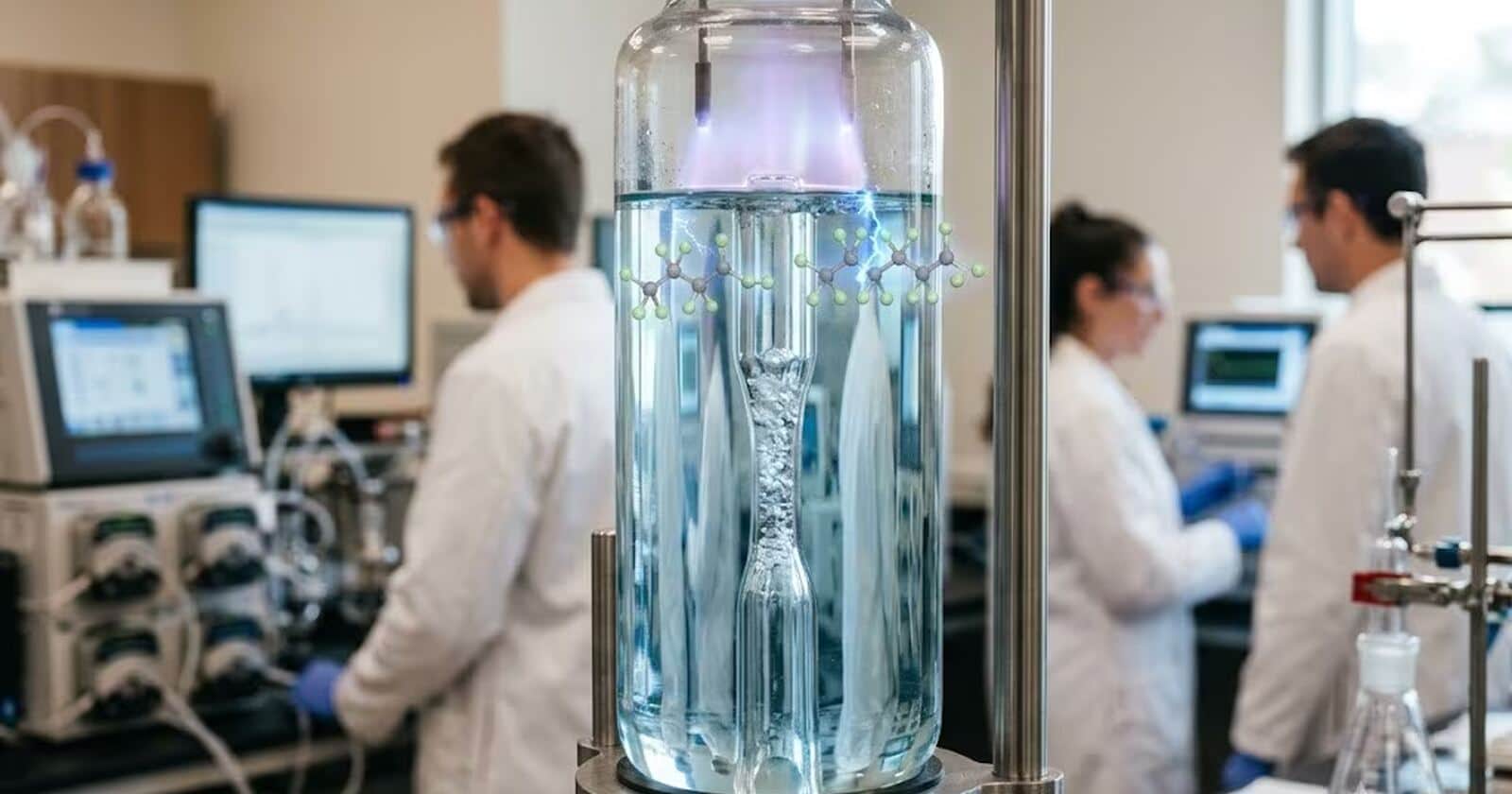
Image: ITzine
Two laboratory techniques developed by researchers at Germany’s HZDR center can accelerate the breakdown of PFAS, the persistent synthetic compounds often called “forever chemicals.” The team used hydrodynamic cavitation and cold atmospheric plasma to treat contaminated water.
PFAS accumulate in water and soil and have been linked to health risks ranging from impaired immune function to a possible increase in cancer. They are used in nonstick coatings, fire-resistant materials, packaging, and textiles, and degrade very slowly in nature. Regulatory pressure is also growing: in 2024, the US Environmental Protection Agency introduced binding limits for several PFAS in drinking water, while the European Union is discussing a broader ban on their production and use.
How the two PFAS treatments work
With hydrodynamic cavitation, contaminated water is forced through a constriction, creating microscopic bubbles. When the bubbles collapse, they generate localized extreme temperatures and chemically reactive particles that attack PFAS molecules, including perfluorooctanesulfonate (PFOS), one of the group’s most persistent compounds.
The second method injects gas into the water to create bubbles that carry PFAS to the surface, where plasma breaks down the compounds. According to the researchers, plasma treatment works faster than cavitation and requires neither catalysts nor additional reagents.
Recommended reading
3D thermal cloak redirects heat from infrared cameras
Both approaches still have drawbacks. Cavitation currently achieves only partial degradation, while plasma consumes considerably more energy and can leave byproducts that require separate treatment.
In laboratory tests, plasma converted about 35% of the fluorine atoms in PFAS into fluoride salts and almost completely destroyed both long-chain and short-chain compounds. The team’s current target for cavitation is to break down more than 80% of PFAS and mineralize more than 50% of the bound fluorine.
The researchers are scaling experiments from 50 milliliters to 5 liters and plan to combine the methods in one system: plasma would provide high chemical reactivity, while cavitation would reinforce pollutant degradation. Compared with activated-carbon sorbents, membranes, and high-temperature incineration, the proposed methods could avoid simply transferring PFAS between media without fully destroying the molecules—if they can reach industrial volumes.

Frontier Editor
Dan is our resident futurist, covering electric mobility, space exploration, and the smart home. He's interested in atoms just as much as bits. Whether it's a new battery chemistry, a reusable rocket, or a protocol that finally makes IoT devices talk to each other, Dan breaks down the engineering that pushes humanity forward.
via ITzine