• 4 min read
Foxconn replaces VMware with Arcfra for AI workloads
Foxconn is replacing VMware with Arcfra across factories and offices, while Broadcom secures a $200 billion Samsung memory and foundry deal.
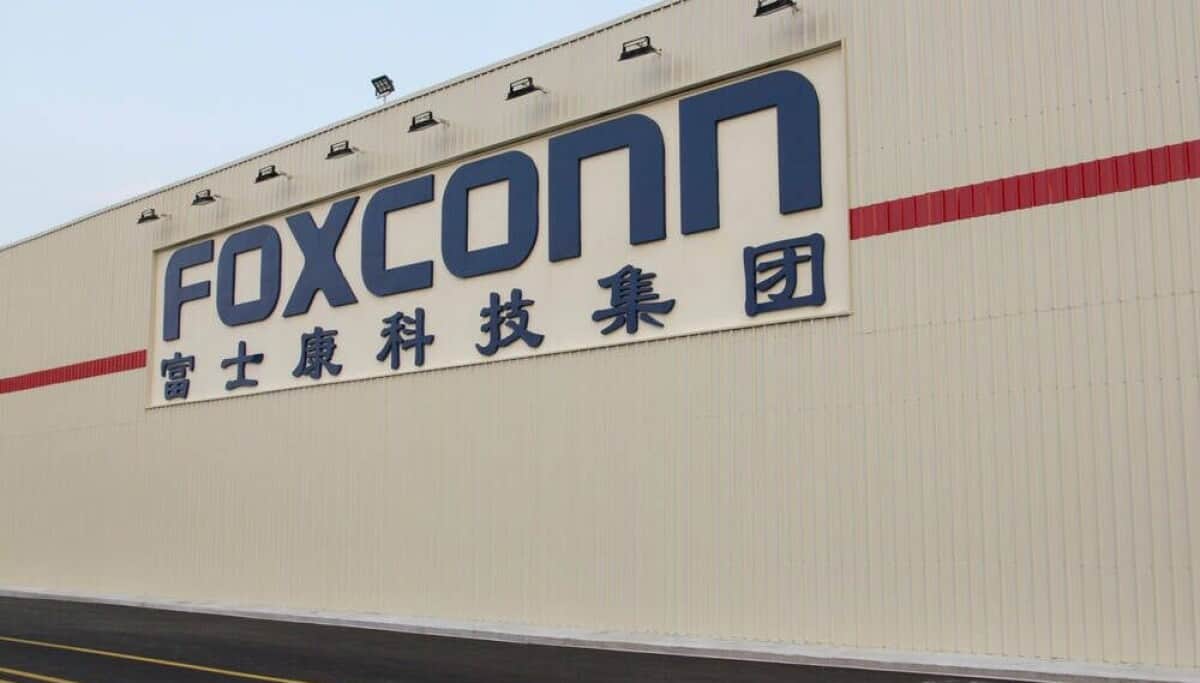
Image: The Register
Foxconn has adopted Singapore-based hyperconverged infrastructure vendor Arcfra for GPU virtualization workloads and to replace VMware at some remote offices, adding pressure to Broadcom’s effort to move large customers onto its VMware Cloud Foundation suite.
Arcfra launched in 2024 and was included the following year in Gartner’s Market Guide for Full-Stack HCI Software. Last week, it updated its Neutree model-as-a-service platform with native GPU virtualization and model-governance features.
Arcfra said Foxconn is using Neutree to modernize distributed factory infrastructure and improve how AI models are delivered, managed, and observed across environments. The Taiwanese manufacturer also uses it to accelerate model deployment, improve operational visibility, and establish a scalable base for future AI and intelligent-manufacturing workloads.
Foxconn has previously described AI as a critical part of its strategy. The Register reported last year that chairman Young Liu had praised generative AI’s potential to significantly improve the company’s factories.
Foxconn replaces VMware and SAN infrastructure
According to an Arcfra case study, Foxconn’s branch companies had relied on traditional VMware virtualization and SAN storage. Arcfra said that setup had become increasingly difficult to manage and scale across a distributed global footprint, while driving up construction, operations, and maintenance costs.
Recommended reading
WEKA claims 1.1 exabytes in one storage rack
Foxconn reportedly deployed Arcfra across branch factories in Mainland China, Taiwan, Vietnam, and North America. The platform supports critical intranet, manufacturing-management, ERP, and production-line-management systems, as well as DevTest environments and virtual desktop infrastructure workloads.
“The legacy VMware virtualization + SAN storage architecture was successfully replaced, providing a modern, scalable foundation ready to accommodate future business growth and technology adoption.”
Foxconn had not responded to The Register’s request for further details by publication time. Broadcom has shifted VMware’s strategy toward large organizations such as Foxconn and says the overwhelming majority of its target customers have adopted Cloud Foundation. The Register has also reported dissent from major customers including Tesco, Western Union, and Allstate Insurance.
Broadcom secures Samsung memory and foundry deal
Broadcom’s semiconductor business received better news with a $200 billion deal involving Samsung’s memory and foundry operations.
Samsung said the companies will pursue a strategic collaboration on memory solutions, including high-bandwidth memory (HBM) for Broadcom’s next-generation AI accelerators. The foundry relationship will cover Samsung’s 2-nanometer and below process technologies for Broadcom products, including wireless broadband communications solutions, as well as advanced 2.3D and 2.5D packaging built on the 2nm process.
“By combining Samsung’s memory and foundry expertise with Broadcom’s AI and connectivity leadership, we aim to continue to deliver technologies that power the next generation of AI infrastructure.”
Broadcom has a large order book for custom accelerators and needs additional foundry capacity for those products and its other offerings. Samsung is arguably the world’s second-most sophisticated fab operator, making the manufacturing access valuable amid a global shortage of fabrication capacity.
Infosys appoints next CEO
Indian technology-services company Infosys has named Ashiss Kumar Dash as its next CEO. The company said Dash is currently global head for a business portfolio covering more than 12 industry verticals.
He will replace Managing Director and CEO Salil Parekh on April 1, 2027, after Parekh’s nine-year tenure. Infosys described the change as an orderly handover, although its latest first-quarter results included guidance for revenue growth of 1.5% to 3%, down from previous full-year guidance of as much as 3.5%. The company said its earlier forecast assumed an economic upswing that had not occurred.
India targets BitChat as China fines Trip.com
The Indian government has ordered GitHub to remove BitChat, Jack Dorsey’s decentralized peer-to-peer messaging app, which can use Bluetooth mesh networks for offline communication. Dorsey shared the order on the renamed platform, saying Indian authorities want the technology taken down.
The order cited Delhi’s power to compel communications service providers to stop services to prevent public disorder, riots, or terrorism, while arguing that authorities cannot act against decentralized messaging infrastructure. The BitChat repository remained accessible at publication time.
Separately, China’s State Administration for Market Regulation fined Trip.com Group $770 million on Saturday over alleged monopolistic practices involving its Ctrip brand. The regulator said Ctrip forced hotel merchants into exclusive cooperation agreements and used technology to manipulate hotel prices, intensifying the industry’s “involutionary” competition. The action could attract attention from regulators elsewhere because Trip.com and its Skyscanner subsidiary are widely used outside China.
Enterprise Editor
Marcus follows the money. He covers enterprise software, cloud architecture, and the tectonic shifts in Big Tech strategy. He translates dense earnings calls and complex M&A activity into actionable insights about where the industry is actually heading. If a tech giant makes a silent pivot, Marcus is usually the first to notice.
via The Register