• 2 min read
China unveils a floating nuclear hub for ports and ships
China’s Jiangnan Shipyard has shown off a floating marine complex that sounds like three businesses crammed onto one platform: a container port, a power station, and a refuelling stop for ships. The concept, presented at

Image: ixbt.com
China’s Jiangnan Shipyard has shown off a floating marine complex that sounds like three businesses crammed onto one platform: a container port, a power station, and a refuelling stop for ships. The concept, presented at Posidonia 2026 in Athens, centers on a liquid-salt nuclear reactor and is pitched as a portable “energy island” for maritime trade.
That is a bold answer to a real logistics problem. Ports want more power, shipping wants cleaner fuel, and coastal infrastructure is expensive to build from scratch; the Chinese pitch tries to solve all three at once, with a modular system that could be dropped into major harbours or busy sea lanes.
What the floating nuclear hub is meant to do
The project is being developed by Jiangnan Shipyard, which is part of state-owned CSSC. Its plan is to create a hub that can receive cargo, redistribute freight, generate electricity, and support ship refuelling from a single offshore platform.
Recommended reading
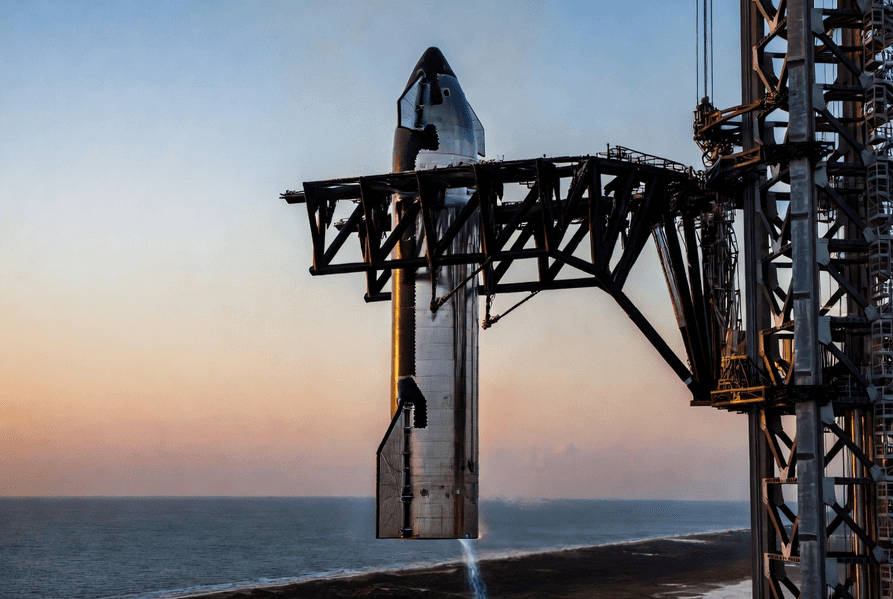
SpaceX may catch Starship on its next flight
That makes it less of a single-purpose vessel and more of a mobile infrastructure node. The idea also fits a wider pattern in shipping: the industry is under pressure to cut emissions without waiting decades for every port to rebuild itself.
Liquid-salt reactor and renewable add-ons
At the heart of the design is a molten-salt reactor, or MSR, where nuclear fuel is dissolved in molten salt that also acts as the coolant. Jiangnan Shipyard says the low-pressure setup can reduce certain failure risks, and that if the salt leaks, it solidifies quickly, helping contain radioactive material.
The platform is also supposed to carry wind turbines and solar panels. Power from the complex would not only support its own operations but also charge electric ships and produce hydrogen and ammonia, both of which are being eyed as alternative marine fuels.
Why the modular floating nuclear hub matters
The modular angle is the most commercially interesting part. If the concept ever moves beyond exhibition-floor optimism, it could be deployed near major ports or along strategic shipping corridors, creating a distributed network of floating energy hubs instead of relying on fixed coastal plants.
That would also put it in a small but growing class of nuclear-adjacent maritime projects that are chasing flexibility rather than brute size. The catch, of course, is that floating nuclear infrastructure has a habit of looking elegant in renderings and getting very complicated once regulators, insurers, and port authorities start asking questions.
The harder question is deployment
China is clearly signalling confidence in advanced reactor concepts and in maritime electrification at the same time. The open question is whether this becomes a real shipping tool or stays a statement piece that helps Beijing and CSSC advertise technical ambition ahead of everyone else.
Frontier Editor
Dan is our resident futurist, covering electric mobility, space exploration, and the smart home. He's interested in atoms just as much as bits. Whether it's a new battery chemistry, a reusable rocket, or a protocol that finally makes IoT devices talk to each other, Dan breaks down the engineering that pushes humanity forward.
via ixbt.com