• 3 min read
Dell XPS 16 returns as a powerful creative laptop
Dell’s 2026 XPS 16 combines a 3.2K OLED display, strong Intel performance, and up to 31 hours of claimed battery life.
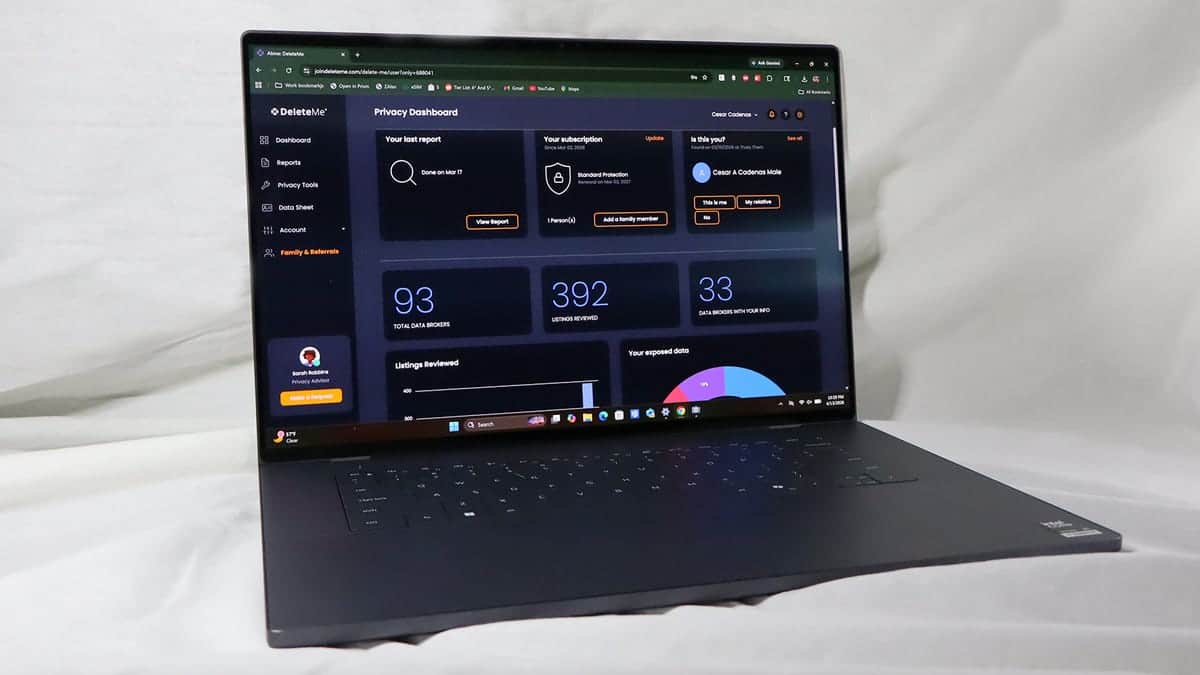
Image: ZDNET
Dell’s 2026 XPS 16 brings back the XPS name after the series briefly disappeared during last year’s rebranding, when Dell replaced it with the “Plus” and “Premium” lines. Customer response was lukewarm, and the return of the familiar XPS design gives this flagship laptop a clear sense of purpose again.
The result is more than a restoration. Dell has refined the formula into a premium Windows 11 laptop aimed at professionals and content creators, with a sleek chassis, a high-resolution OLED display, and enough performance for demanding creative work.
Design, keyboard, and connectivity
The XPS 16's Graphite finish covers the entire chassis, producing a smooth, refined appearance. It does attract fingerprints, but not enough to become distracting. The laptop weighs 3.65 pounds and measures 14.6mm (0.57 inches) thick, according to Dell, making it easy to carry in a backpack.
Recommended reading
Honor launches two new MagicBook laptops in Russia
The chassis is made primarily from CNC-machined aluminum, while the display uses Gorilla Glass 3. It feels solid and well-built, although the review did not include deliberate durability testing.
The main weakness is connectivity. The XPS 16 has only:
- Three Thunderbolt 4 ports
- One headphone jack
The flat keyboard sits flush with the wrist rest. Its keys feel somewhat mushy and do not match the feel of keyboards offering 1.5mm of travel, but the return of physical function keys is a welcome change from the previous touch-sensitive row.
Dell has also added faint visual stripes around the trackpad, replacing the completely hidden design used on older XPS models. In use, the trackpad is responsive, smooth, and spacious.
OLED display, camera, and speakers
The centerpiece is a 16-inch 3.2K OLED touchscreen. It delivers rich, accurate color and strong sharpness, while the thin bezels make the display feel immersive. Fine details remain clear enough to reveal individual strands of hair during webcam use.
The 8MP webcam captures sharp, vibrant 4K video and benefits from HDR support. Audio comes from a quad-speaker system with dual 3W main speakers and dual 2W tweeters, tuned with Waves MaxxAudio Pro.
There is no dedicated subwoofer, but the main speakers provide enough bass to compensate. Spoken audio, music, and video playback are clear, loud, and well-balanced.
Performance and battery life
The tested configuration included an Intel Core Ultra X7 358H processor, 32GB of RAM, integrated Intel Arc graphics, and a 1TB SSD. It handled video editing, photo work, coding, and everyday tasks without trouble, delivering performance that felt close to a high-end desktop PC.
The XPS 16 outperformed most of the flagship laptops in raw processing tests, including Samsung’s Galaxy Book6 Ultra and the M5 MacBook Air, although Apple’s machine led by a narrow margin. In Cinebench testing, Dell’s laptop fell well behind the Galaxy Book6 Ultra and ThinkPad P1, both of which use dedicated Nvidia graphics. Even so, its Cinebench 2026 score of 4,065 is strong for an integrated Intel Arc GPU—and the XPS 16 is significantly cheaper.
The review unit lasted about 14 hours on a charge, enough for a full workday. Buyers prioritizing battery life may prefer the base model, which Dell claims can last up to 31 hours.
Pricing and availability
The Dell XPS 16 starts at $1,900. The base model includes an Intel Core Ultra 7 325, integrated graphics, 16GB of LPDDR5x RAM, a 512GB SSD, and a 16-inch 2K display.
The $2,350 configuration adds Battlefield 6, the survival game Everwind, Adobe Premiere Pro, and the Creative Cloud Photography Plan. A $2,460 version includes those extras plus one year of Adobe Express Premium, McAfee+ Premium, and Dell Care Premium.
For shoppers seeking a premium Windows 11 workstation, particularly content creators who need reliable performance on the move, the XPS 16 makes a compelling case—provided its limited port selection is not a deal-breaker.

Computing Editor
Tomas lives in the terminal. He covers chips, laptops, and operating systems with a focus on performance and efficiency. He reads kernel changelogs the way other people read fiction, and he's always on the hunt for the perfect mechanical keyboard switch. If it processes data, Tomas has an opinion on it.
via ZDNET