• 5 min read
Data centers shift $23B in power costs onto ratepayers
PJM report ties $23B in higher power prices through 2028 to data centers, exposing how grid costs and peak-demand rules hit households.
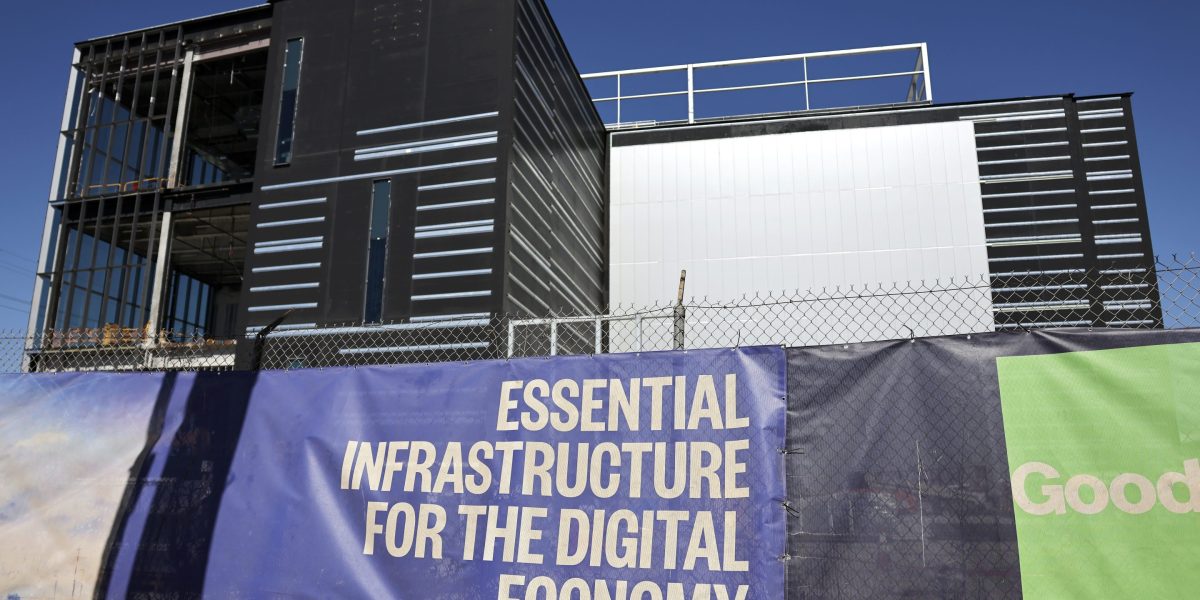
Image: Hacker News
Data centers linked to $23B in higher power bills
A recent report from the organization that monitors the PJM electricity market — which covers all or part of 14 mid-Atlantic and Midwest states — concluded that expected power demand from data centers was a primary reason for $23 billion in customer price increases. Those higher prices are expected to last until at least the end of 2028.
The issue isn’t just raw energy consumption. Someone has to pay for substations and other transmission equipment needed to serve large new loads, and current pricing rules determine how much of that bill lands on data center operators vs. everyone else.
How regulators set electricity prices
In principle, pricing is simple: identify the costs to provide service, allocate those costs to customer groups, then design prices to recover them. In practice, it’s a grind.

Recommended reading
Mira Murati’s lab unveils Inkling, a 975B open model
Regulators first examine the value of utility assets — power plants, transmission lines, substations — plus operating expenses such as salaries, fuel, replacement parts, and purchased power. These costs are then allocated across residential, commercial, and industrial customers.
Ideally, costs are assigned to the customers who cause them, but that’s tough to define. A data center built 50 yards from an existing substation will clearly pay for the 50-yard line to connect. But if the utility must upgrade the substation or secure additional electricity sources, those assets become part of the shared grid — and the costs are likely spread among all customers.
Cost analysts go through thousands of individual line items and decide, case by case, how each is allocated. A common approach is proportional use: if a customer group uses 20% of delivered electricity, it gets 20% of related delivery costs. Other allocations depend on customer counts or usage at specific times, but the core question is the same: what’s your share?
Once that’s done, analysts set rates to recover the allocated costs. Whatever gets assigned to your group shows up directly in the price you pay.
Peak demand rules and a data center loophole
One widely used metric for cost allocation is “coincident peak demand” — how much a customer group is using at the exact moment the entire system hits its maximum load. Costs tied to meeting that overall peak are then split proportionally.
That’s where data centers gain an edge. They can fine-tune their consumption minute by minute in ways residential users can’t. Computerized controls can ramp workloads up or down automatically, while homeowners would have to manually shed load or buy specialized devices.
With that flexibility, data centers can try to predict system peaks and throttle usage to near zero during those short windows, as has already happened with cryptocurrency-mining operations in Texas. When regulators later look at coincident peak data, those centers may appear to have contributed little or nothing to peak demand — even if they draw huge amounts of power at other times.
That can allow data centers to avoid paying a significant share of peak-related grid costs, shifting them instead onto less flexible customers.
Who actually represents residential users?
When utilities file for new rates, they propose how costs should be allocated. Other large stakeholders do the same:
- Large industrial customers such as factories
- Retail groups representing big and small stores
- Large data centers, which can hire specialists in cost allocation
Some states also have dedicated offices, like Pennsylvania’s Office of Small Business Advocate, that step in for particular commercial groups.
Residential voices are more muted. Every state except Georgia, Idaho and Louisiana has an office of the consumer advocate, but those offices are typically required to represent all customers without bias. They can push to keep overall utility costs low, but may be barred by law from arguing for rate designs that shift more cost onto one customer group, such as data centers, to protect another.
That gap creates an asymmetry: data center advocates can argue aggressively for minimal cost allocation to their clients, while there may be no one tasked with directly contesting that on behalf of households.
Long-term risks if data centers don’t show up
Grid investments built to serve data centers can last many years, but the demand those projects assume might not. Some planned centers may never be built, some may use less energy than projected, and rapid technology shifts can make facilities obsolete after a year or two of operations.
If that happens, the utility’s sunk costs for extra capacity don’t disappear — they’re spread across everyone else on the system. Municipal utilities and rural cooperatives face the same allocation challenges, often without full-time regulatory staff. City councils or elected boards may need to hire external experts just to keep up.
The Director of Energy Studies at the University of Florida, Theodore J. Kury, argues that consumers need to understand how cost allocation works because it directly affects their bills. He says they should file public comments and speak at open hearings, as there may be no one else effectively advocating for their interests.
This article is republished from The Conversation under a Creative Commons license.
Read the original article.

AI Editor
Ava covers the rapidly evolving world of artificial intelligence, from foundational models and research labs to the real-world economics of intelligence. With a background in computational linguistics, she cuts through the hype to find out what actually works. She firmly believes that benchmarks are just marketing until reproduced in the wild.
via Hacker News