• 4 min read
China’s CXMT rises as RAM prices stay high
CXMT now supplies 7.67% of global DRAM, but China’s new memory giant may take years to ease soaring RAM and PC prices.
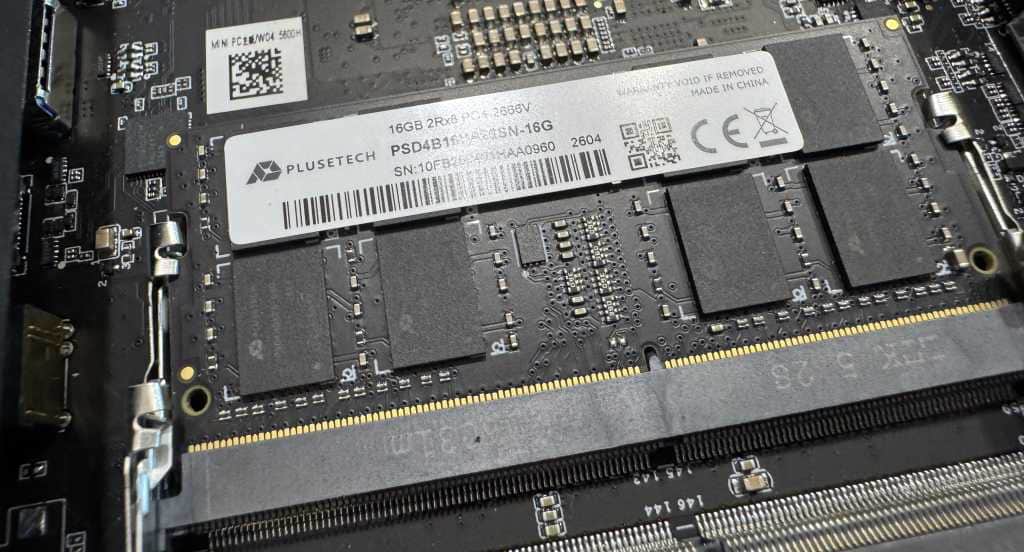
Image: PCWorld
CXMT, a Chinese memory supplier that was barely known outside China a year ago, has become one of the hottest names in the DRAM market. Its rise comes as Samsung, SK Hynix, and Micron redirect production toward more profitable HBM chips for AI data centers, leaving consumer memory in short supply.
The timing is ideal for ChangXin Memory Technologies. The company completed its first domestic memory fabrication plant in Hefei in 2019, when it was China’s only memory manufacturer. It is now the world’s fourth-largest memory supplier, although the gap between CXMT and the “Big Three” remains substantial.
CXMT’s initial public offering on the Shanghai Stock Exchange last week surged nearly 500 percent, raising the equivalent of $8.6 billion. According to its IPO, the company supplied 7.67 percent of the global DRAM market last year, despite focusing primarily on China.
CXMT memory reaches global hardware
Dell, Acer, and HP are investigating CXMT as a supplier. Lenovo, the world’s largest PC manufacturer, already uses CXMT DRAM in at least a few models, while Apple is considering the company for products sold in China.
Recommended reading
Huawei MatePad Air weighs just 509 g
CXMT’s DDR5 desktop modules are now compatible with most motherboards, though some systems may require a BIOS or UEFI update. Retail memory suppliers including Corsair are also beginning to use CXMT chips in their modules.
Dell’s Alienware 15 review unit examined by PCWorld used a 16GB SK Hynix SO-DIMM rather than CXMT memory.
Initial testing suggests CXMT’s RAM is adequate but less attractive for overclocking. Its older technical design also consumes more power than the latest products from Samsung, SK Hynix, and Micron. Still, with high-performance memory costing roughly four to five times what it did in July 2025, additional supply is welcome. PCWorld’s desktop memory would cost more than $1,000 to replace at current prices.
Consumers are unlikely to find CXMT-branded modules on store shelves. Like Micron’s consumer memory business, CXMT primarily sells chips to other companies, with most production going to Chinese customers. Even so, its share is large enough to influence the market and provide competition against the established suppliers, which have been accused of conspiring to keep prices high. The source notes that there is currently no evidence of such a conspiracy.
Why RAM prices have not fallen
Consumer RAM prices remain flat or slightly higher. PCPartPicker data shows a sharp increase late last year, followed by steady rises through 2026, leaving DDR4 and DDR5 prices about four to five times higher than in July 2025.
Large PC makers pay less than consumers because of volume discounts, but they are still raising laptop and desktop prices and reducing memory and storage in entry-level configurations. Framework and Valve, which have less purchasing power than the biggest manufacturers, have also reported supplier difficulties.
CXMT and fellow Chinese memory company Yangtze Memory Technologies, or YMTC, may already be preventing the shortage from becoming worse. But memory manufacturing does not respond to market changes in a matter of weeks. The price spike resulted from a post-COVID supply shortfall, a surge in planned AI data-center construction, and manufacturers shifting capacity from consumer DRAM to HBM.
Even if CXMT continues concentrating on consumer memory while Samsung, SK Hynix, and Micron serve data-center customers, it could take a long time for higher output to reach retail prices and finished PCs.
A slower route to cheaper PCs
The immediate answer is uncertain. The most optimistic forecasts put the shortage another one or two years away from ending; more pessimistic predictions call for a decade of elevated prices and constrained supply, assuming the current AI boom continues.
CXMT is unlikely to reduce RAM and PC prices by itself anytime soon. Its more realistic contribution is preventing the consumer market from collapsing after established memory makers shifted attention elsewhere. If additional suppliers emerge in China and other regions, returning to the prices buyers enjoyed just one year ago could still take multiple years.
PCWorld’s author is Michael Crider, a staff writer with 15 years of technology journalism experience.
Computing Editor
Tomas lives in the terminal. He covers chips, laptops, and operating systems with a focus on performance and efficiency. He reads kernel changelogs the way other people read fiction, and he's always on the hunt for the perfect mechanical keyboard switch. If it processes data, Tomas has an opinion on it.
via PCWorld