• 3 min read
China starts DUV scanner production despite ASML gap
China has begun producing DUV lithography scanners, but its tools remain about four generations behind ASML for 28nm chipmaking.
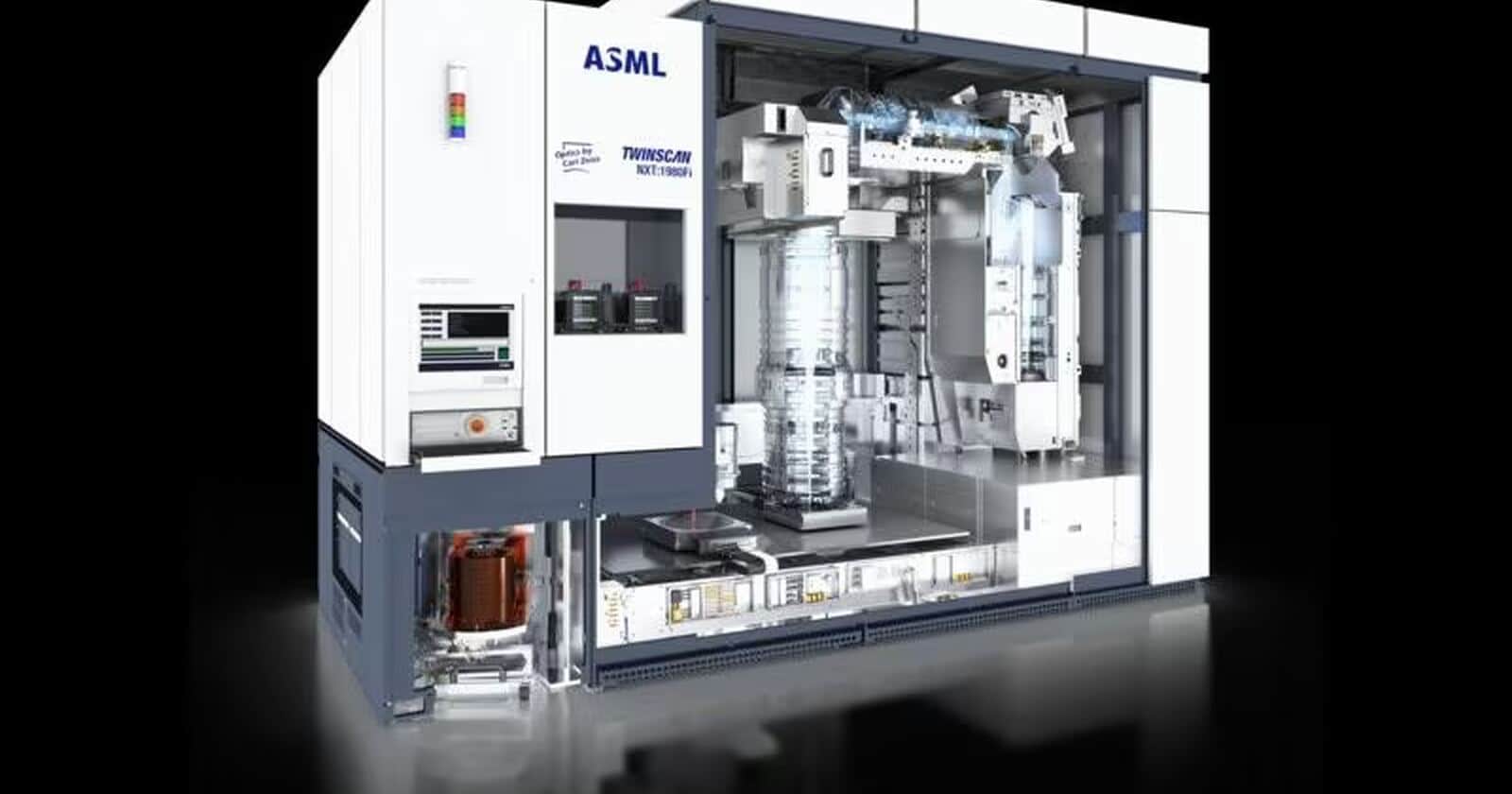
Image: ITzine
Chinese manufacturers have begun series production of DUV lithography scanners, but their equipment remains several generations behind ASML in performance and reliability. The systems are reportedly immersion tools used for chips on process nodes older than EUV, including the strategically important 28-nanometer class and nearby technologies.
According to sources cited by Reuters, Shanghai Aishengna Electronic Technology Group has already started mass assembly of the equipment. The company is expected to build only five lithography systems in 2026, followed by roughly 20 in 2027. Those volumes are small by semiconductor-industry standards, but they stand out as China faces strict restrictions on Western semiconductor equipment and continues trying to localize critical parts of the supply chain.
Potential early customers reportedly include SMIC, HuaHong Semiconductor, and ChangXin Memory Technologies. These companies are frequently named in discussions about Chinese purchases of lithography equipment, particularly where domestic tools could partially replace imports.
Chinese DUV scanners versus ASML
The local DUV effort is linked to engineers from Shanghai Yuliangsheng, SMEE, and related teams. Over recent years, those groups have worked on domestic scanners while SMEE shifted more attention toward EUV equipment. Industry reports have suggested that the projects draw on a shared pool of personnel and technology rather than developing entirely independently.
Recommended reading
Memory shortage puts MacBook Air supply under pressure
Even if production scales as planned, the technology remains a catch-up effort. Western experts cited by the source estimate that Chinese systems intended for 28nm chip production lag foreign alternatives by about four generations. They also reportedly trail significantly in reliability and performance.
The SSA800, associated with domestic development, is claimed to achieve throughput of about 150 silicon wafers per hour. However, it remains far from the target 90–95% yield, according to the source. That gap matters because a scanner’s nominal wafer-per-hour figure does not by itself determine how many usable chips a factory can produce.
The shortfall extends beyond the scanner itself. China still has to import laser sources, optics, mirrors, and control software, leaving domestic equipment makers dependent on external suppliers. ASML’s advantage is therefore not limited to the machine’s design: the Dutch company has spent decades building a broad supplier ecosystem, while China is trying to assemble a comparable network piece by piece under sanctions pressure.
What the first production volumes change
For Chinese fabs, even five systems in 2026 and approximately 20 the following year could modestly reduce reliance on imported equipment where EUV remains unavailable and DUV continues to serve as the production workhorse. The development is particularly significant as China invests heavily in its semiconductor supply chain while the United States and its allies restrict access to advanced manufacturing tools.
The market reaction showed how sensitive investors are to any sign of progress. ASML shares fell more than 13% at the beginning of the week, while Infineon Technologies stock dropped 15.5%. Those moves do not establish that Chinese tools can compete with ASML, but they underline the attention given to domestic alternatives.
The source also stresses that the Aishengna story is still based partly on expectations and reports. It remains unclear how quickly the company can deliver the planned systems, how many will enter actual production, and whether Chinese fabs can use them to achieve stable, high-volume chip output. Real shipments and sustained manufacturing results—not rumors—will determine whether this is the start of broader lithography localization or another intermediate step in China’s effort to catch ASML.
Computing Editor
Tomas lives in the terminal. He covers chips, laptops, and operating systems with a focus on performance and efficiency. He reads kernel changelogs the way other people read fiction, and he's always on the hunt for the perfect mechanical keyboard switch. If it processes data, Tomas has an opinion on it.
via ITzine