• 3 min read
Augmental’s MouthPad and Vox spark hands-free AI dreams
Augmental’s MouthPad and Vox target accessibility, but online users are recasting them as tools for vibe coding and hands-free AI work.
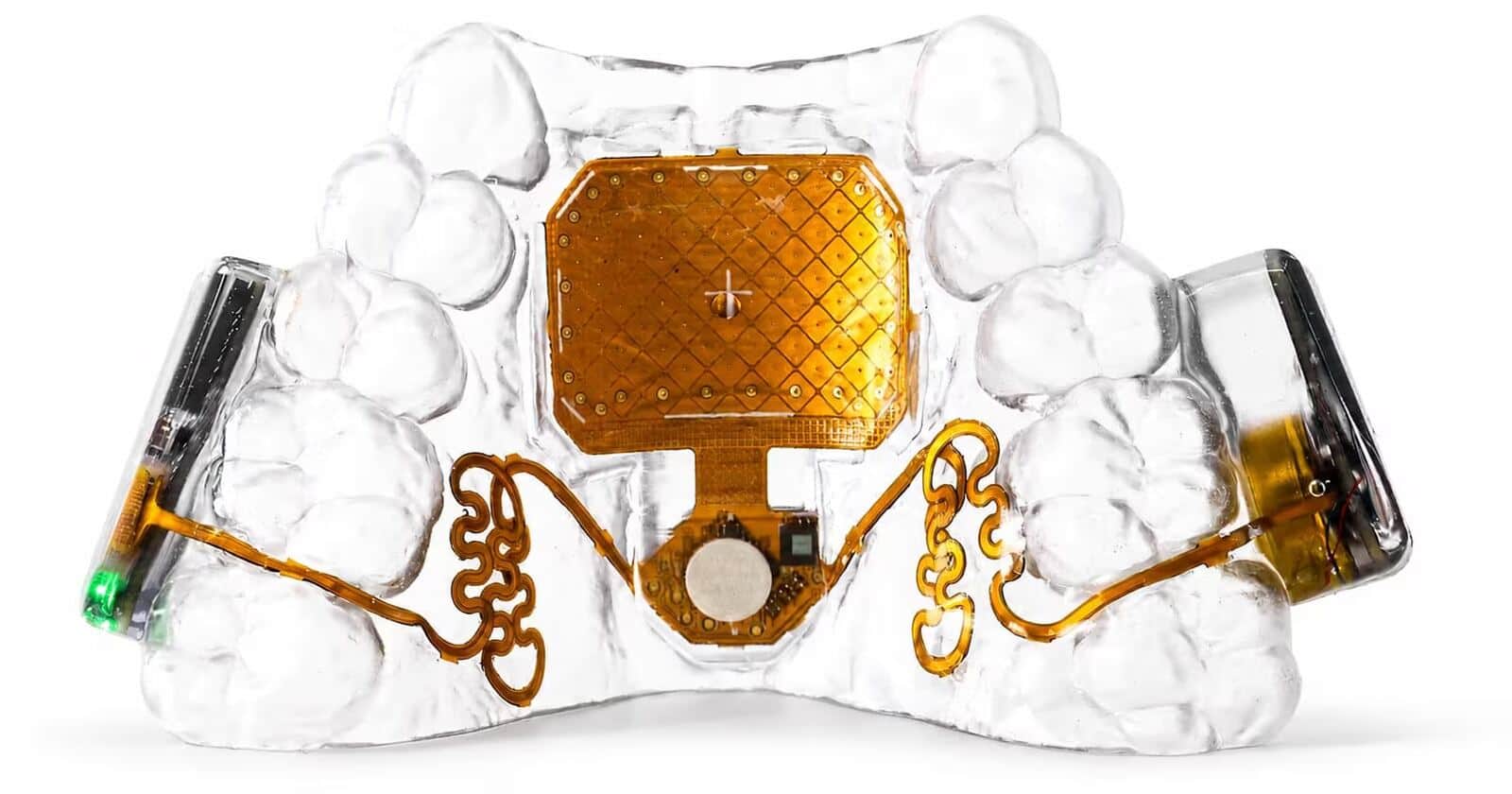
Image: ITzine
Augmental has unveiled two devices from its “skinware” line: MouthPad, a touchpad controlled with the tongue, and Vox, a body-mounted microphone designed for quiet speech and dictation. The company built them primarily as accessibility tools, but online users quickly began imagining them as hardware for voice coding and hands-free conversations with AI at a desk.
MouthPad replaces conventional touchpad control with tongue-driven cursor movement. Vox is worn on the body and targets private dictation, weak speech, and noisy environments. Augmental says more than 100 people already use its devices, with some wearing or operating them for 16 hours a day.
Why Augmental’s devices moved beyond accessibility
The online reaction has diverged from the company’s stated focus. On X, “effective accelerationism” advocate Beff Jezos quickly promoted the idea that MouthPad, combined with subvocalization, could create an ideal setup for “vibe coding.” He later turned to Vox, suggesting a “soft merge” with non-invasive brain-computer interfaces.
Augmental explicitly says it is designing for people with quadriplegia, ALS, spinal-cord injuries, and severe motor impairments. That emphasis is substantive, not marketing decoration. Assistive-interface companies typically have to prioritize reliability, compatibility, and affordability over internet hype.
Convenient input has long sat between medical technology and mainstream electronics. Apple, Google, and Microsoft already offer voice, switch, and gesture controls, while specialist providers such as Tobii Dynavox develop eye trackers and communication systems. These products serve comparatively small audiences, and adoption can take time, so they rarely become symbols of a speculative “future of work.”
Recommended reading
ChatGPT and Codex hit partial outage
Augmental’s devices landed differently because they also suggest a way to move hands farther from the keyboard and mouse. That idea fits the current enthusiasm for speaking to AI systems. The Wall Street Journal recently reported on offices where employees increasingly dictate prompts to models, turning workplaces into an uneasy mix of open-plan offices and call centers.
MouthPad and Vox’s accessibility role
The same trend has an obvious drawback: the louder the conversation with AI becomes, the more disruptive it can be to people nearby. Vox may ultimately prove more significant than the MouthPad hype because it addresses a clear need for people with speech impairments, rather than simply fueling fantasies about typing with thoughts, tongues, or anything else that eliminates the keyboard.
Assistive technology often grows more slowly than consumer electronics, but users value dependable performance. If a device helps someone work or communicate for 8–16 hours a day, it can have a long life without mass-market attention.
For Augmental, the key test is whether it can keep serving the people it designed these products for. If MouthPad and Vox work reliably in everyday use, their path may run through rehabilitation centers, clinics, and corporate accessibility programs—not memes. The same hardware can still acquire two very different identities: a route to a computer for one person, and a vision of a world without typing for another.

AI Editor
Ava covers the rapidly evolving world of artificial intelligence, from foundational models and research labs to the real-world economics of intelligence. With a background in computational linguistics, she cuts through the hype to find out what actually works. She firmly believes that benchmarks are just marketing until reproduced in the wild.
via ITzine