• 2 min read
AMD Helios takes aim at Nvidia’s AI racks
AMD’s Helios AI rack platform targets Nvidia with Microsoft, Meta, OpenAI, and Oracle as early customers. Shipments begin in late 2026.
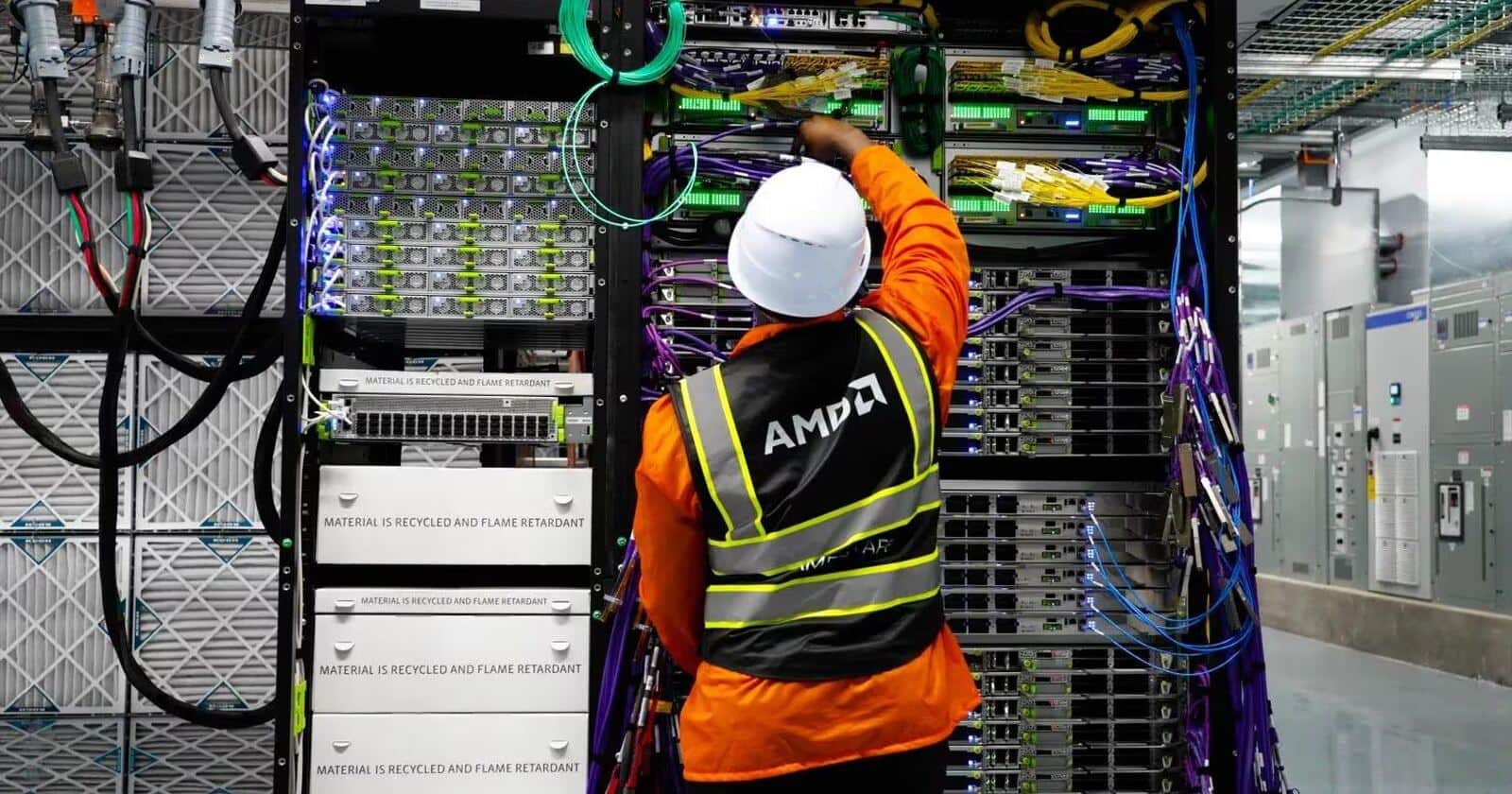
Image: ixbt
AMD has unveiled Helios, its first full-size rack-scale platform for AI computing, with Microsoft, Meta, OpenAI, and Oracle named among its initial customers. Shipments are scheduled to begin in late 2026, positioning Helios as a direct rival to Nvidia’s Grace Blackwell and Vera Rubin server platforms.
AMD’s full-stack AI platform
Helios combines AMD’s data-center portfolio in a single system: Instinct GPUs, EPYC processors, networking components, and software. The platform contains 18 compute racks, each equipped with four accelerators and one server processor, and is designed for training and inference of large models.
That all-in-one approach reflects a shift in how cloud and AI companies buy infrastructure. Instead of purchasing individual chips, they increasingly want tightly integrated platforms spanning compute, networking, and software. Nvidia has built a strong advantage here through CUDA, leaving AMD to compete on both performance and developer usability.

Recommended reading
Roscosmos tests AI for ISS crew reports
Microsoft has confirmed that it will deploy Helios in Azure and introduce two new types of compute instances based on AMD Venice processors. One will target agentic AI and data processing; the other will focus on semiconductor-design workloads. The commitment gives Helios a route into infrastructure that Microsoft sells directly as a cloud service.
Image source: ixbt
Helios pricing and customer commitments
According to The Futurum Group, a Helios system could cost $5 million to $5.5 million, while Nvidia still controls more than 95% of the server GPU market. AMD’s share is estimated at approximately 4.5%.
That makes the customer list a test of whether AMD can scale beyond a typical product announcement:
- Meta has previously discussed plans to use up to 6 GW of AMD accelerators, starting with 1 GW of Helios-based systems.
- OpenAI and Oracle have also said they intend to deploy the platform.
AMD previously gained Microsoft as the first major customer for its MI300X accelerators, which were positioned as an alternative to Nvidia products. Helios expands that strategy from individual chips to a complete stack covering compute, networking, and software support.
The company’s larger test will come in 2026: whether it can win meaningful share not only in hardware, but also in the developer ecosystem that often determines platform adoption. If Helios reaches broad deployments at Microsoft, Meta, and OpenAI, 2027 could become AMD’s first year of significant AI data-center revenue.
Meta is owned by Meta, recognized as an extremist organization in Russia, where its activities are prohibited.

AI Editor
Ava covers the rapidly evolving world of artificial intelligence, from foundational models and research labs to the real-world economics of intelligence. With a background in computational linguistics, she cuts through the hype to find out what actually works. She firmly believes that benchmarks are just marketing until reproduced in the wild.
via ITzine