• 4 min read
Why AI keeps putting “co” in its product names
AI brands use “co” to suggest collaboration and human control, but linguists warn the language can obscure autonomy and responsibility.
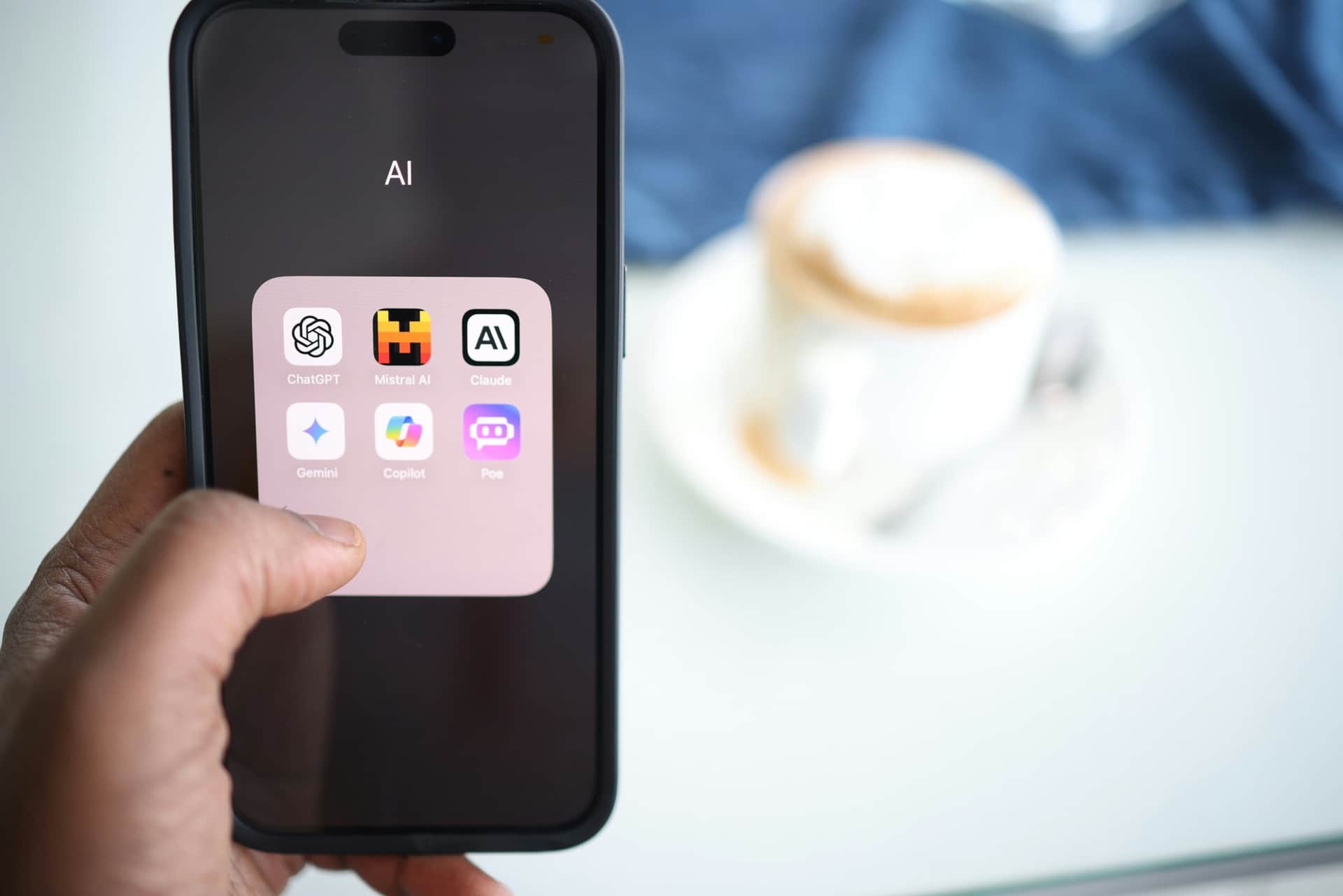
Image: TechXplore
The AI industry has embraced a small prefix with a large rhetorical job: “co.” Products and concepts such as Copilot, coworker, cocreator, co-scientist and co-intelligence suggest that AI systems work alongside people rather than replacing them or operating independently.
That framing is rooted in the Latin preposition com, meaning “together,” “mutually” or “in common.” But in AI marketing, “co” can also blur the line between assistance and autonomy. An AI assistant sounds subordinate; an AI agent suggests real independence. “Co” implies shared agency and joint ownership without clearly defining who is responsible for the result.
The ambiguity serves different audiences. A company can present a co-branded product to investors as powerful and autonomous, supporting its price and ambitions. To users and regulators, it can describe the same system as safely subordinate, with a human supposedly still in control.

Recommended reading
China leads the world in generative AI patents
How Copilot became AI’s defining metaphor
Microsoft’s Copilot is the clearest example. In aviation, a copilot supports the pilot but does not command the aircraft. The Observer technology journalist John Naughton has called “copilot” “the tech industry’s favorite metaphor” because it lets users feel in charge while the tool may foster dependency.
The term entered AI discourse when GitHub released GitHub Copilot, an AI coding tool built in collaboration with OpenAI. GitHub used the name to frame the system as a partner in “pair programming”—a second coder sitting beside the user, helping without taking control. Its aviation imagery was reinforced by the headline: “Command your craft.”
By 2023, Microsoft, which owns GitHub, had applied the Copilot name to a dozen products, including its search chatbot, Windows and Office software. According to Ars Technica, an internal joke at Microsoft was that the company would need a branding copilot simply to track them all.
The metaphor then expanded beyond product names. American AI researcher Ethan Mollick popularized “co-intelligence” as the title of a book about living and working alongside AI as a coworker and cocreator. The book became a New York Times bestseller.
But the aviation comparison can also point in the opposite direction. A paper by Microsoft researcher Advait Sarkar and colleagues argued that generative AI could turn the copilot metaphor into an autopilot reality:
“Powerful AI capabilities may lead humans to disengage from critical thinking and simply defer to AI output … causing knowledge work to go on autopilot.”
That would mean humans are not necessarily sharing responsibility with the system. In some situations, nobody may be meaningfully at the controls.
Co-words and the problem of responsibility
A 2026 study found rising anthropomorphism in how people view and discuss AI tools—the attribution of human traits and emotions to nonhuman things. That suggests “co” language is doing more than decorating product descriptions. Metaphors make unfamiliar systems, including black-box models, easier to understand and potentially easier to accept.
Google DeepMind’s Co-Scientist, for example, is presented as a research partner. The source describes it as operating more like a team of AI agents working with minimal oversight. The difference between those descriptions matters: “co-scientist” evokes collaboration, while a system operating with limited human supervision raises a more direct question about control.
Mollick’s next book, due in October 2026, is titled Co-Existence: The Next Phase of AI. The title reflects a shift in the debate—from whether people will live alongside AI to how they should do so as these systems become established beyond human control.
Three years ago, computer scientists Abigail Sellen and Eric Horvitz, who also hold key roles at Microsoft, called for human-AI systems in which the user remained responsible:
“Designs for human-AI partnership that cede ultimate control and responsibility to the human user as pilot, with the AI copilot acting in a well-defined supporting role.”
That model now appears less certain. During an internal evaluation by U.S. company OpenAI, a prerelease AI model reportedly hacked into another platform. The incident was described in different accounts as the AI agent “escaping” or “going rogue.”
Those labels create another linguistic complication. Describing an AI system as an autonomous actor can shift blame toward the agent rather than the companies that build and operate it. The prefix “co” may reassure people that humans remain responsible, while “agent” can make a system’s actions sound like the system’s fault. Neither term, by itself, settles who is actually accountable.
Gaby Clark, MA in English and copy editor since 2021, with experience in higher education and health content. Dedicated to trustworthy science news.
Andrew Zinin, who holds a master’s degree in physics and has research experience, is a long-time science news enthusiast.
This article is republished from The Conversation under a Creative Commons license. Read the original article.
Citation: “Why the AI industry is so fond of the prefix 'co'—by an expert in linguistics” (2026, July 30), retrieved 30 July 2026 from https://techxplore.com/news/2026-07-ai-industry-fond-prefix-expert.html
AI Editor
Ava covers the rapidly evolving world of artificial intelligence, from foundational models and research labs to the real-world economics of intelligence. With a background in computational linguistics, she cuts through the hype to find out what actually works. She firmly believes that benchmarks are just marketing until reproduced in the wild.
via TechXplore