

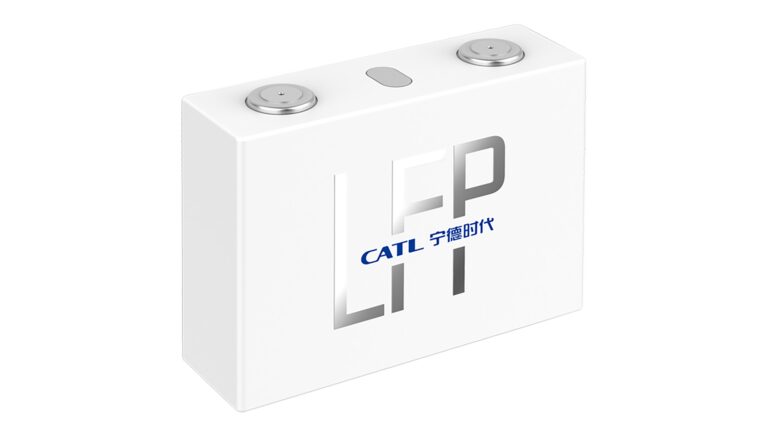
CATL has opened a new online sales channel that lets smaller storage integrators buy battery cells directly from the factory instead of working through layers of resellers. The company launched CATL Mall on 26 June 2025, and the pitch is simple: make small and scattered orders less painful for customers that do not buy in massive volumes.
That sounds mundane until you remember how battery supply usually works. Big manufacturers tend to chase the biggest contracts first, which leaves smaller buyers paying more, waiting longer, and taking whatever stock is available. CATL is trying to pull some of that demand in-house, and that could make life less comfortable for the middlemen who built a business on those markups.
What CATL Mall sells right now
At launch, the platform lists three battery models that can be bought now: 100 Ah, 280 Ah, and 314 Ah. A 587 Ah model is also shown, but it is not yet available for purchase. For buyers, that mix suggests CATL is starting with the products most likely to move in storage projects before widening the offering.
- 100 Ah
- 280 Ah
- 314 Ah
- 587 Ah, listed but unavailable
A lower bar for smaller buyers
The store sets a minimum order of three boxes, which is a pretty clear signal that CATL wants to serve smaller and medium-sized customers rather than only the giant project developers. That matters because the old model often forced these buyers to go through trading companies, adding cost, uncertainty, and a fresh round of finger-pointing whenever supplies got tight.
Direct factory ordering also changes the economics of trust. If CATL can keep delivery consistent and quality uniform, it may chip away at the value proposition of distributors who have long sold access as much as product. The bigger question is whether the company is willing to keep expanding the platform beyond a narrow set of cells and turn it into a real sales channel, not just a carefully controlled experiment.
How CATL Mall could shift battery sales
CATL is hardly the first manufacturer to test direct sales, but it is one of the few with enough scale to make distributors nervous. In a market where supply chains have often been optimized for large contracts, a factory-run storefront aimed at fragmented demand could force rivals to rethink how they serve smaller integrators. The move also hints at a broader industry pattern: battery makers want more control over pricing, customer data, and aftermarket relationships, not just production output.
For now, the smart money says the platform will be judged on boring things: stock availability, lead times, and whether the listed 587 Ah cell actually becomes purchasable. If CATL gets those basics right, the mall may grow into a channel that competitors will have to answer. If not, it will be remembered as a neat idea that still needed a lot more batteries.