

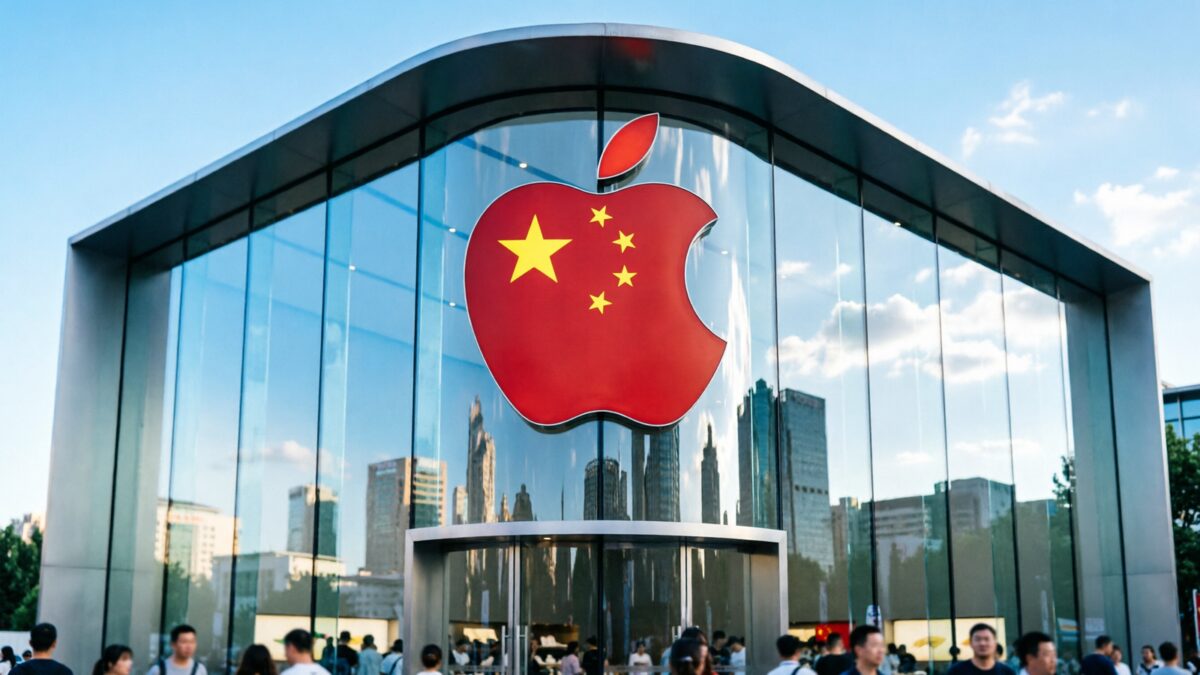
Apple is trying to get permission from the Trump administration to buy memory chips from China’s CXMT, a move that shows just how far the company is willing to go to soften a painful rise in DRAM and NAND prices. According to Financial Times sources, Apple has already contacted the U.S. Commerce Department and is lobbying officials in Washington for an exception to the current restrictions.
The irony is obvious: CXMT is on a Pentagon-linked list of companies tied to China’s military, which is exactly the sort of label that usually shuts doors, not opens them. But memory is now expensive enough to make even Apple test the edges of policy, and that tells you the pressure is real – not just on Apple, but on every device maker that depends on a handful of giant suppliers.
Why Apple wants a Chinese memory supplier
The trigger is cost. Apple recently raised prices on Mac computers and iPads because memory prices have been climbing, and WCCF says 12-gigabyte LPDDR5X chips have roughly tripled over the past year. That kind of jump is hard to absorb quietly, especially for a company that hates margin surprises almost as much as it hates looking dependent on a rival’s supply chain.
If the trend continues, the math gets uglier. Memory and storage could account for about 27% of the cost of a future iPhone 18 Pro, up from 9% in the current iPhone 17 Pro, which is a neat way of saying Apple has a problem that won’t be solved by a slightly shinier keynote slide.
CXMT gives Apple leverage, even without a deal
CXMT may not replace Samsung, SK hynix, or Micron overnight, and nobody is pretending otherwise. Still, even the possibility of an extra supplier can strengthen Apple’s hand in negotiations with its existing memory partners, who currently dominate the company’s supply chain and know it.
That leverage story matters because memory is one of those components where shortages and price spikes tend to travel fast across the industry. Apple is not the only buyer feeling the squeeze; the bigger question is whether regulators will let one of America’s richest companies shop around in China when geopolitics says it shouldn’t.
What happens if Washington says yes
Nothing is official yet, and neither Apple nor U.S. authorities have confirmed any approval. If Washington does grant an exception, it would be a sharp example of policy bending under commercial pressure – the sort of outcome companies love, lawmakers defend cautiously, and competitors immediately take note of.
If the answer is no, Apple still gets something useful out of the effort: a public reminder to Samsung, SK hynix, and Micron that its purchasing power is enormous, and its patience with rising chip bills is not. Expect more of these quiet supply-chain maneuvers as memory prices stay hot and every major device maker starts hunting for a less expensive plan B.