

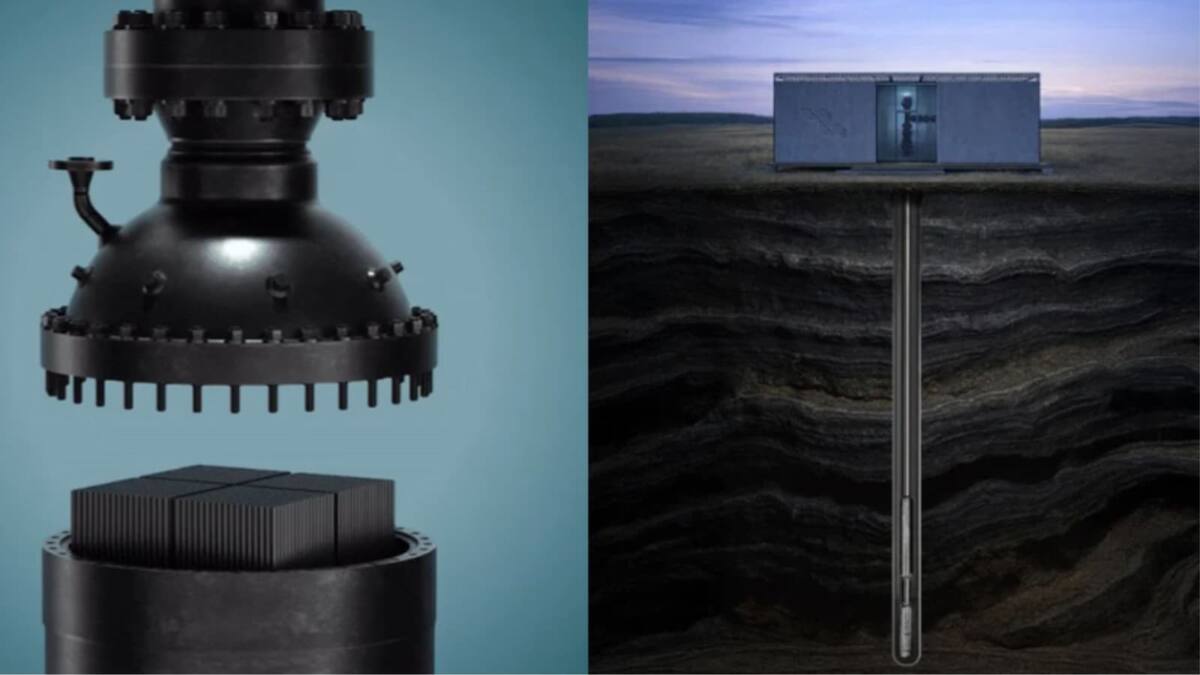
A U.S. startup is trying to make nuclear power a lot more compact by sending the reactor underground. Deep Fission says it has signed a series of letters of intent for its buried reactor concept, with potential demand that could add up to 18.5 GW if every project on the table eventually happens. The catch is doing a lot of work here: these are not binding contracts, and nobody is yet on the hook to finance or buy anything.
The buyers Deep Fission is courting are the usual electricity-hungry suspects: data-center operators, industrial firms, developers of industrial parks, and infrastructure companies. That mix tells you where the pitch is aimed. This is less about replacing giant legacy nuclear plants and more about serving customers who want large amounts of power on-site, fast, and with fewer headaches than a conventional build.
How Deep Fission’s underground reactor works
The company’s Gravity Nuclear Reactor is a compact pressurized water reactor designed to sit in a vertical borehole about 1.6 km deep. Instead of spreading a plant across a big surface site, Deep Fission is betting that putting the reactor underground could shrink the footprint and simplify security and safety compared with classic small modular reactors. That is a bold claim, and one that will need more than a nice diagram and a hard hat.
Deep Fission says its first demonstration project is planned for Great Plains Industrial Park in Kansas under the U.S. Department of Energy’s Reactor Pilot Program. The company has already drilled a research well to a depth of about 1.8 km, which should give it data for the next step: drilling a full-size shaft for a prototype reactor. A few meters of rock can be helpful; 1.6 km is a much larger commitment.
Licensing, contracts and the long road to revenue
The timetable is still very early. Deep Fission plans to apply for a license with the U.S. Nuclear Regulatory Commission in the first half of 2027, and commercial plants would only come after testing, approvals, and proper customer contracts. In nuclear, that is the part where optimism collides with paperwork, and paperwork usually wins for a while.
The broader pitch makes sense in a market that is already bending under AI and cloud demand. Data centers are driving a fresh appetite for steady power, and nuclear startups from conventional SMR developers to behind-the-meter power suppliers are all chasing the same prize: long-term electricity customers that want reliable baseload generation without waiting for a grid upgrade. Deep Fission’s twist is the drilling rig, not the reactor physics.
- Reactor concept: Gravity Nuclear Reactor
- Planned depth: about 1.6 km
- Research well already drilled: about 1.8 km
- Potential demand announced: 18.5 GW
- First NRC license filing planned: first half of 2027
What would have to happen next
The obvious question is whether burial solves enough problems to justify the engineering risk. If Deep Fission can prove that underground placement really lowers the site footprint and security burden, it may find enthusiastic customers among operators desperate for firm power. If not, the concept will join the long list of nuclear ideas that looked elegant on paper and then ran straight into reality, where rock is expensive and regulators are patient for a reason.