
Tesla is about to spend like a company trying to become three companies at once. The automaker said capital expenditures will rise to $25 billion in 2026, a sharp jump from recent years and a sign that Elon Musk’s AI and robotics pivot is moving from pitch deck to factory floor.
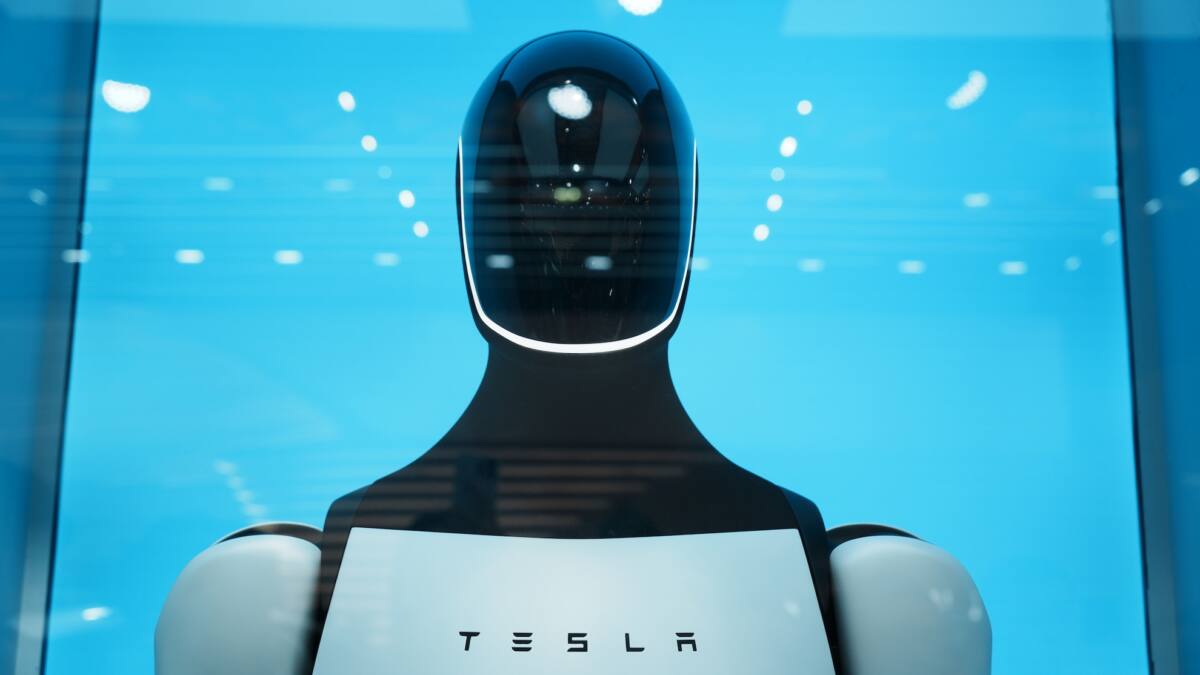
The extra money is not going into a mystery bucket. Tesla says it will fund AI training, chip design, manufacturing expansion, robotaxi work, and a new semiconductor research fab in Austin. It is also preparing a dedicated Optimus facility near its Austin factory, while the Fremont plant likely absorbs more spending as Model S and Model X production winds down and Optimus production ramps up.
Where Tesla says the $25 billion goes
In practical terms, Tesla is betting that hardware still matters even in an AI story. That is the same playbook being used across Big Tech: Amazon has projected $200 billion in capex in 2026, and Google is slated to spend between $175 billion and $185 billion, so Tesla’s number looks less like a moonshot and more like a family resemblance.
- AI training and chip design
- Compute infrastructure and data centers
- Manufacturing ramp and R&D production lines
- Robotaxi operations
- New semiconductor research fab in Austin
- Battery, energy, and AI silicon supply chain upgrades
Why Tesla’s spending jump matters to investors
Tesla had already told investors in January that capex would exceed $20 billion in 2026, so the new figure is not a surprise so much as an escalation. The company’s quarterly capital expenditure was $2.5 billion, which it said was in line with previous quarters, but the annual target now suggests the expensive part of the transition is still ahead.
That is the trade-off Musk is selling: more spending now, more revenue later. CFO Vaibhav Taneja said the company expects negative free cash flow later this year and that the spending wave will last a couple of years, even after Tesla ended the first quarter with $44.7 billion in cash, cash equivalents, and short-term investments.
The Optimus bet is getting real
The most revealing part of the plan is not the headline number. It is the fact that Tesla is now spending on the plumbing for a humanoid robot business that does not yet exist at scale. Musk said the company will increase internal Optimus production for testing and probably make the robot useful outside Tesla sometime next year, which is a bold promise in a field where timelines tend to age badly.
For shareholders, that is either proof of ambition or a very expensive argument with gravity. Tesla shares briefly rose on the company’s unexpected $1.4 billion in free cash flow, then erased those gains in after-hours trading once the capex bill and negative cash flow outlook came into view. The next question is whether Tesla can turn all this spending into a business that looks less like an EV maker and more like the AI hardware platform Musk keeps describing.