• 3 min read
8,000Hz polling is faster—but do gamers need it?
8,000Hz polling cuts theoretical input latency, but battery drain, CPU load, and pro-player settings make 1K or 4K more practical for most gamers.
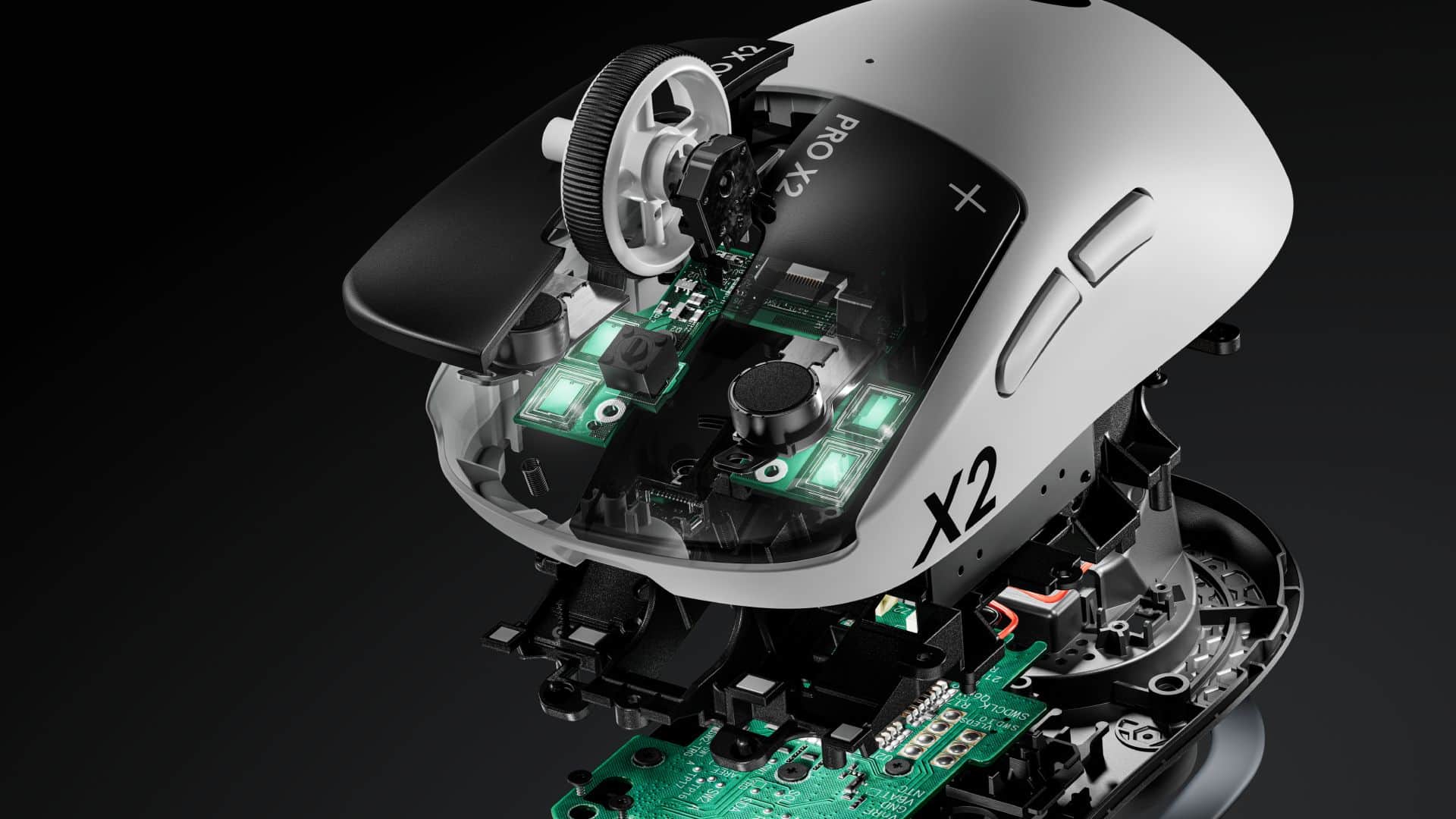
Image: TechRadar
Polling rate is how often a mouse or keyboard sends data to a computer. For years, 1,000Hz was the standard setting for gaming peripherals. Competitive shooters such as CS2, VALORANT, and Rainbow Six Siege have helped push esports hardware toward 4,000Hz and 8,000Hz polling.
Products including the Razer Viper V4 Pro, Logitech G Pro X2 Superstrike, Razer Huntsman V3 Pro Tenkeyless, Corsair Vanguard Pro 96, and Cherry XTRFY K63W Pro Compact Ultra-Wideband now advertise 8,000Hz support. The question is whether the technical gain is worth the cost in battery life and system resources.
How 8,000Hz changes latency
An 8,000Hz device reports its position 8,000 times per second, compared with 4,000 times at 4K and 1,000 times at 1K. That translates to an update every 0.125ms, versus 0.25ms at 4K and 1ms at 1K. In theory, 8K removes up to 0.875ms of input delay.

Recommended reading
GPTK 4 Gives Mac Gaming a 66% Boost
The improvement is real, but demanding. High polling rates can put extra load on a processor, reduce wireless battery life, and in some systems contribute to micro-stuttering. Wireless peripherals often ship at 1K because it is a more practical default.
Battery life and hardware costs
TechRadar’s testing highlights the trade-off. The Corsair Sabre V2 MG, which weighs 56g and uses a Magnesium Alloy frame, lasts around 100 to 120 hours at 1K. At 8K, its battery life falls to roughly two to three days, or about 18 hours in the described use case—an estimated 85% reduction.
Other high-end mice show similar results:
- Razer Viper V4 Pro: up to 180 hours at 1K, compared with 45 hours at 8K.
- Logitech G Pro X2 Superstrike: around 90 hours at 1K and 20 to 35 hours at 8K, with haptics contributing to the range.
That can undermine one of wireless gaming hardware’s main benefits: avoiding frequent charging and cables.
Do professional players use 8K?
Human reaction time also limits the practical benefit. Average reaction time is around 250–280ms, while the article’s author reports an average of about 175ms. TenZ, widely considered one of the best VALORANT players, has been cited with an average of 135ms; the broader competitive average tends to sit around 150ms, though 100ms is possible.
At 1K, a 150ms reaction involves roughly 150 reports between the peripheral and processor. At 8K, that becomes 1,200 reports, but the additional updates do not make a human react eight times faster.
Professional settings reinforce that point:
- TenZ: Pulsar TenZ Signature Edition, 1,600 DPI, 0.24 sensitivity, and 1,000Hz.
- f0rsakeN: Pulsar Sustanto-X, 800 DPI, 0.71 sensitivity, and 4,000Hz.
- donk: prototype Zowie X Donk mouse, 800 DPI, 1.25 sensitivity, and 1,000Hz.
- NiKo: Razer Deathadder V4 Pro Niko Edition, 800 DPI, 0.9 sensitivity, and 2,000Hz.
- Peterbot: Logitech G Pro X Superlight 2, 800 DPI, and 1,000Hz.
- ImperialHal: Finalmouse Starlight Pro, 800 DPI, 1.1 sensitivity, and 1,000Hz.
None of these leading players uses 8K as a default. That does not make high polling rates useless, but it shows that the highest number is not a requirement for elite performance.
For most users, 1K is the sensible setting. 4K or 8K can make sense on a high-end gaming PC or laptop with a 4K graphics card and high-refresh-rate monitor, particularly for users who value every fractional optimization and accept shorter battery life. But TMR or Hall Effect switches and sensors can have a greater impact on performance than the reporting interval itself.
The saved milliseconds are effectively indistinguishable to almost everyone. An 8,000Hz mode is technically faster, but hardware companies have also benefited from the simple assumption that a larger number must be better.
Follow TechRadar on Google News for its news, reviews, and opinion. The article was written by Aleksha McLoughlin, formerly TechRadar Gaming’s Hardware Editor and now a freelancer covering computing technology, gaming, and ecommerce.

Culture Editor
Maya explores gaming, streaming, and the internet as a place where people actually live. From deep-dives into creator economies to the anthropology of digital communities, she tracks platform drama and cultural shifts so you don't have to. She believes the best tech stories are fundamentally about human behavior.
via TechRadar